The Road Comes From Walking
An Archaeology of Perception, A Genealogy of Seeing
Translated from the Chinese《上路由路:知觉的考古,观看的谱系》
“How difficult it is, for anyone — including yourself — to make others believe something you have not fully worked out for yourself.” — from a critique by my friend Chen Yan
“The most incomprehensible thing about the universe is that it is comprehensible.” — Albert Einstein
Between these two sentences lies the whole of my work. One comes from a friend who has watched me create, and who, before I had even begun to speak, pointed a finger at my blind spot: how do you persuade others to believe in something you yourself have not fully arrived at? The other comes from a physicist who redefined the universe through reason, announcing an ambition to understand the world — and my long journey has been, step by step, a withdrawal from beneath the shadow of that very ambition.
Chen Yan's question makes it impossible for me to treat writing as a defense. Einstein's assertion makes clear to me that what I am trying to withdraw from is not reason itself, but the cognitive habit of folding all existence into a framework of “the comprehensible.” What follows is the full process, from being questioned to withdrawing — not an attempt to persuade anyone, but a long self-examination, carried out under a friend's gaze.
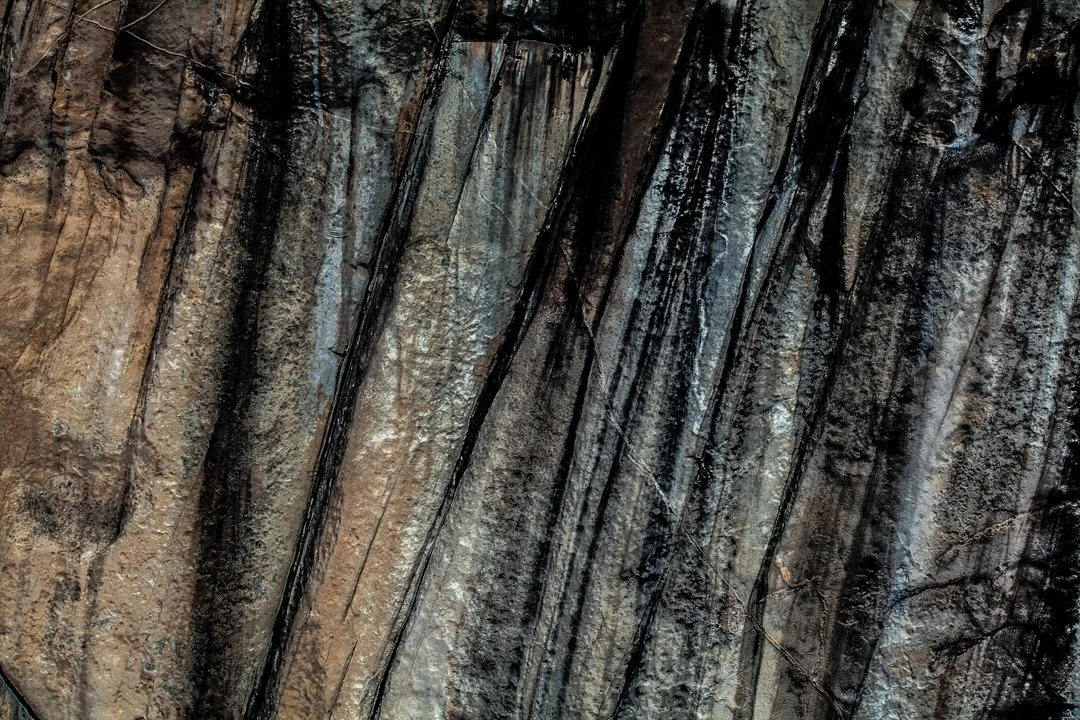
Zhang Shuguang, from the series Seeing Without Seeing, [2016]. Digital photograph
Introduction: Why Build Steps?
Since publishing The Return to the Origin: Readymade Abstraction and Perceptual Critique, I have received a number of sincere responses. Some lingered at the paradox of “minimal intervention”; some read their own shadow into the passage on “the childhood origin”; others suggested: you spoke of a shift from “institutional critique” to “perceptual critique,” but the theoretical content of “perceptual critique” could be developed further; you worked hard to avoid an essentializing Orientalist formulation, but beyond the “East/West” framework, is there a more precise intellectual instrument for understanding this difference?
These questions all point in the same direction: how, at the theoretical level, to find a more stable anchor for the practice of “the Returner.” What follows is an elaboration along these two directions — not a correction of the earlier essay, but an attempt, from several dimensions not yet fully unfolded, to build a few steps that might let us walk closer to that “unable to tell” rainy day.
But I am also aware that steps, in the end, are only steps. Beneath every theoretical structure, beneath the names of Foucault and Crary, there remains an afterglow that no discourse can exhaust — the swaying spring felt by the child lying against his mother's back. The purpose of theory is not to cover this over, but to let us, returning to it years later, not lose our way — though we must also stay alert: once theory grows too bright, it can fade the shadow of that rainy day as well. Steps are a tool for approach; once you have approached, the steps should be left behind. Chen Yan did not finish his sentence. He left me a question I must walk into myself: how do I convince myself — let alone anyone else — that that “spring” is art's own truth? When I say “form and emptiness are not two,” am I stating a genuine experience of cosmic life, or am I using a learned discourse to cast a spell over my own childhood sensory memory? I still cannot answer this. The whole trek of this essay is not meant to arrive at an answer, but to stay within this question long enough that it stops being a question, and becomes the road itself.
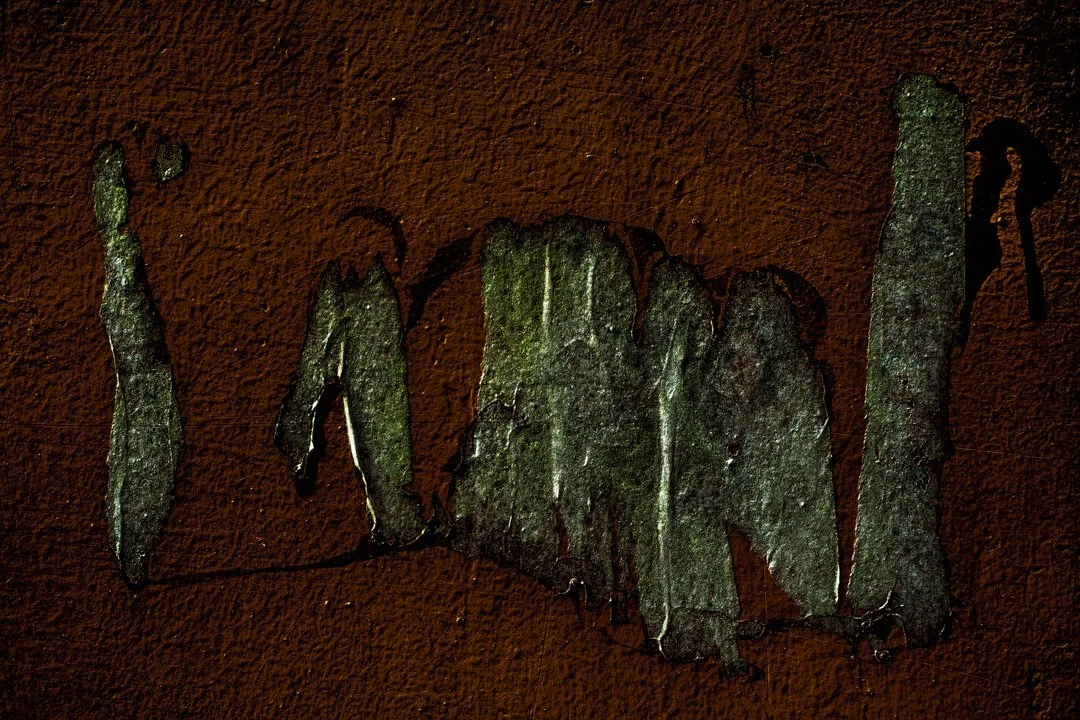
Zhang Shuguang, from the series Seeing Without Seeing, [2020]. Digital photograph
My friend also alerted me to another, more hidden danger: when people put on a new suit of expression, the old question gets discarded along with it, like an old set of clothes. As terms like “readymade abstraction,” “perceptual critique,” “genealogy of seeing,” and “return” take shape under my pen, are they becoming just such a new suit — letting me respectably avoid the naked difficulties that no theory can cover? When a problem cannot be solved, does dressing it in a more refined description mean it has been dealt with? I must stay alert: every concept in this essay may, at the very moment of its birth, quietly replace the living difficulty it points toward with a more manageable stand-in, within the world of discourse. My writing must therefore be, simultaneously, writing and a surveillance of writing — building the bridge and dismantling it, at once.
What follows will unfold along several threads: Foucault's theory of the episteme[1] will reveal how seeing is shaped by historically constituted orders of knowledge; Crary's technology of the observer will ask how vision is constructed by technical apparatus; “perceptual politics” will clarify how this kind of repair, at the level of perception, constitutes a fundamental practice of resistance; and “the genealogy of seeing” is my own departure from the “East/West” framework — I cannot claim to have found a better framework to replace it, but I can try to return to the specific strata in which my own perception took shape, and describe those mixed currents that no binary classification can accommodate. These four threads correspond, respectively, to the historicity, the technicity, the political character, and the cultural character of seeing, forming this essay's theoretical skeleton.
There is also a parallel reference drawn from contemporary philosophy — the concept of “withdrawal” from object-oriented ontology — running through the nodes of Foucault, perceptual politics, and the genealogical inquiry. It is not an independent fifth thread, but a mirror that recurs throughout: giving “The Grey I Could Not Enter” a more precise philosophical contour, while continually questioning whether my practice is even possible at the ontological level.
But beneath all these theoretical threads, a more silent, more bodily current will run throughout, and will finally become the remainder that no theory can accommodate — the touch of my grandfather's hand and footsteps, my grandmother's scissors and prayers, my father's silence and “the road comes from walking,” this folk-perceptual experience. These are not illustrations for a theory, nor sensory ornamentation decorating a theoretical skeleton — they are the very soil from which theory is able to grow. My grandfather copying geomantic manuscripts stroke by stroke onto coarse paper; my grandmother binding volumes, stitch by stitch, with hemp cord she processed by her own hand; my father, having inherited these manuscripts and the art of geomantic divination, presiding with gravity over the rites of the countryside; my grandfather leading me by the hand through unnamed mountains, teaching me to recognize the Azure Dragon and White Tiger and where the wind comes from; my grandmother's figure, walking an hour and a half up a mountain path to attend church every weekend, rain or shine; the long, silent summer days my father sent me to guard the orchard deep in the mountains alone; my mother's voice, calling me home from the kitchen doorway in the dusk; her hands, seemingly forever soaked in water, forever steeped in cooking smoke; and, years later, the moment after a New Year's Eve dinner when my father said, “the road comes from walking” — these memories are not objects theory needs to explain. On the contrary, it is they that support theory, even as they interrogate it. They will form, in Chapter Five, a complete and independent perceptual current, converging with the literati painting tradition as “one ground, many springs” — not the confluence of two rivers, but the same underground water table surfacing in different places.
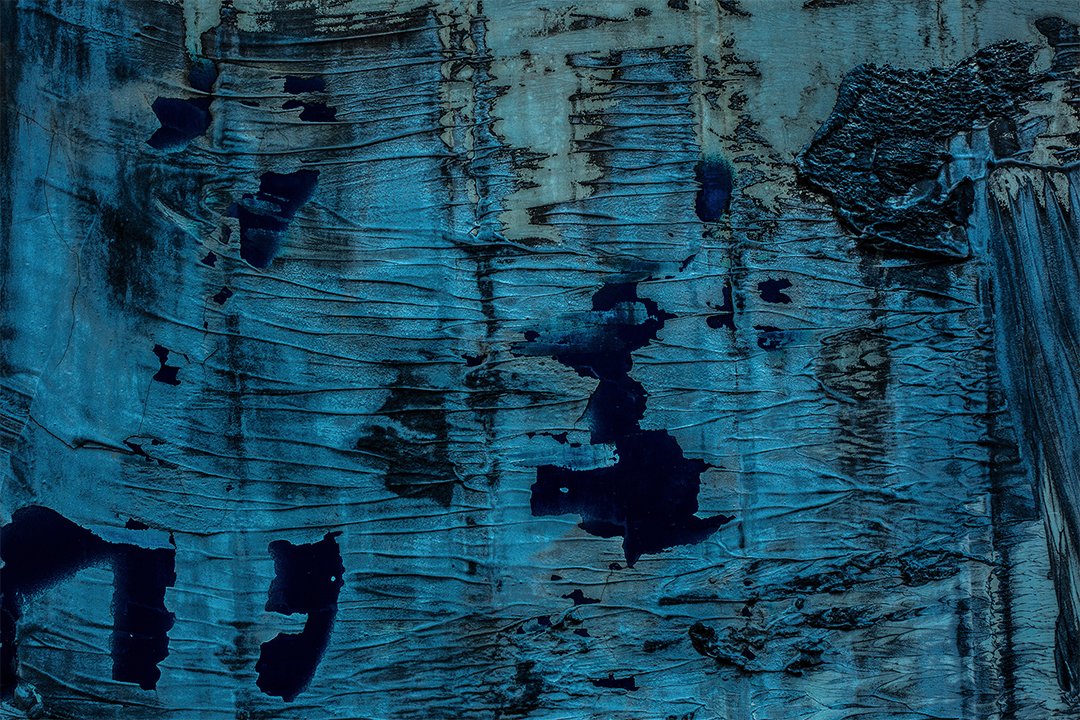
Zhang Shuguang, from the series Seeing Without Seeing, [2022]. Digital photograph
Structurally: the first two chapters focus on building the theoretical framework — Foucault and Crary will help us see how seeing is constructed by history and technology; the third chapter returns these theories to the details of two specific works — a nameless wall and a nameless flower — to be tested; the fourth chapter unfolds the theoretical content of “perceptual politics,” clarifying how this resistance, occurring at the level of perception, constitutes a fundamental political practice, finally finding its simplest and most precise folk correlate in my father's words, “the road comes from walking”; the fifth chapter turns to “the genealogy of seeing,” offering, at the confluence of the literati painting tradition and folk perceptual experience, an intellectual instrument for “return” that moves beyond the “East/West” framework; the sixth chapter distills this whole posture of practice into a “four-step method of perceptual critique” — suspend, gaze, purify, release — attempting to make it a transferable method, not merely one person's autobiography; the seventh chapter is a necessary pause, a self-reflection on the theoretical impulse running through the whole essay, acknowledging language's fundamental limits in trying to reach a “pre-linguistic” state.
Beyond this main vertical line of advance, object-oriented ontology will serve as a horizontal dimension of reference, pausing briefly at three points — in Chapter One (juxtaposed with Foucault to distinguish a “historical boundary” from an “ontological boundary”), Chapter Four (calibrating the promissory limits of “perceptual repair”), and Chapter Five (as a mirror for reflecting on the “contemplation of things” tradition) — forming three parallel dialogues. In addition, the essay will interweave three moments of self-reflexivity — after Chapter Two (the turn from “institutional critique” to “self-critique”), after Chapter Four (has “theory” itself become a new “contest of ideas”?), and after Chapter Five (standing within a “genealogy,” trapped within a “genealogy”) — forming a continuous undercurrent of self-interrogation that stands in tension with the essay's forward theoretical construction, ensuring that this text is not merely a manifesto, but a self-dissection carried out in the course of a trek.
The introduction of object-oriented ontology is not meant to fold my practice into a Western philosophical lineage, nor to use its terms to “certify” my own sources — the legitimacy of those sources does not rest on confirmation by any external theory, but on whether they can still be walked upon again, in the manner of “the road comes from walking.” I introduce this reference so that “The Grey I Could Not Enter” might gain a clearer contour within contemporary philosophical discourse, while also more clearly exposing philosophical discourse's powerlessness before an actual concrete wall. It is a mirror, not a ruler.
Finally, every step will lead back to that wall — “The Grey I Could Not Enter.” It is the boundary of every theory, and a silent crossroads. It is precisely in its refusal that “return” acquires its truest meaning: not arrival, but accepting the impossibility of arrival, and then walking on where there is no road, letting the road become the road itself.
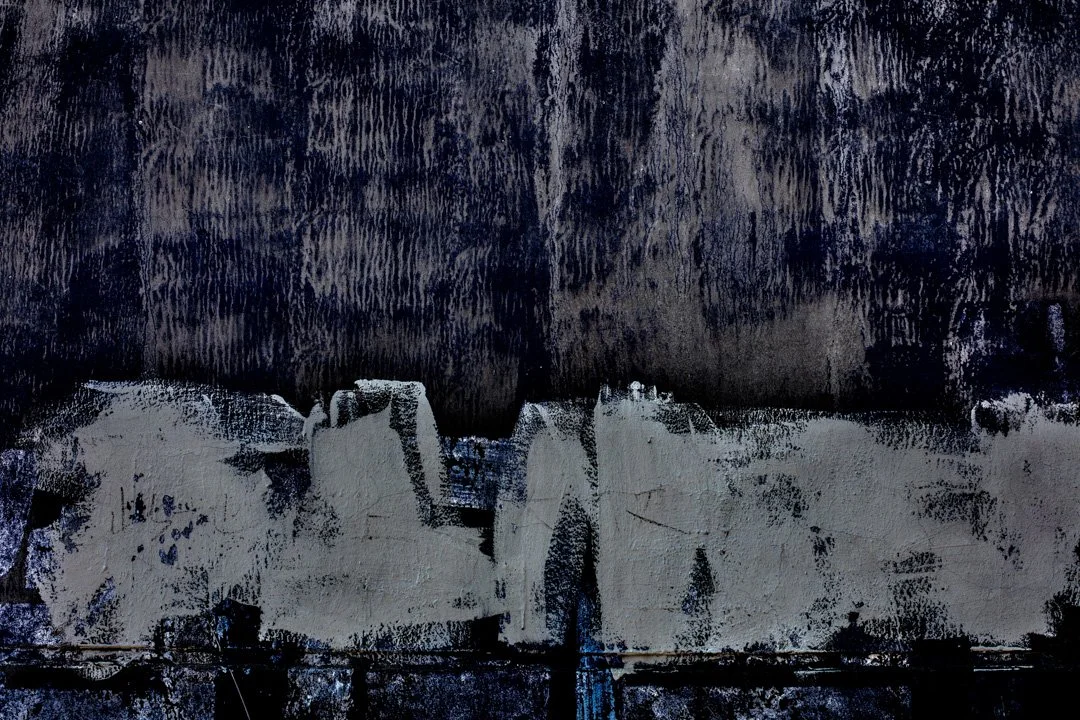
Zhang Shuguang, from the series Seeing Without Seeing, [2021]. Digital photograph
I. The Historicity of Vision: Foucault's “Episteme” and “Pure Gaze”
In The Order of Things, Foucault proposes the concept of the episteme[1] — the unconscious structure that determines, within a given age, what can be known and by what means. He distinguishes three historical epistemes: the “resemblance” of the Renaissance, the “representation” of the Classical age, and the modern episteme centered on “Man.” Each shift between epistemes is not a gradual evolution but a rupture — a reorganization of the entire cognitive order.
Foucault's three epistemes — resemblance, representation, the human-centered — each define what may be called “knowledge.” Einstein's “comprehensibility” is precisely the highest echo, within modern science, of the classical order of representation: the universe, presupposed as a book that can be written in the language of mathematics. And what my work tries to suspend is exactly this cognitive habit of folding all existence into a framework of “the comprehensible.” This does not mean abandoning reason, but acknowledging that certain encounters — a silent grey wall, for instance — lie outside this framework's jurisdiction.
This logic of rupture applies equally to vision. In his analysis of Velázquez's Las Meninas, Foucault, by dismantling representation, searches for a pure gaze undisturbed by theory, reason, or imagination[2]. He defines this gaze as one that operates prior to all intervention, capturing the immediate thing faithfully, without modification. In Manet's work, Foucault sees this pure gaze realized — painting reduced to “painting-as-thing,” no longer the vehicle of meaning, but the presence of the thing itself.
There is a thread worth examining between this and what I call “letting the wall show itself.” Foucault's “pure gaze” pursues the stripping-away of every non-visual appendage — concept, imagination, theory — returning vision to seeing itself. This is exactly what I do in Seeing Without Seeing: stripping the wall from the concealment of everyday function and the accretion of symbolic meaning, letting its mottled, flaking, seeping material traces manifest of themselves. Foucault's object of analysis is painting; what I face is the forgotten walls of the city — the medium differs, but the direction, of “returning vision to vision itself,” is the same.
But the difference is equally fundamental. Foucault's “pure gaze” ultimately leads to a paradox: it demands purity even as it makes the observer both the one who sees and the object seen — the gaze becoming aware of itself as an object of its own act of seeing, and it is exactly this self-awareness that undoes the premise of purity.
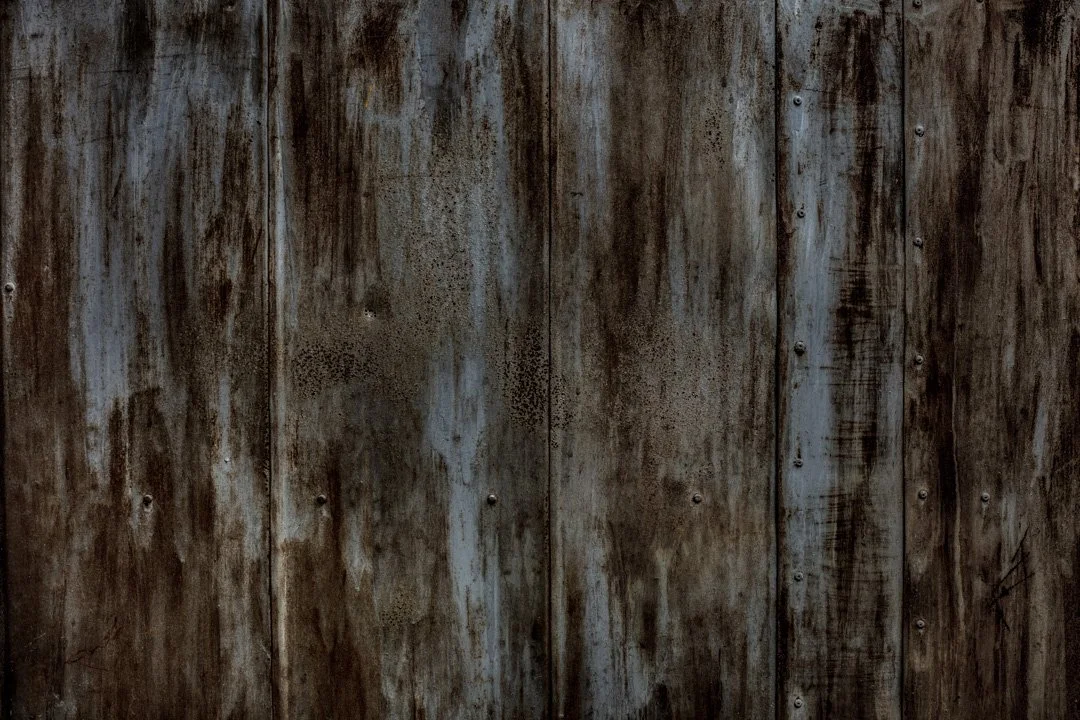
Zhang Shuguang, from the series Seeing Without Seeing, [2021]. Digital photograph
What my practice tries to move toward is a seeing unaware of itself — like the child lying against his mother's back, who had no consciousness of “seeing”; he simply let the spring color flow in. This is not Foucault's “pure gaze,” but a more thorough forgetting of seeing: letting even the thought “I am seeing” step aside. In this sense, my practice might be described as an Eastern radicalization, one step further, of Foucault's “pure gaze” — not merely stripping away concept and imagination, but stripping away the positional self-awareness of “the one who sees.”
And yet I must draw an uncrossable line here: Foucault's “pure gaze” and my “letting the thing show itself” do overlap at the operational level, but belong to entirely different philosophical foundations. Phenomenological bracketing always presupposes a subject that returns — consciousness, having bracketed judgment, returns to a pure intentionality “facing the things themselves”; it is an active withdrawal of the subject, but after withdrawing, the subject is still there, as the witness “watching itself watching.”
What “form and emptiness are not two” points toward is a more thorough dissolution. It is not the withdrawal of the subject, but the collapse of the subject/object cognitive structure itself. In the context of the Heart Sutra, “form” and “emptiness” are not opposing poles, but two faces of the same reality — when I gaze at that wall, it is not that I am looking at it, nor that it is looking at me, but that “seeing” itself is occurring, and “I” and “the wall” are only positions temporarily marked out within this occurrence.
This difference cannot be dissolved by any juxtaposition of terms. I place them side by side not to conceal the difference, but to expose it, nakedly, before the reader — to let you see: a similar operation (letting the thing manifest) can grow from entirely different intellectual foundations, and point toward entirely different kinds of manifestation. My practice grows from the latter. Foucault has given me a critical self-awareness — but what finally makes me press the shutter is always that swaying instant, not yet cut by concept, in which subject and object are not yet divided.
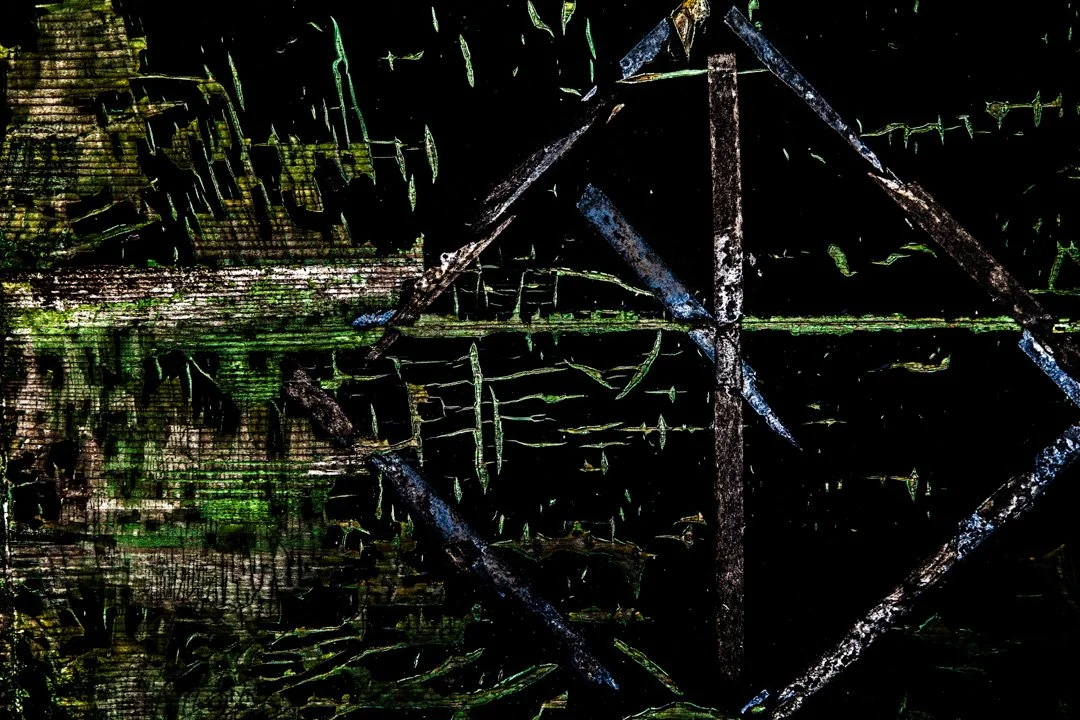
Zhang Shuguang, from the series Seeing Without Seeing, [2020]. Digital photograph
In The Return to the Origin, I once wrote about a wall — a grey cement wall on the outer side of an abandoned factory, its surface covered by a thick coating, almost without a single crack or water stain. I tried every focal length, every angle of light; in the viewfinder there was only ever a flat expanse of grey. It did not “speak” — or rather, it spoke a language I could not understand at all. I finally put the camera down, and named it “The Grey I Could Not Enter.”
Now, looking back at this wall through Foucault's framework, it takes on new meaning. It was not only the record of a failure, but a clear revelation of the boundary of my own “pure gaze” — my seeing, at least in that moment, could only resonate with traces already internalized within my own aesthetic habit. Mottled, flaking walls, “written upon” by time and rain, naturally resonate with the Eastern aesthetic habit I was steeped in since childhood. A flat, silent grey wall refuses to enter this frequency of resonance. It is not my aesthetic object; it is simply itself — an existence outside every perceptual framework I possess.
This wall's silence reminded me of a deeper fact: I am not an omnipotent listener; I am only a mortal with a particular kind of ear. And the true meaning of “letting the thing show itself” may not be letting the thing manifest in the way I want, but accepting that some things will simply never manifest for me at all. In that moment, there was no resonant communion between myself and that wall — only something more real than resonant communion: my own powerlessness.
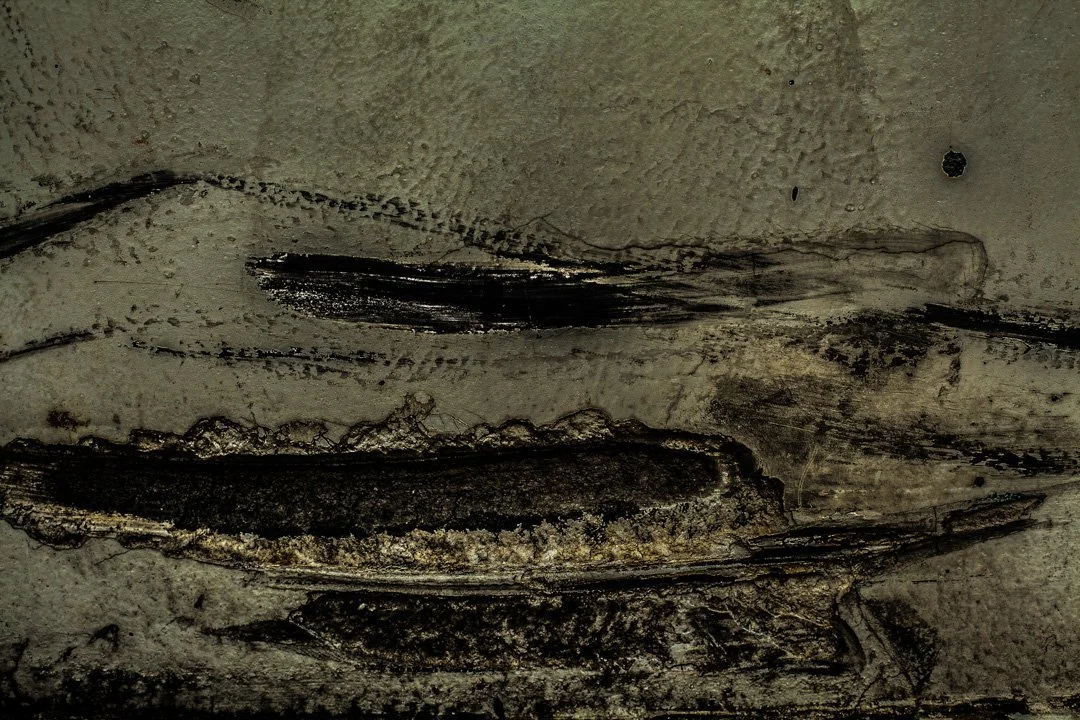
Zhang Shuguang, from the series Seeing Without Seeing, [2020]. Digital photograph
[▲ OOO Supplement 1: A Parallel Reference — Harman's “Withdrawal” and My “Failure”]
When I say “this wall refused me,” a voice from contemporary philosophy leans in to say: this is not your failure, but a universal law. Object-oriented ontology, represented by Graham Harman, proposes a deeply seductive claim: the thing always retains an untouchable remainder beyond human contact, which he calls “withdrawal.” Any interaction — a hammer striking a nail, an eye observing a wall — can only touch the “sensual qualities” or “effects” of the thing, never the thing itself. The thing always remains, outside of all its relations, a silent core.
If I retell that afternoon in OOO's language: as a human subject, I could only access the wall's “surface” or “image,” while the wall itself — the real core of that thing — remained forever outside my cognition. I was not “refused”; I simply encountered a universal truth.
But there is a boundary I must draw clearly here. Harman's “withdrawal” is ontological, universal, without exception. What “The Grey I Could Not Enter” marks is a specific, historical failure, occurring between myself and one particular wall. It is not a universal philosophical law, but the manifestation of one person's finitude, in a specific time and place. That wall was “unreachable” not because it withdraws ontologically, but because it did not fall within the frequency of resonance shaped by the aesthetic habit I learned as a child. In other words, I could not enter it not because all things are unenterable, but because “my” particular perceptual structure failed here.
This distinction matters greatly. But if a reader presses further: those “successful” experiences — the flower beside the pigsty in childhood, the moonlight on a frosty night, the mottled wall — were they a genuine arrival at the thing's own “nature,” or merely a deeper feeling toward the thing's phenomenon? I must admit I cannot give a definite answer. The reality of those moments is, for me, beyond doubt — they were not “knowledge about” the thing, but a co-presence with it — but I cannot prove that this co-presence is not another form of indirect contact. Perhaps this is precisely the fissure “return” must preserve: I choose to believe in the “encounter”-nature of those moments, and the basis of my belief is not philosophical argument, but the intensity of bodily memory. This choice need not be universally accepted; it need only be honestly declared. So the value of OOO for me lies not in telling me “all encounter is impossible,” but in reminding me: do not declare my own experience a universalizable ontological truth. It is a mirror, letting me see my own limits clearly — not a ruler, measuring the ultimate structure of the world.
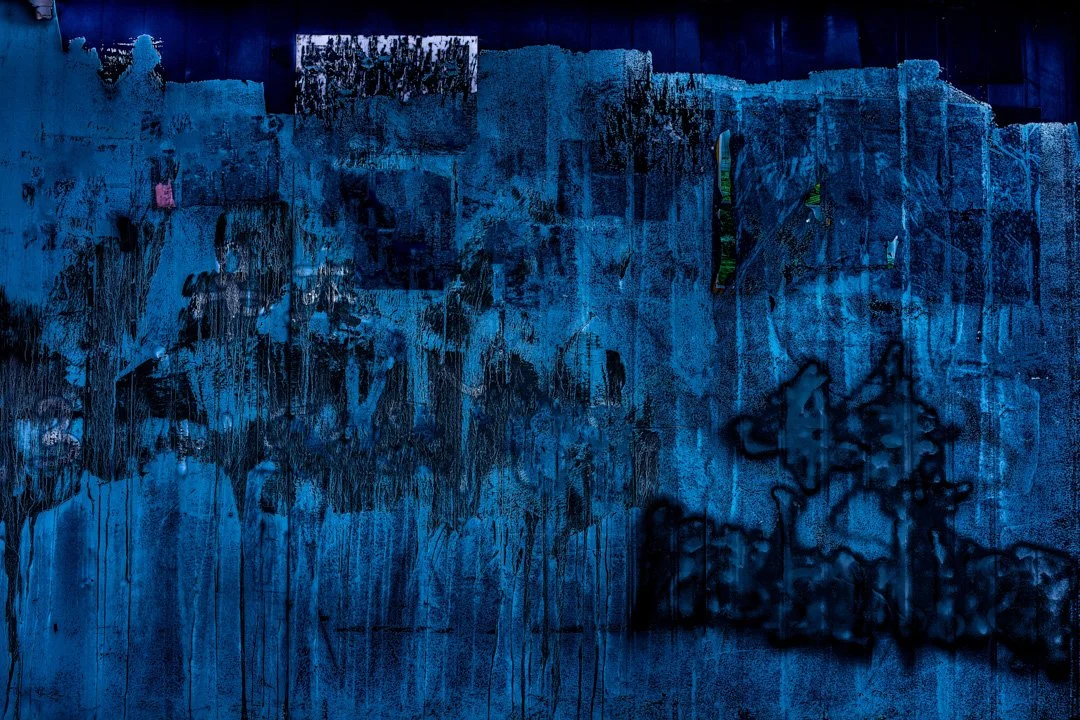
Zhang Shuguang, from the series Seeing Without Seeing, [2023]. Digital photograph
Therefore, what “The Grey I Could Not Enter” marks is, in the final analysis, not the withdrawal of the thing, but my own failure — the particular aesthetic habit I carry found no frequency of resonance here. It is not proof of the thing's secret, but clear evidence that I am bound by my own limits. This distinction must be drawn again and again, because the moment I misread it as a universal ontological law, I gain a false comfort — “it's not my problem, the thing itself is simply unenterable” — and it is precisely this comfort that would dissolve the entire reality I felt standing before that wall: that powerlessness, that being-refused, that clear-eyed awareness of being nothing more than a mortal with a particular kind of ear. It is my own specific failure, and it is precisely the specificity of this failure that makes it more real than any successful communion.
If I accept Harman's universal withdrawal, then my entire practice — that patience trying to “let the thing show itself,” that posture of believing communion possible — would collapse into a form of self-deception: I never truly met any thing at all; I have only ever been dealing with the appearances of things. But my own experience tells me that in those successful moments, there exists something more intimate than “dealing with appearance.” It is not a knowledge-based possession, nor is it “indirect contact” in Harman's sense, but a co-presence occurring before concept and naming, before the division of subject and object. It may not be “arrival at the thing itself,” but it is a sufficiently real “posture oriented toward the thing” — and this posture itself already constitutes the way I stand in this world.
So: Foucault reveals my historical boundary; Harman reveals my ontological boundary. And the fissure between these two boundaries is precisely the place where “return” becomes possible: I cannot cross the historical boundary, nor the ontological boundary, but I can, between the two, in the posture of “the road comes from walking,” walk out a path that neither denies the boundaries nor is ended by them.
Foucault's archaeology of vision also suggests another important dimension: the relation between “the visible” and “the sayable.” Foucault points out that the visible and the sayable belong to two different registers, related only asymmetrically — a blind discourse on one side, a silent vision on the other[3]. This insight responds precisely to a central claim I repeatedly emphasized in the earlier essay: those “unable to tell” things in art are not theory's failure, but its irreducible foundation. Discourse has its boundary, and seeing — especially the seeing that occurs before naming — exists exactly outside that boundary. My “perceptual critique” tries to work precisely within the fissure between “the visible” and “the sayable” — using the image to touch what discourse cannot capture. And the reason “The Grey I Could Not Enter” has remained in my archive is precisely because it guards this fissure more thoroughly than any successful image — it surrenders to no discourse at all.
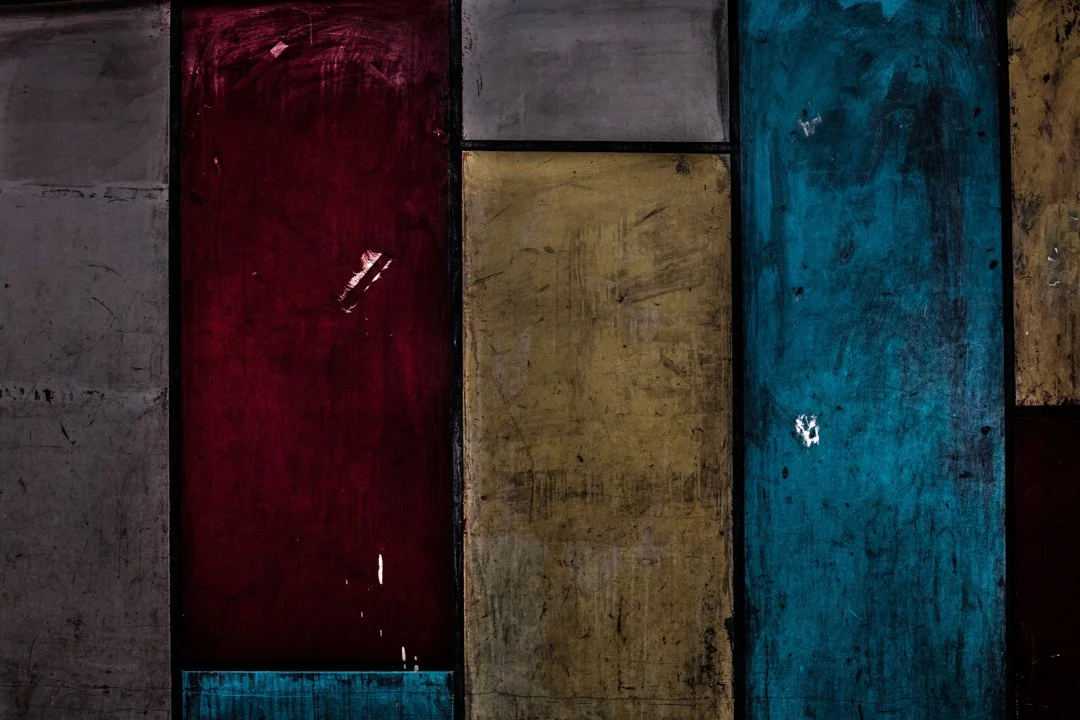
Zhang Shuguang, from the series Seeing Without Seeing, [2023]. Digital photograph
Foucault's framework of the episteme carries one further implication directly relevant to my practice, not yet fully unfolded. He distinguishes three epistemes: the Renaissance, organized by the principle of “resemblance” — things related to one another through analogy, imitation, sympathy; the Classical age, ordered by “representation” — knowledge's aim being to classify, name, and tabulate the world clearly, folding things into a single system of signification; and the modern age, centered on “Man” — knowledge unfolding around human finitude, the thing becoming an object known and historicized by the subject.
What my gaze at the wall resists is precisely this cognitive violence of classification and naming, a continuation of the classical episteme into the present. Naming a wall “a building facade,” “an abandoned factory,” “something awaiting demolition” already completes its total possession. This naming is not merely a linguistic act, but a cognitive disarmament: once named, it no longer needs to be truly “seen.” What I do — stripping away — is, at its core, a suspension of the classical order of representation: temporarily halting the folding of the wall into any classificatory system, letting it retreat from “the named thing” back to “the field of manifestation.” This goes one step further than Foucault's “pure gaze”: the pure gaze still presupposes a subject “who is seeing” and an object “being seen,” while the fundamental problem of the classical episteme lies precisely in this subject/object cognitive structure itself. What my practice tries to dissolve, in its very operation, is the continuation of this structure — not replacing one naming with another, but letting the impulse to name itself step aside.
If Foucault's episteme reveals how seeing is historically constructed, another level of inquiry must be added: does the thing itself have a legitimate right to “refuse to be fully known”? OOO's “withdrawal” offers an extreme version of this inquiry — but as noted above, it moves toward dissolving all specificity into a universal law, while what I want to do is precisely the opposite: to suspend the universal law temporarily, so that this particular wall's specific silence can be felt in its own way.
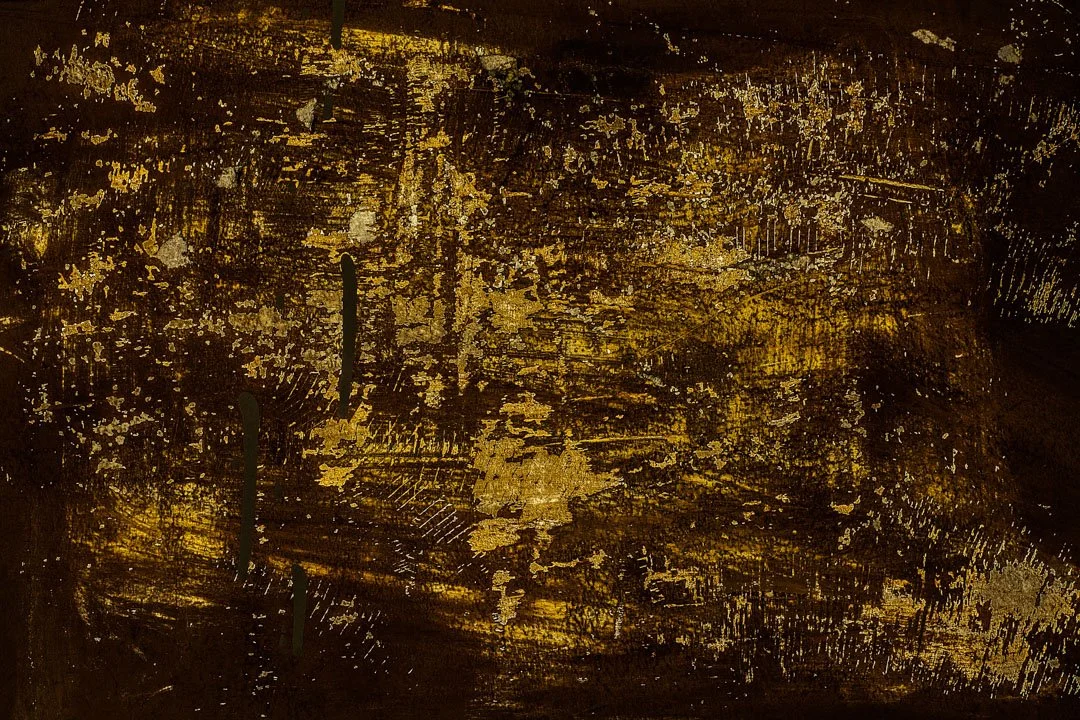
Zhang Shuguang, from the series Seeing Without Seeing, [2020]. Digital photograph
II. The Technical Shaping of the Observer: Crary's Archaeology of Vision
If Foucault reveals how vision is shaped by the episteme, Jonathan Crary pursues a further, more specific question: how is “the observer” itself historically constructed?
In Techniques of the Observer: On Vision and Modernity in the Nineteenth Century, Crary argues that the observer is neither innate nor natural, but historically formed. Through an analysis of the shift in visual technology from the camera obscura to the stereoscope, he reveals a far-reaching visual revolution in the early nineteenth century. In the camera-obscura model, the observer is conceived as a passive receiver — the world projects an image onto the box's wall, and the person merely watches this image. In the stereoscope model, the observer gains a new autonomy — vision is no longer a passive recording of the world, but an active construction of the body's senses. At the same time, this new autonomy brings with it a new form of control: vision can be captured, shaped, disciplined by technology.
Crary's central insight is that the mechanism of vision and the order of cognition are two sides of the same coin. Changes in the observer's position — from passive reception to active construction — constitute different visual regimes, and each visual regime corresponds to an order of knowledge. What he offers is not a history of art or of vision, but an “archaeology of vision,” or an “archaeology of cognition.”
This framework offers two important insights for understanding my practice.
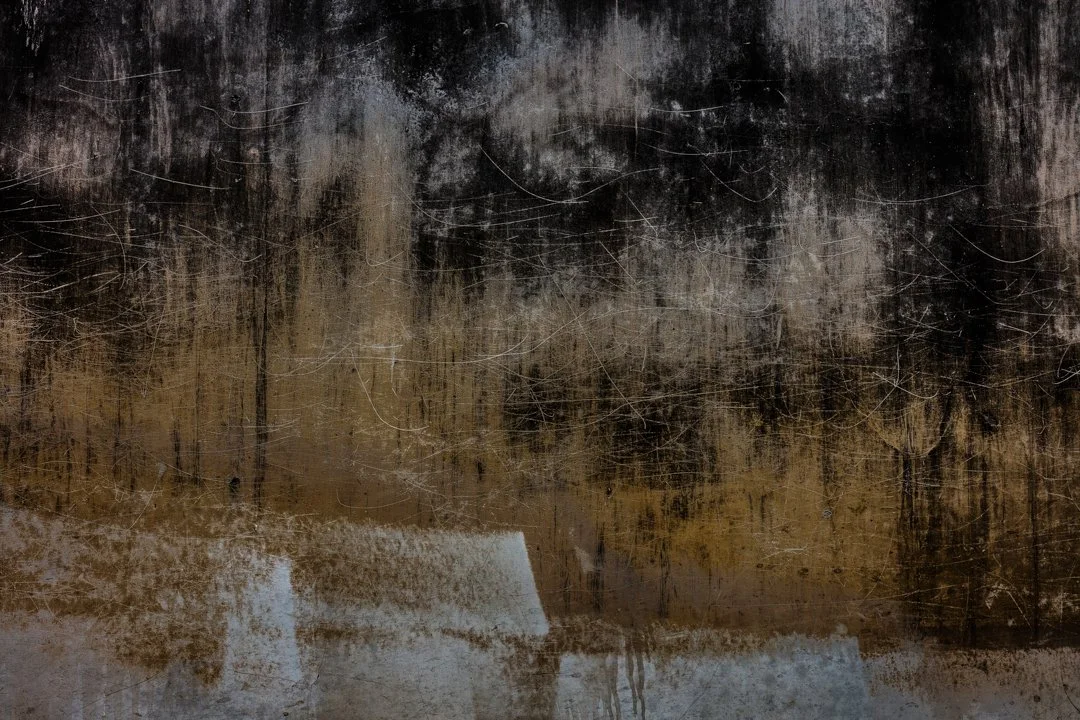
Zhang Shuguang, from the series Seeing Without Seeing, [2024]. Digital photograph
First: the object of “perceptual critique” is not eternal perception, but the mode of seeing constructed under specific historical conditions.
What Crary reveals is the nineteenth century's shift from the camera-obscura model to the physiological-optical model — a rupture in modes of seeing. What I face is a more radical visual crisis of the twenty-first century: the screen, the algorithm, the attention economy's total hijacking of seeing. In Crary's analysis, attention had already become a central problem by the latter half of the nineteenth century — at once the foundation of individual freedom, creativity, and experience, and the core mechanism through which economic and disciplinary systems exercise their effect[4]. This paradox has been magnified countless times over in today's digital environment. When our attention is precisely captured, segmented, and sold by algorithms, seeing in the mode of “letting the thing show itself” becomes, in itself, an act of resistance — not against any specific power, but against the modern condition of seeing being fully instrumentalized.
Second: “the observer” is not universal, but jointly shaped by technology, institution, and discourse.
Crary chooses “observer” over “spectator” because the former implies someone seeing from within an entire pre-established field of possibility, embedded in a system of conventions and constraints[4]. This means there is no “natural” mode of seeing — every act of seeing is historically, technically, culturally shaped. The “observing things through things” mode of seeing I learned in the hills of Yongtai, central Fujian, is not a universal human nature, but a specific perceptual habit, carrying a particular cultural gene. Recognizing this does not weaken the universality of my practice — it makes it more concrete, more honest. I no longer need to claim to possess some transcendent wisdom of seeing; I need only acknowledge: this is the way of seeing I have learned, and I choose to spend the rest of my life deepening it.
There is also a dimension of Crary's research easily overlooked: he argues that modern painting was not the true starting point of visual modernity — a new mode of observation had already begun taking shape, half a century earlier, within instruments themselves[4]. This means the artist's visual experiment is often a response to a social visual transformation already underway, rather than its origin. Borrowing this perspective to examine my own practice, one might say: the digital camera and image-processing software are not merely tools I use — they are, in themselves, already a “technology of the observer,” presupposing certain possibilities of seeing while foreclosing others. My “minimal intervention” is precisely an attempt, made in full acknowledgment of this technical precondition, to let technology serve “letting the thing show itself” rather than “manufacturing a new thing.” This may constitute a contemporary extension of Crary's framework: in an age when technology has already fully intervened in vision, how can “the observer” possibly regain a mode of seeing not entirely dominated by technological logic?
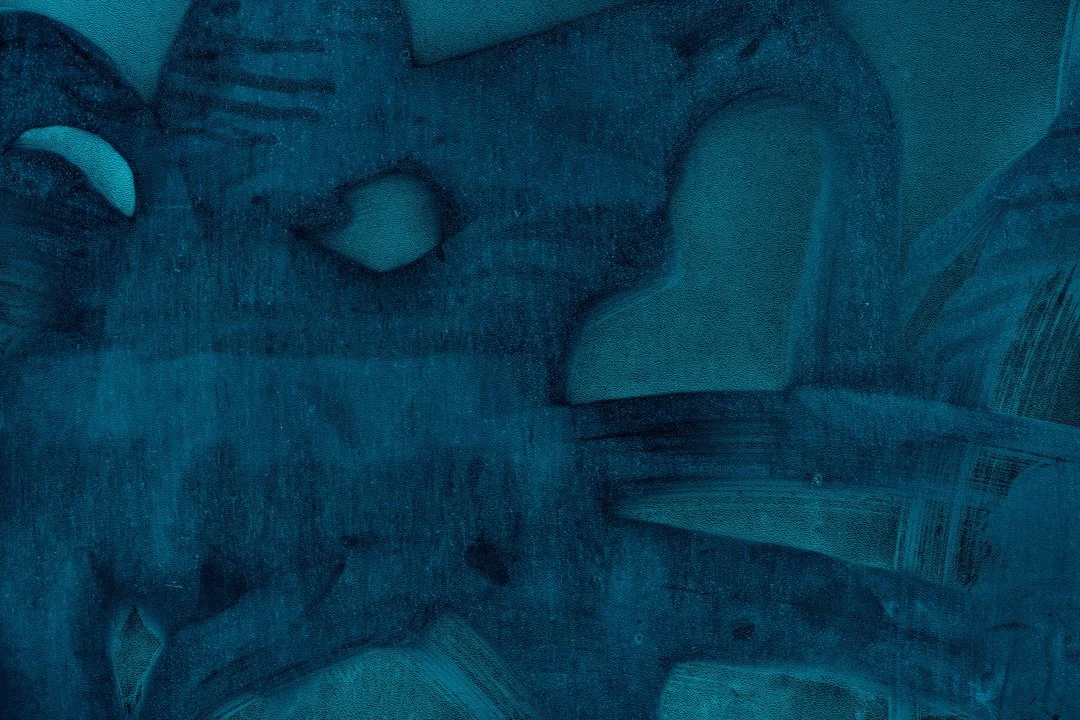
Zhang Shuguang, from the series Seeing Without Seeing, [2026]. Digital photograph
Reflexive Note One: From “Institutional Critique” to “Self-Critique”
Having used Foucault and Crary to see clearly the historicity and technicity of seeing, I must now turn this gaze upon myself. When I describe my own practice as “perceptual critique,” a sharp question cannot be avoided: is what I call “perceptual critique” merely institutional critique continuing under a new set of terms — packaging a private, unverified experience within the reference system of the Duchampian sequence?
This question has no simple answer. It demands that, at every moment of self-certainty, I retain a clear-eyed doubt: has the perception I rely upon already been shaped by the very institution I am trying to critique? Is my “return” only drawing a seemingly free circle within the institution — a circle whose boundary was already determined by the very thing I resist? This self-awareness is not nihilistic evasion, but necessary clarity. It requires me, every time I raise the camera, to suspend not only the impulse to name the thing, but also the impulse to name the “self” — including the identity of “the Returner” itself.
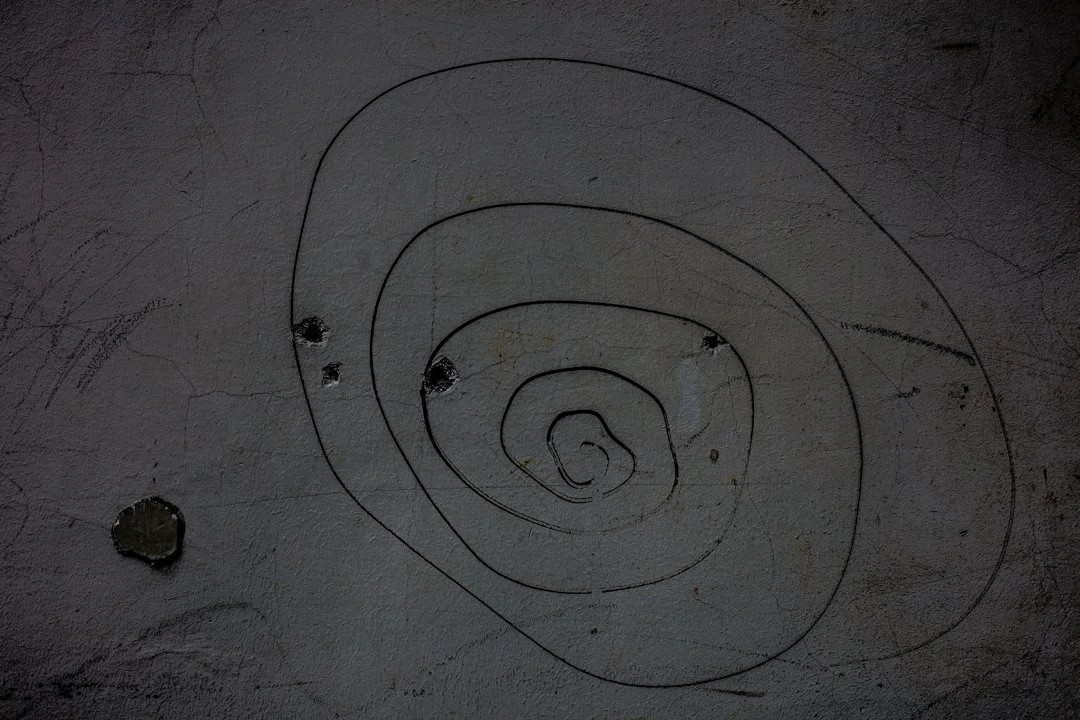
Zhang Shuguang, from the series Seeing Without Seeing, [2026]. Digital photograph
III. The Work as the Embodiment of Theory
All of the theory above must, in the end, be tested before a specific wall, before a nameless flower. If theory does not return to the details of the thing, it remains suspended rhetoric. I want to offer here two sliced readings of specific works — one from the wall-gazing of Seeing Without Seeing, one from the flower-and-light-tracking of Beyond Appearance — letting the concepts find their body in visual detail.
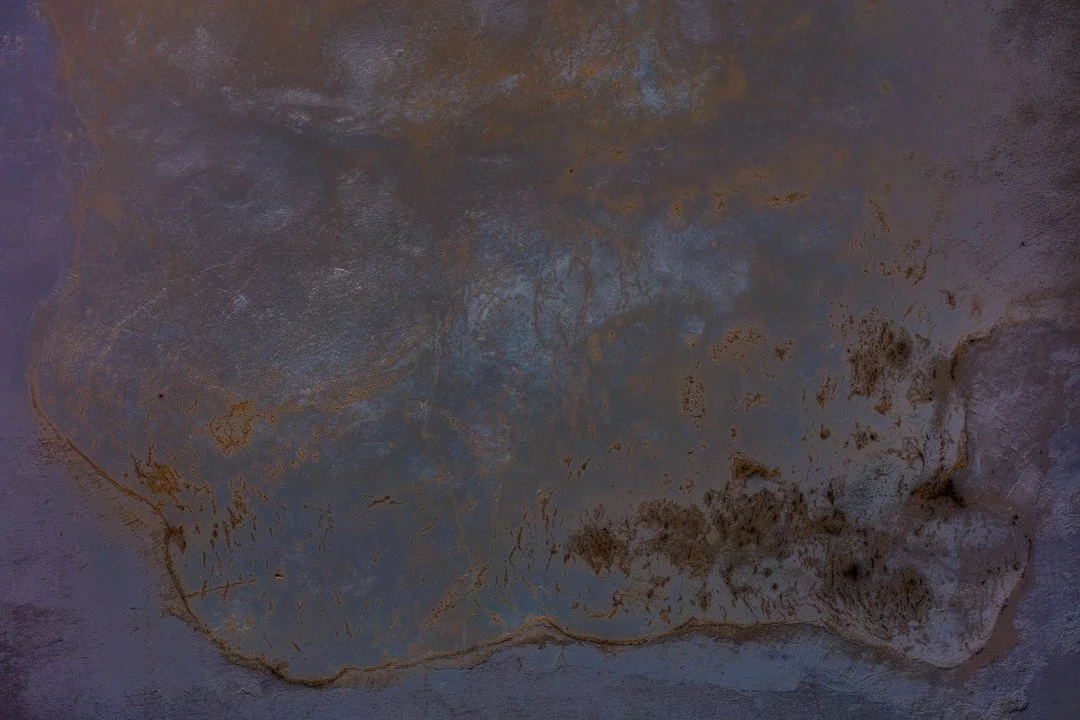
Seeing Without Seeing, 20240224144855:
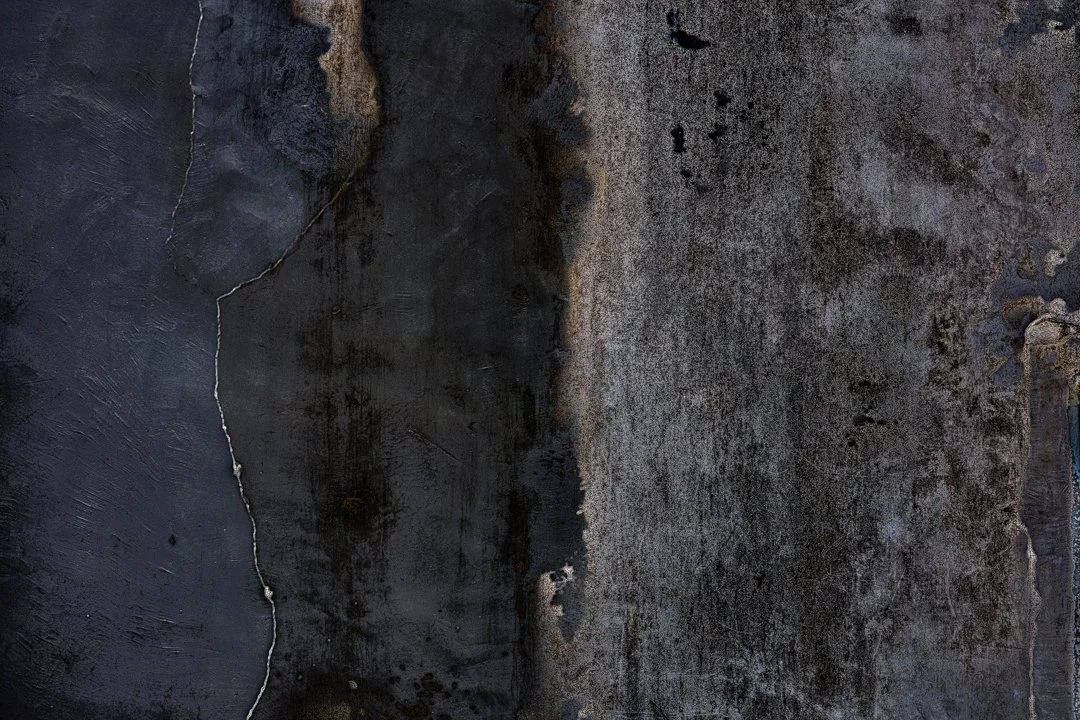
Zhang Shuguang, from the series Seeing Without Seeing, [2024]. Digital photograph
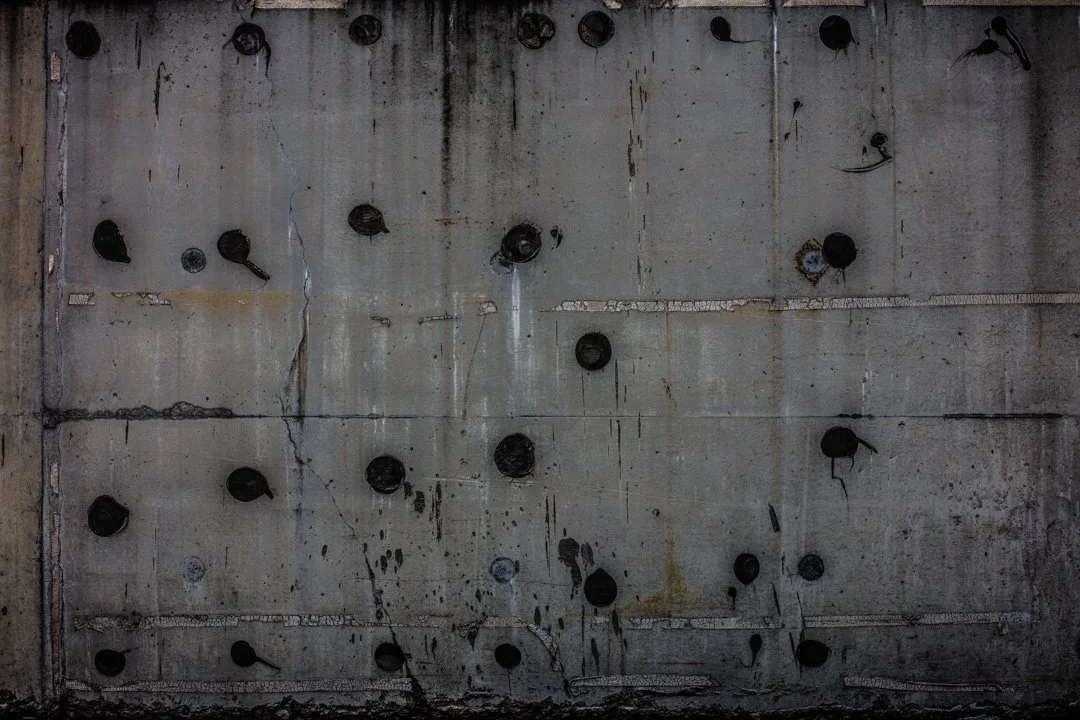
This wall is located on the shaded side of an old factory building slated for demolition, its surface covered with layers of paint from different eras — early lime-white, 1970s cement-grey, 1990s beige, up to a recent, rough coat of white. Rainwater seeping down through cracks at the top of the wall has created a complex capillary diffusion between the layers of paint, forming a texture close to the bleeding of ink on paper. I chose an overcast afternoon — soft, diffused light eliminating all clear shadows, letting the wall's surface appear entirely as a two-dimensional phenomenon. I used a full-frame camera, a 50mm standard lens, aperture f/5.6, to ensure an appropriate depth of field. In post-processing, I performed only one operation: reducing overall saturation to near black-and-white, while retaining an extremely faint warm-tone residue. This operation was not meant to “beautify,” but to strip away the temporal implications carried by color — grey-green mildew stains, brown rust, beige old paint — colors that would quickly pull the viewer into the everyday cognition of “this is an old wall,” while the faint warm residue suspends the image between “thing” and “non-thing.”
In the final image, the wall is no longer a wall, but has become a topographical map made of cracks, flaking, and seepage — a miniature landscape existing only within the act of seeing. It is not a created abstraction, but a “discovered abstraction” and a “purified abstraction” — a visual “form is emptiness.”
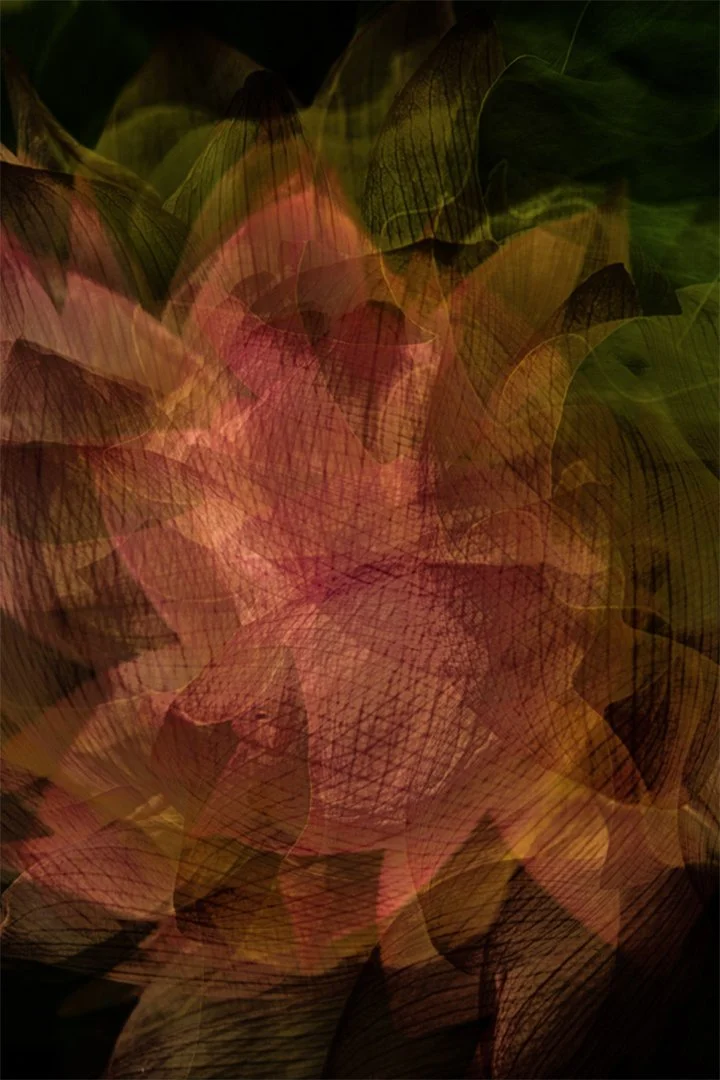
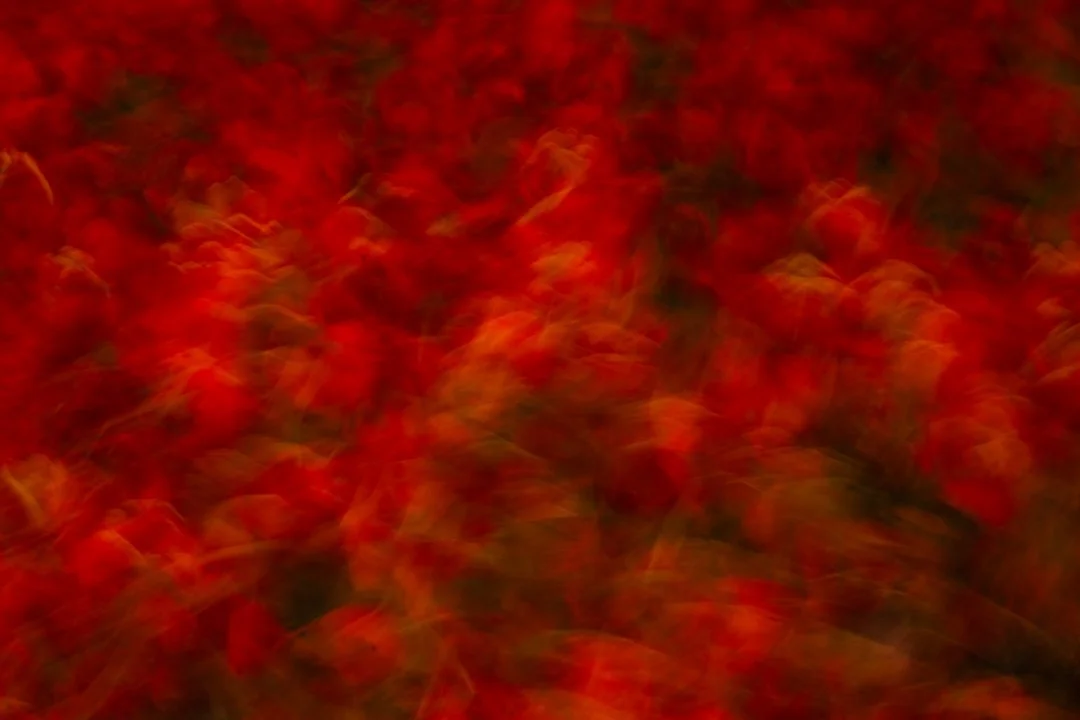
Beyond Appearance, 20210717104513:
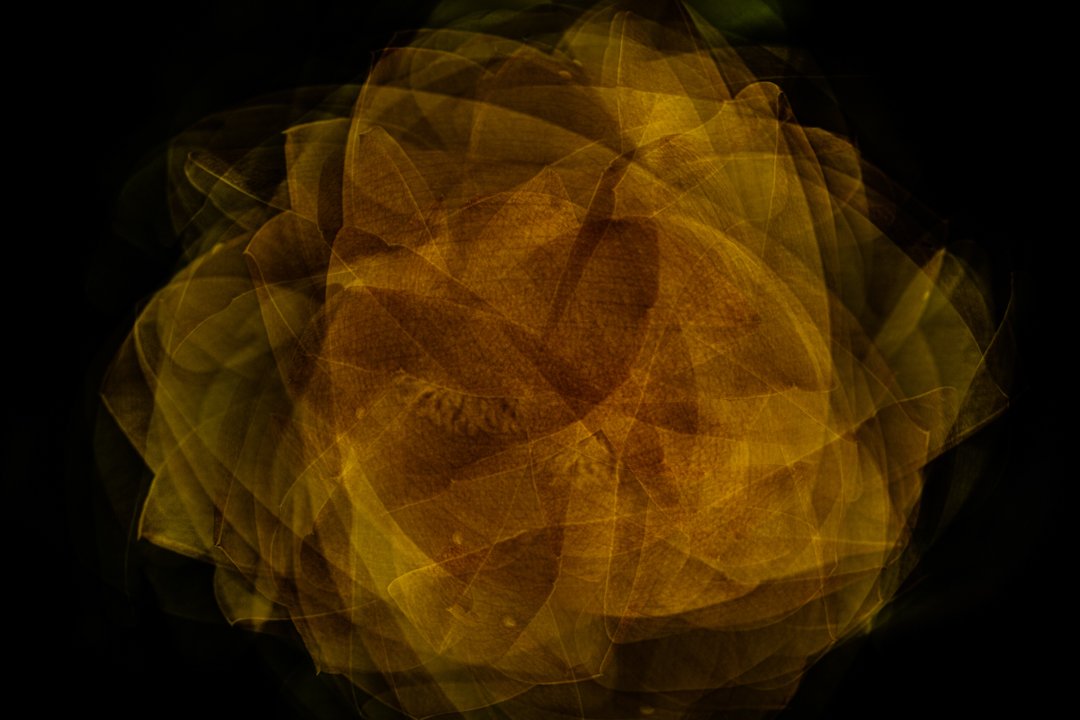
Zhang Shuguang, from the series Beyond Appearance, [2021]. Digital photograph
I returned to that hillside where, as a child, I crouched to watch flowers. That wildflower — whose scientific name I still do not know — swayed in the April wind.
Using a full-frame camera with a 100mm fixed lens, in multiple-exposure mode, I set the shutter between 1/4 and 1/125 second. Before each exposure, I shifted the framing through tiny movements of my own body, leaving three to five overlapping, slightly offset traces of the same flower on the negative. While shooting, I deliberately looked away from the viewfinder, pointing the lens only roughly toward the flower, making extremely slow circular motions with my wrist, in time with the rhythm of the wind. In the end, the figurative outline dissolved completely, replaced by a surging mass of light and color — veins of gold-brown and amber forming a whirlpool-like bloom at the center of the frame, layered transparent wing-like forms unfurling like petals, their edges gradually swallowed by a deep, pure black. If images have a scale of “sharpness,” this one could be described equally as “excessively blurred” or as “having escaped the constraint of focus.” The viewer cannot identify “what flower this is” — but this is exactly the state I wanted: only when botanical naming fails does the flower, for the first time, get seen as the flower itself.
It lets us see that the most cutting-edge visual experiments may draw their force from the oldest homesickness; that the most abstract image-making may be grounded in something a child once felt beside a stream, before a flower, on his mother's back — an ineffable yet utterly real, primordial feeling of oneness with the ten thousand things. This feeling is the same as the sensation of mud welling up between bare toes stepping into a paddy field; the coolness of mountain wind on skin, the cold of stream water rising past the ankles; that perceptual state not yet named, not yet classified.
A detail concerning perception in the field: on the day I shot Beyond Appearance, I crouched before that flower for about forty minutes. At one point, a bee lingered among the blossoms for about three seconds, then flew away. My shutter did not capture that bee — it was too fast — but I remember its presence. That “remembering” is not knowledge-based, but a bodily sense of presence: while I crouched there, between myself and the flower, the wind, and that bee, there was no “meaning” that needed to be produced. In those forty minutes, nothing happened, and yet everything was happening. Those forty minutes are closer to what I actually want than any single work finally selected for exhibition — and the “work” is nothing more than a search for a container that can be shared, for those forty minutes.
Zhang Shuguang, from the series Beyond Appearance, [2021]. Digital photograph
IV. Perceptual Politics: Resistance as an Ethics of Seeing
In The Return to the Origin, I positioned my own stance as “pre-political” or “meta-political” — restoring, before political discourse forms, the capacity to meet the thing sincerely. This formulation deliberately keeps my practice at a distance from the social engagement, identity politics, and institutional critique common in contemporary art. But this distance itself needs further clarification: is it avoidance, or a conscious, strategic choice? If the latter, what exactly is the relationship between “the pre-political” and politics itself?
Let me begin from the most honest place: my work does not, in fact, speak directly of power, class, race, or gender. It offers no slogans, takes no side, signs no joint statement with any camp. If someone concludes from this that my work is “not political enough,” I will not argue — from the standpoint of traditionally understood political art, that judgment is accurate.
But in my own understanding, what I do carries a more fundamental political character — it does not participate in the discussion of established political issues, but questions, at a deeper level, “the very perceptual premise on which politics is able to operate.” Let me try to unfold this seemingly contradictory position.
Zhang Shuguang, from the series Seeing Without Seeing, [2024]. Digital photograph
First, as a practice of “perceptual politics”: resisting the alienation of seeing.
The deepest violence of contemporary visual culture may lie not in which specific ideological content it disseminates, but in the way it fundamentally alters our very mode of “seeing.” Advertising, screens, short video, algorithmic recommendation — these technical apparatuses together shape an entirely new visual regime: attention is precisely cut, captured, and sold; seeing is no longer a free perceptual activity, but a consumption behavior fully monitored and guided. Under this visual regime, “gazing” becomes “browsing,” “examining closely” becomes “scrolling,” “encounter” becomes “refresh.”
What my practice resists is precisely this total instrumentalization of seeing. When I stand before a forgotten wall, spending twenty minutes, forty minutes, an hour gazing at its mottling and flaking — this act, in itself, is a small but real refusal of the attention economy. I need shout no political slogan; the act itself is already a political, bodily practice: it tells the eye trained by algorithms to linger only three seconds — you can stop, you can search for nothing, you can simply look.
This may be resistance at the level of what Foucault calls “micro-power” — not confronting the state or capital on the macro-political stage, but reclaiming control over one's own perception at the capillary level of daily life. My “minimal intervention” is not intervening in the wall — it is intervening in my own habits of seeing, already shaped by technology.
Second, the wall as a silent archive: the politics of forgetting and the politics of memory in urban space.
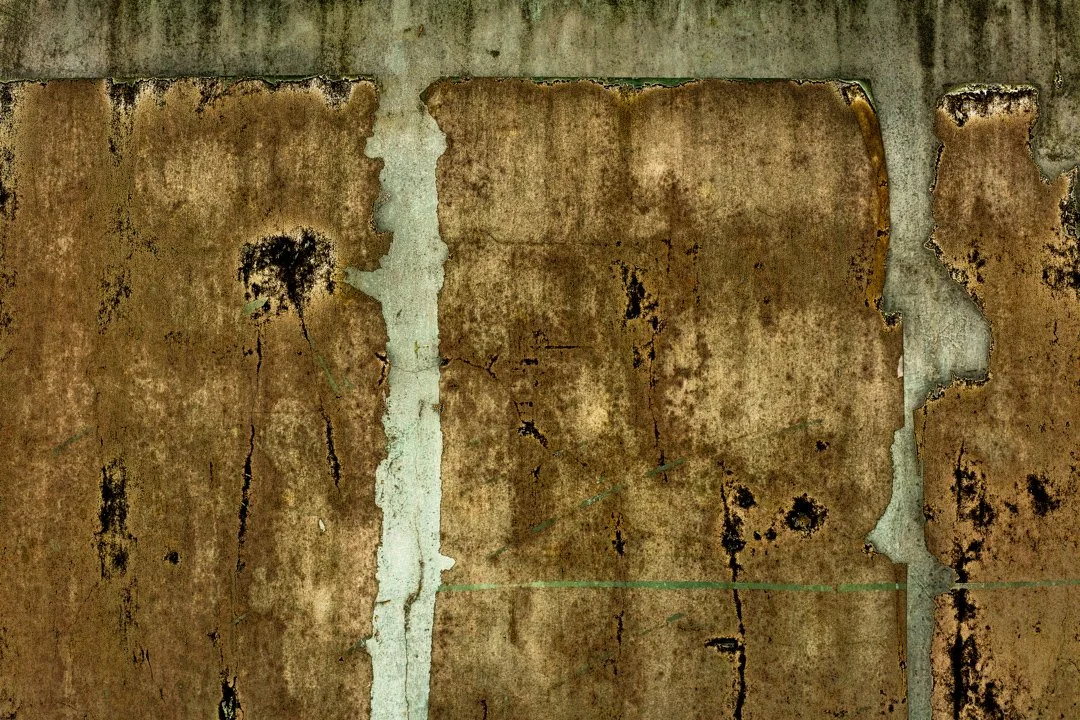
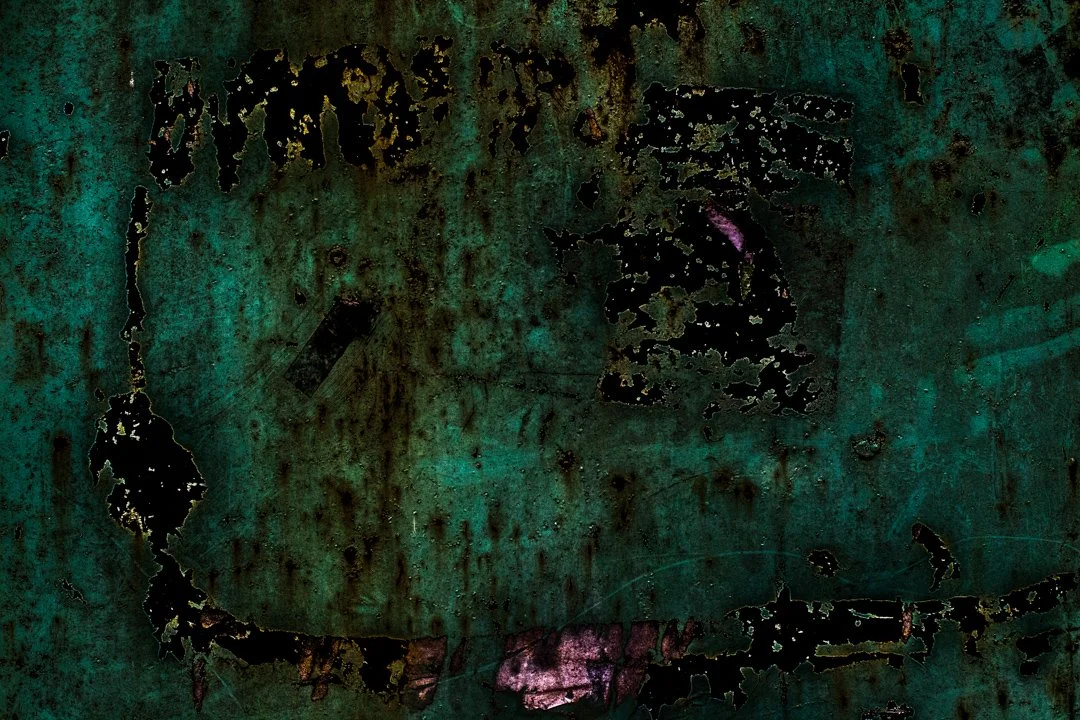
In Seeing Without Seeing, the walls I gaze at — the outer walls of abandoned factories, the gable walls of old residential districts, the rain-eroded bases of billboards — are not neutral aesthetic objects. They are silent witnesses to the operation of power in urban space.
Every wall carries a forgotten history. Beneath the flaking paint may lie slogans from different eras, repairs from different periods, traces of different owners. The city is continually renewing itself — tearing down the old, building the new, whitewashing, erasing graffiti — and every renewal means some memory is legitimately erased. What I do is not to “rescue” these memories (that lies beyond photography's capacity), but to let these forgotten surfaces regain a right to be gazed at — to let them rise up from the everyday background of “not worth looking at,” becoming faces that can be quietly regarded.
Zhang Shuguang, from the series Seeing Without Seeing, [2024]. Digital photograph
In this sense, Seeing Without Seeing forms a hidden dialogue with the politics of memory in urban space. I do not record these walls' addresses, histories, or social backgrounds — that is not my mode of working — but I give them the chance to be seen. The corners of a city not considered “scenery” constitute the city's true body. They are overlooked by mainstream visual narratives, and my gaze is a form of respect for the marginal, the forgotten, the not-considered-worth-recording.
And yet I cannot avoid a more specific question: are the communities where these walls stand undergoing gentrification? Beneath that flaking paint, does it cover a generation's memory of dwelling? When I “purify” a wall out of its social context into a pure visual phenomenon, am I also, at the same time, stripping away its identity as a witness to social history?
I believe the boundary of perceptual critique lies not in “whether social history is allowed into the field of vision,” but in “the manner by which it enters the field of vision.” If I directly recorded these walls' addresses, photographed residents' portraits, compiled oral histories — that would not be my language; that is the language of social documentary photography or social investigation. My language is the gaze — a way of seeing that is not eager to convert what is seen into knowledge or evidence. The social history carried by this gaze does not appear in the form of information, but in the form of “the materiality of the trace itself” — those flaking layers of paint, those fragments of covered-over slogans, those patterns carved by rainwater, are themselves already the body of social history. They need not be translated into words; they are already speaking — in a silent language that requires no decoding.
Therefore, my “depoliticization” is not a denial of the social dimension, but a choice about the mode of artistic engagement. I believe that letting a wall be gazed at in its own way — not quickly classified, named, archived — is, in itself, a resistance to the politics of forgetting. Social history is not elsewhere; it is right there, in that wall's mottling and flaking. If a viewer feels, in the work, some weight or silent force, that feeling was not placed there — it was awakened. It was already there; I only did not point at it with words.
Zhang Shuguang, from the series Seeing Without Seeing, [2020]. Digital photograph
I must also respond to a question that has long unsettled me — a curator's blunt remark after viewing Seeing Without Seeing: “These walls are beautiful, but isn't beauty just another form of decoration? You want to strip away meaning, but you've manufactured a new aesthetic pleasure instead.”
I still have no definite answer, but I have arrived at a more precise way of thinking about it. An image hung on the wall of a middle-class living room produces an entirely different effect than the same image displayed within an abandoned factory. When “mottling” and “flaking” become a market-endorsed sign of “refined taste,” my work may indeed be effortlessly absorbed by consumerism. This is the fate faced by any resistant practice: even as it resists the institution, the institution stands ready, at any moment, to convert that resistance into a commodity.
And yet, I believe the efficacy of “perceptual politics” does not occur at the moment a work is hung — it occurs at the moment the work is seen, or more precisely, after the viewer has left. I admit this resistance is extremely fragile, with no guarantee that it will even occur. But perhaps acknowledging this uncertainty is precisely what distinguishes perceptual politics from traditional political mobilization — it promises no outcome, only a posture. If a viewer, standing in the gallery, feels a moment of quiet, and that quiet causes them to pause one extra second, later, while scrolling their phone, as the algorithm pushes the next piece of content at them — that second is the instant politics occurs. I cannot control how a work will be collected, priced, or turned into decoration. But I believe that every genuine encounter of seeing leaves an extremely fine, invisible scratch on the viewer's perceptual structure. Enough of these scratches, accumulated together, might change how someone stands before the world.
Zhang Shuguang, from the series Seeing Without Seeing, [2024]. Digital photograph
[▲ OOO Supplement 2: Calibrating Perceptual Repair — Promising No Arrival, Only a Posture]
Here, object-oriented ontology offers me a necessary calibration. When I say “repairing the capacity for sincere encounter between person and thing,” OOO reminds me: “encounter” can never be direct — the thing always remains, outside all of its relations, withdrawn. What my practice repairs is not the capacity for “fusion with the thing itself” (which is ontologically impossible), but a “posture oriented toward the thing” — a mode of approach with less violence, more waiting, less naming, more listening. I do not promise to make the thing “manifest itself”; I only promise that, standing before the thing, I will not rush to convert it into knowledge, resource, or sign. This is a repair of ethical posture, not an epistemological breakthrough.
In this sense, the foundation of “perceptual politics” is not “I can make the thing open itself to me,” but “I accept that the thing has the right to remain silent toward me, and I still choose to stand there.” In those “successful” experiences — coexisting with the mottling of a wall, falling into the same rhythm as a swaying flower — the boundary between thing and self softens, concept steps aside, a “co-presence” occurs. As for whether this “co-presence” touches the thing's real core — I cannot prove it. But the promise of perceptual politics does not lie here — it offers no ontological guarantee, only an ethical posture: even if arrival is impossible, I still choose to stand there.
Zhang Shuguang, from the series Beyond Appearance, [2025]. Digital photograph
Third: nature and ecological thought — from botanical classification to the manifestation of life itself.
If the wall-gazing is a silent response to the politics of memory in urban space, then the photographing of flowers, trees, and stones in Beyond Appearance resonates, in another hidden way, with contemporary ecological discourse.
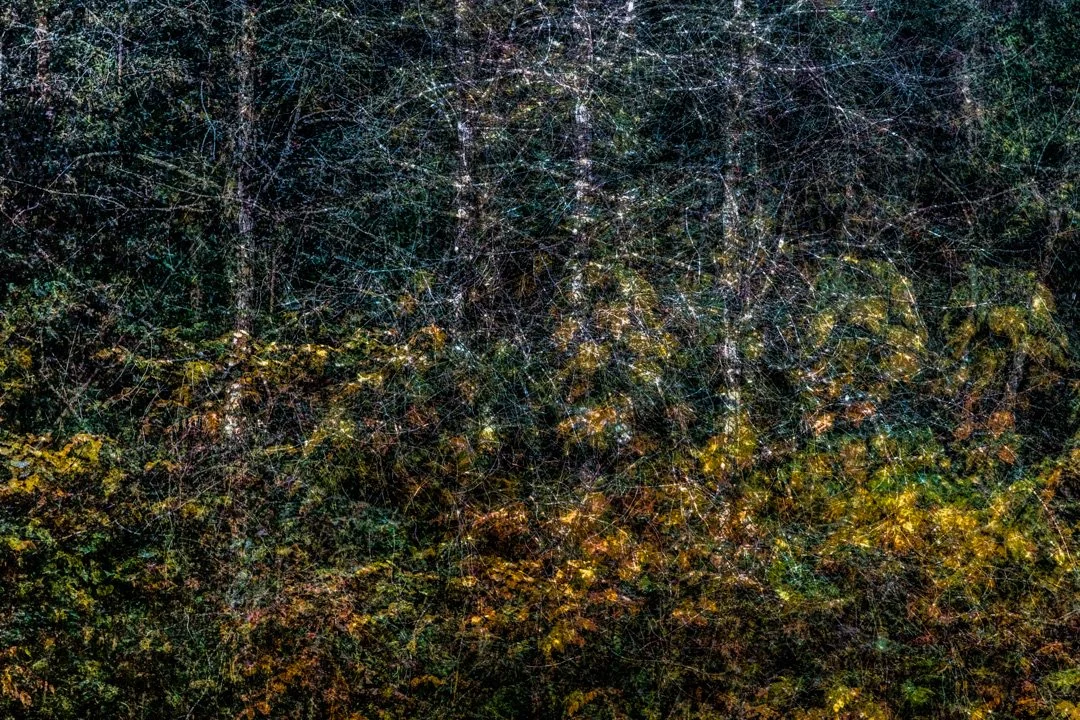
When I release a flower, a tree, a stream-side stone from botanical or geological naming, letting them become rivers of light, fields of color, the tremor of water's surface, what I resist is not only a classificatory habit internal to art history, but a deeper violence of modernity: folding all things into the human system of knowledge, assigning them function and value, making them resources available for use. Botanical naming is itself a colonial history — the establishment of the Linnaean system proceeded in step with European global expansion, and behind the naming of every plant may lie the erasure of indigenous knowledge and an intent to possess natural resources. The methodological foundation of this “letting the flower be only a flower” kind of seeing may lie not in any Eastern aesthetic principle, but in those barefoot childhood experiences roaming the hills — gathering wild greens, climbing trees, jumping into streams, watching my father's spring plowing from a hilltop, crawling out of a thatched hut on a frosty night surrounded by moonlight and frost. In that time, perception was not “about” the world; it was within the world. Vision had not yet separated itself from touch, smell, and hearing to become a privileged organ of its own. What Beyond Appearance does is nothing more than an attempt, through lens and light, to recall that whole, not-yet-fragmented perceptual state.
Zhang Shuguang, from the series Beyond Appearance, [2023]. Digital photograph
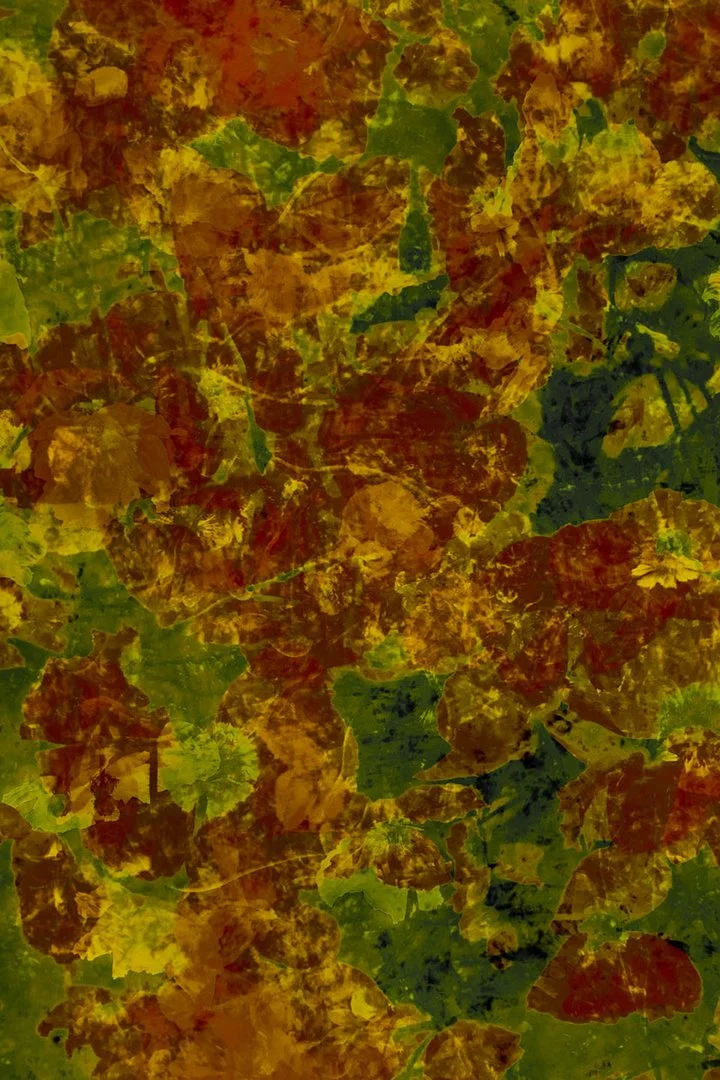
My work does not directly narrate this history, but in its operation I try to let the flower return, from “the named thing,” to “manifested life” — not as medicine, food, ornamental plant, or ecological indicator, but simply as an unrepeatable flow of light and color. In an age of accelerating species extinction and the total instrumentalization of nature, this kind of seeing — “letting the thing be only itself,” whether flower, tree, or a stretch of water — may, in itself, constitute a gentle resistance: a resistance to the cognitive violence that reduces the ten thousand things to resource, a resistance to the anthropocentric habit of vision.
This led me, in shooting Beyond Appearance, to make a choice contrary to conventional photography: not pursuing a “clear rendering of the flower's form,” but letting it become unrecognizable through multiple exposure and motion. This operation is itself a metaphor — only when a flower no longer appears in the guise of “an identifiable species” does it escape the human system of knowledge and return to its own vital nature. This “unrecognizability” is not blur, but an active refusal — a refusal to become an entry in any classificatory system.
Zhang Shuguang, from the series Beyond Appearance, [2025]. Digital photograph
Fourth: the relationship between repairing perceptual capacity and social engagement — foundation and superstructure.
The logical structure of what I call “the pre-political” can be understood this way: any meaningful political action — whether environmental protection, social justice, or cultural critique — presupposes that the actor is capable of perceiving the world sincerely, unhijacked by concept. If our eyes have already been trained by advertising to recognize only consumer signs, if our attention has already been fragmented by algorithms, if we can no longer stand quietly before a tree for ten minutes — then any grand political agenda becomes a tree without roots.
My work does not serve any specific political issue directly, but it tries to repair the perceptual soil in which all political action is able to take root. This is a kind of “infrastructure” work — inconspicuous, producing no immediate effect, but without which nothing built on top of it can stand firm.
This is not a denial of political participation, but a self-aware division of labor: some people confront power directly, organize protest, push legislation — that work is essential; my work happens in a quieter place, at the root of seeing, at the moment attention is reclaimed. The two are not substitutes for each other, but complements.
Fifth: an open self-awareness — acknowledging the limits of this framework.
What I have said above is my current understanding of the political character of my own practice. I acknowledge that this framework has its boundaries. First, I must say honestly: my work has, indeed, never directly changed anyone's material circumstances. It provides no housing, lowers no prices, stops no wars. If someone concludes from this that it is “not political enough,” I will not argue. What I can do is choose, among the many ways of “changing the world,” the one closest to my own nature — not changing others' actions, but repairing the severed perceptual relationship between person and thing. Second, if my work, in the future, begins to touch more specific social issues, then the “pre-political” framework I state now will need to be adjusted. I will not refuse the work's own growth for the sake of preserving theoretical coherence. On the contrary, I trust that the work itself will go further than my theory. Theory always lags behind practice — this is something any honest thinker should accept.
I am willing to restate my current position as a form of “perceptual politics” — not the absence of politics, but a political practice occurring at the level of perception, whose goal is not to directly change social structure, but, at a more fundamental level, to resist the total alienation of seeing, and to repair the capacity for sincere encounter between person and thing.
Writing this, I think of my father. A few years ago, after a New Year's Eve dinner, he asked me to go for a walk with him. I asked which road we should take. He said: “The road comes from walking.” These four words state the whole meaning of “perceptual politics” more simply than any political philosophy — presupposing no path as correct, marking out no battlefield of resistance in advance, only walking, and letting resistance find its own direction in the walking itself. Perceptual politics, in the final analysis, is nothing more than “the road comes from walking.” When my father said these four words, he did not know what “perceptual politics” was, and had never read any theory. He had simply walked a lifetime of roads, and then, one night after a New Year's Eve dinner, handed these four words to his third son — me. What I have done is nothing more than rename it, in images and words. Naming is not origination; the origination is my father, and his silence — and the whole wisdom, carried by that silence, of generations walking the land without speaking of it.
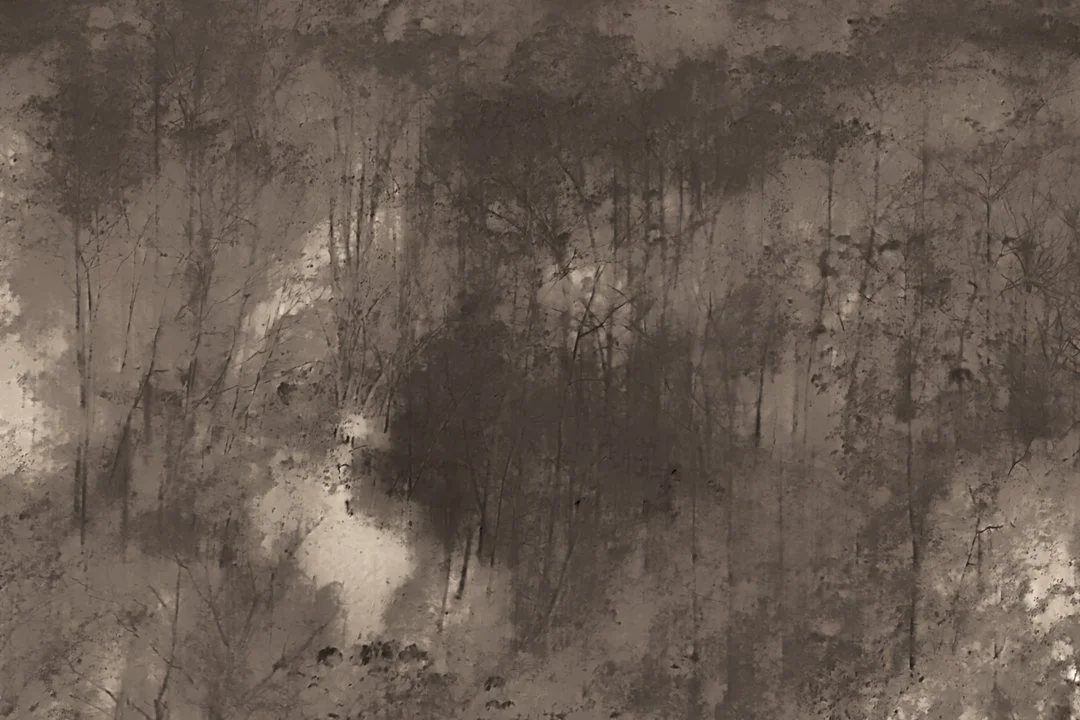
Zhang Shuguang, from the series Beyond Appearance, [2023]. Digital photograph
Reflexive Note Two: Has “Theory” Itself Become a New “Contest of Ideas”?
I must pause here, to respond to a doubt that may arise from within myself. When I position “perceptual critique” as a form of “infrastructural” political practice, am I only engaged in a more refined production of ideas? Isn't mainstream contemporary art criticism today itself trapped in the surface contest of idea, concept, notion? In what sense is my “suspend—gaze—purify—release” not just another “-ism” available for debate, citation, taking sides?
Is it really repairing perception, or is it manufacturing a discourse about “repairing perception”?
When my father said “the road comes from walking,” there was no theory, no manifesto, no four-step method. He simply walked. And I, after writing these tens of thousands of characters, am I closer to that night after the New Year's Eve dinner, or further from it?
Einstein said the universe is comprehensible. My father said the road comes from walking. Between the two is not a matter of right and wrong, but a shift of posture: from folding everything into comprehension, to releasing comprehension back into walking.
Chan's “not establishing words” has, in the end, left behind mountains of recorded sayings — this historical paradox, too, I cannot escape. Every word I write may be reinforcing a wall I originally wanted to tear down: the wall standing between “perception” and “discourse about perception.” This self-awareness cannot cancel my writing, but it demands that I maintain, throughout the writing, a posture of retreat — like someone writing in the sand on a beach, knowing full well the tide is coming.
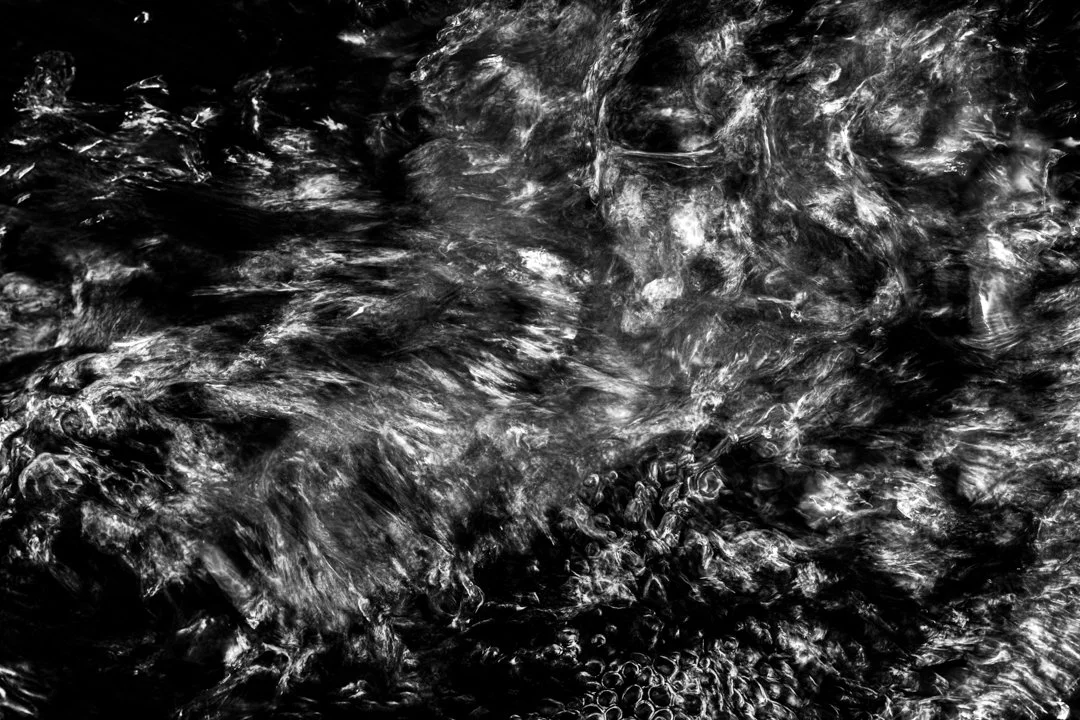
Zhang Shuguang, from the series Beyond Appearance, [2020]. Digital photograph
V. The Genealogy of Seeing: The Same Underground Water Table, Surfacing in Different Places
The Return to the Origin devoted considerable space to addressing the risk of “Orientalism,” and made several rounds of self-correction. But a deeper question remains untouched: is the “East/West” framework itself even the best way to discuss “difference”?
Foucault's theory of the episteme and Crary's archaeology of vision offer an alternative. Rather than saying that “how Easterners see” and “how Westerners see” differ in essence, it is more accurate to say: different cultural traditions have deposited different genealogies of seeing — each mode of seeing constructed under specific historical, technical, and epistemic conditions. No mode of seeing is “natural” or “essential”; each has its own conditions of emergence, its trajectory of evolution, its moments of rupture.
From this perspective, my practice need not be described as “the Eastern way of seeing responding to the Western abstract tradition.” A more accurate description might be: I am an individual who grew up in a particular cultural soil, and the perceptual habit I carry — that manner of “letting the thing show itself,” of “resonant communion” — is itself a historically formed genealogy of perception.
The source of this genealogy can, of course, be traced to the tradition of seeing opened by the Yijing's “observing images and patterns,” Zhuangzi's “things as their own measure” and “I have lost myself,” Chan Buddhism's directly-pointing intuition of “not establishing words” — but these elite texts are not the whole of my perceptual foundation. The more immediate source lies in my grandfather's brush and footsteps, my grandmother's scissors and prayers, my father's silence and “the road comes from walking,” those long, silent summer days in the mountain orchard, those evenings of barefoot running across the hills and the moonlight that woke me on frosty nights, and the television advertisements and roadside product posters that flooded into the hills in the 1980s.
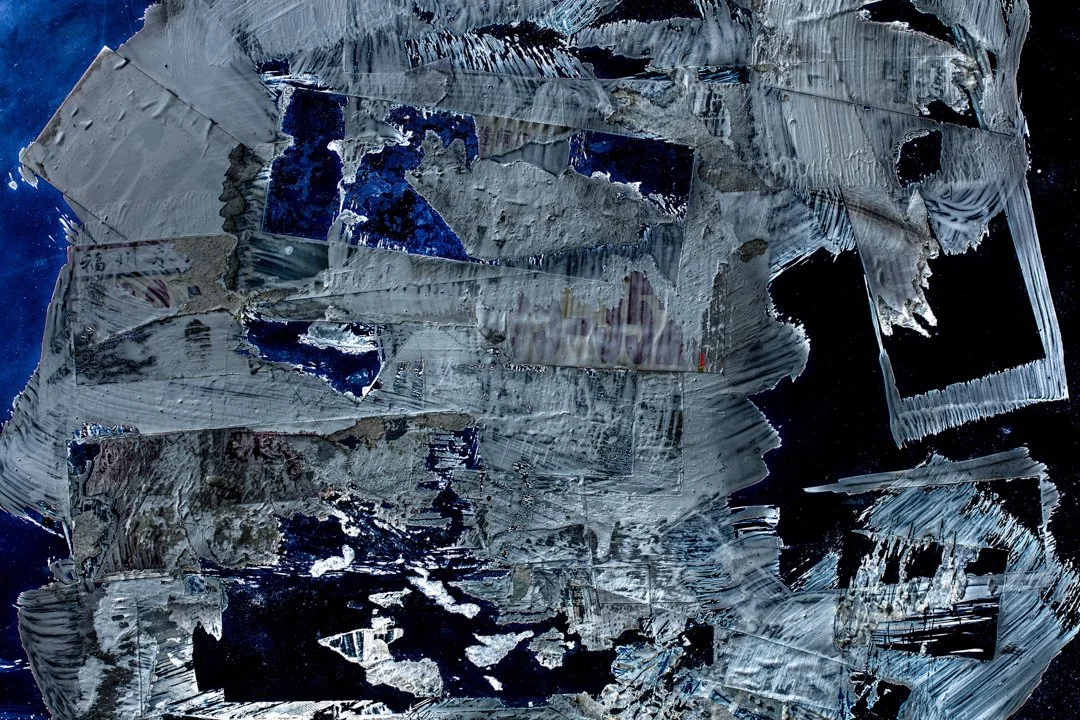
Zhang Shuguang, from the series Seeing Without Seeing, [2022]. Digital photograph
But before this narrative, I must first offer an important clarification: when I juxtapose “the elite” and “the folk,” I am not describing how they were actually divided within my childhood experience. My grandfather's mastery of the Yijing, his operation of the geomantic compass, his presiding over village temple rites — in his hands, these were never separated into “elite theory” and “folk practice”; they were different facets of the same way of responding to the world. The scriptures he read, and the Azure Dragon and White Tiger he taught me to recognize on the mountain path, sprang from the same gravity toward the world. Likewise, my grandmother's paper-cutting, the hymns of the church, the daily needlework — they shared the same trust in “passing through,” standing in subtle contrast to literati painting's pursuit of “eternal preservation.” This contrast is not one of superior and inferior, but the same perceptual spring flowing at different speeds through different riverbeds. The Yijing, Zhuangzi, and Chan that I later read were not the starting point of this genealogy, but found a language for a perceptual experience already deposited in my life. The distinction between “elite” and “folk” is thus an analytical tool imposed after the fact, not a division true to the childhood experience itself. In my telling, they are separated out only to help the reader trace different threads — but on that childhood earth, they had never been divided at all.
Turning this discussion from “East-West dialogue” toward “the genealogy of seeing” is not because I have found a more correct framework, but because this path lets several things, previously unable to be placed, become speakable. First, it avoids the trap of essentialism. I no longer say “how Easterners are,” but “how the tradition of seeing I have inherited is” — an experiential, specific statement, rather than a claim about cultural essence. Second, it opens new space for cross-cultural comparison. Foucault's “pure gaze” and my “letting the thing show itself,” Crary's “observer” and the “version of me who hasn't started photographing yet” from my own childhood, the direction my grandfather's finger pointed when teaching me to recognize the Azure Dragon and White Tiger, and the “painting-as-thing” Foucault identifies in Manet's work — these juxtapositions are no longer an “East vs. West” dialogue, but an encounter between different genealogies of seeing within the same global space of thought. Third, it offers “return” a more precise positioning. “Return” is no longer “returning to an Eastern origin,” nor to any single elite tradition, but a return to the entire stratum of the genealogy of seeing I have inherited — that rainy day on my mother's back, that flower beside the pigsty, my grandfather's study where he copied books, the lamplight under which my grandmother bound manuscripts, the night my father said “the road comes from walking,” the sensation of bare feet stepping into a paddy field, the moment of crawling out of a thatched hut on a frosty night surrounded by moonlight and frost, the first advertisement flickering on a television screen. Each of these origins is specific, personal, unrepeatable — but together they constitute one drop within a larger perceptual tradition.
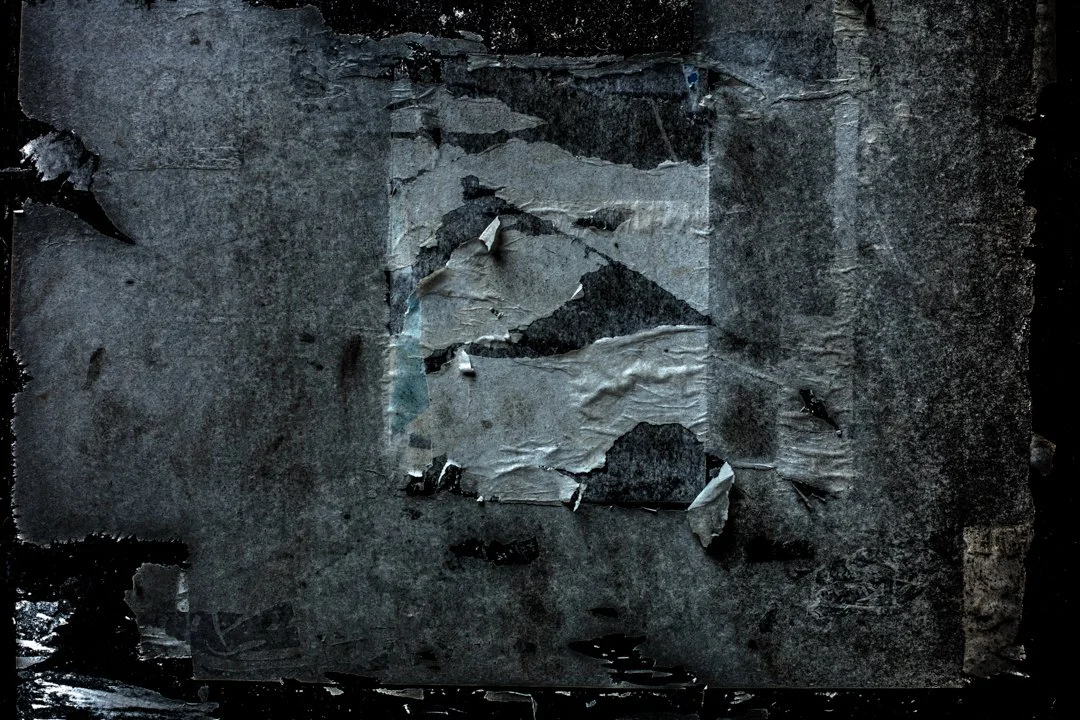
Zhang Shuguang, from the series Seeing Without Seeing, [2022]. Digital photograph
A River Changes Course: The Elite “Contemplation of Things” Tradition, and Its Ossification
Let me try to sketch the rough contour of this genealogy — not as a final conclusion, but as a starting point for further inquiry.
In the Xici commentary to the Yijing, “observing” is first of all a form of ontological participation — the sage “looking up to observe the images in the heavens, looking down to observe the patterns on the earth”; observing is not a subject examining an object, but a resonance between person and heaven-and-earth. This kind of “observing” has not yet differentiated a clear boundary between “observer” and “observed”; thing and self interpenetrate one another in resonant communion.
By the time of Zhuangzi, “observing things through things” further suspends the anthropocentric perspective — letting the thing manifest in its own way, rather than being measured by the human scale. This is a methodological self-awareness: the obstacle to seeing lies not in the eye, but in that stubborn “self.” Zhuangzi's “I have lost myself” is precisely an attempt to let this self — which continually projects meaning, continually renders judgment — step aside for a time.
In the Tang and Song periods, Chan Buddhism pushed this tradition of seeing toward a more radical dimension — “not establishing words” is not opposition to language, but points toward an intuitive state prior to language, before concept has yet hardened. In literati painting, “investigating things” and “writing the mind,” though emphasized differently in different periods, share the same underlying thread: the purpose of painting is not to represent the appearance of things, but to convey that sense of resonant communion — a communion occurring at the level of the dào — felt by the painter upon meeting the thing.
Along the thread of natural things, from the Song-dynasty flower-and-bird painters' “investigating things to extend knowledge” — the meticulous observation of a single blossom's physical structure — to the persimmons rendered in Muqi's Six Persimmons with the most minimal ink, revealing the thing's own nature, to the white-eyed fish and birds of Bada Shanren — the core remains consistent throughout: releasing flower, bird, fish, and insect from the moral metaphor and emotional projection assigned to them by humans, letting them return to a state of manifestation as “merely a flower, merely a bird.” The work of Beyond Appearance is precisely to transplant this natural-thing thread's spirit of seeing from rice paper and ink onto the digital sensor — replacing the diffusion of ink with multiple exposure and motion, replacing the brush's texturing strokes with the trace of light — but still pointing toward the same question: once a tree has been stripped of botanical naming and literati projection, in what manner will it “exist”?
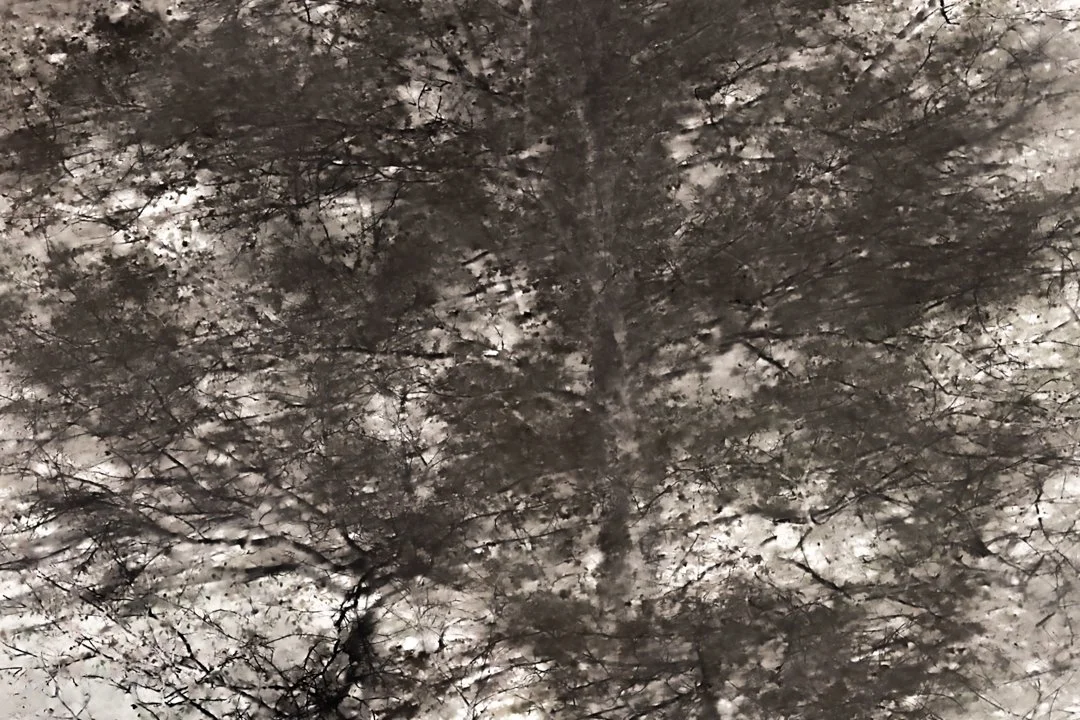
Zhang Shuguang, from the series Beyond Appearance, [2023]. Digital photograph
This genealogy achieved its fullest development within the literati painting tradition — from Fan Kuan's “composing intent from the scene before him” to Ni Zan's “sparse, cursory brushwork,” from Shitao's “searching out all the strange peaks to draft,” to the white-eyed fish and birds of Bada Shanren — every turn responded to the same question: how can the thing retain its own nature within my seeing, rather than being tamed into a vehicle of meaning? This question was answered differently under different historical conditions, but the question itself never disappeared.
But if the writing of this genealogy stopped here, it would be a dishonest nostalgia. I must point out a truth obscured by a romanticized narrative: in its later period, especially around the Ming-Qing transition, that thread of “letting the thing show itself” within the literati painting tradition had already become severely ossified. Once “sparse, cursory brushwork” became a style available for imitation, once “not seeking formal likeness” became an excuse for evading representational skill, that way of seeing, originally meant to liberate the thing, reversed into a further, programmatic concealment of it. The painter no longer looked at the bamboo outside the window, but painted within a genealogy of “how to paint bamboo” — the thing itself had, by then, already exited the scene.
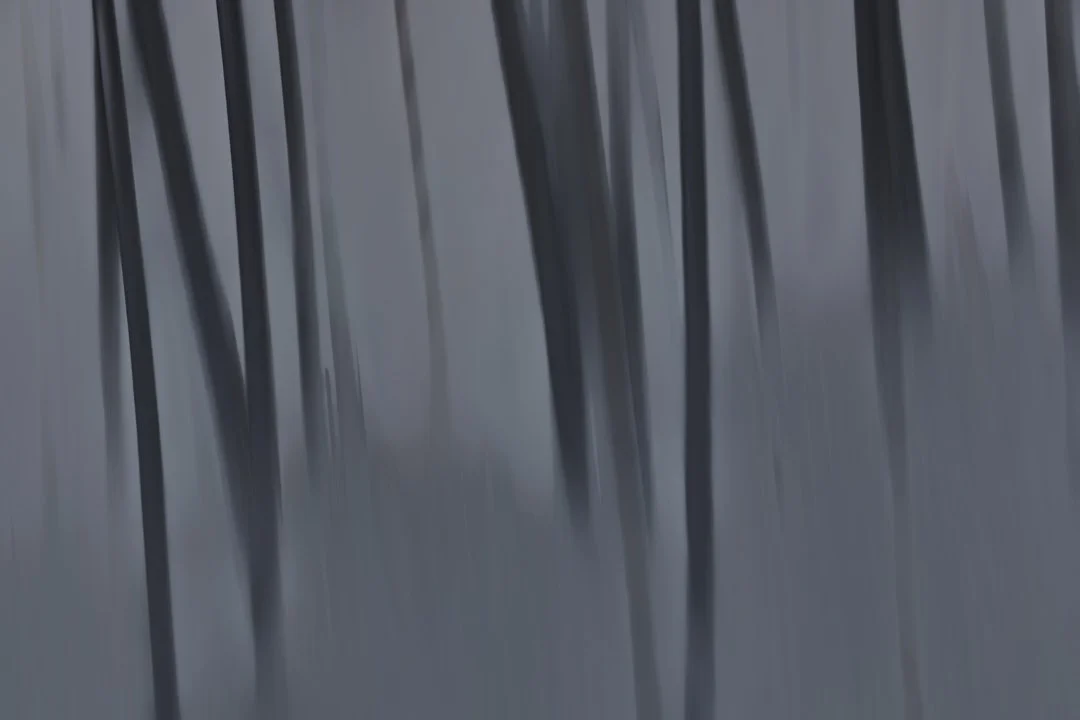
Zhang Shuguang, from the series Beyond Appearance, [2024]. Digital photograph
The specific mechanism of this ossification deserves further dissection. Dong Qichang's “Theory of the Northern and Southern Schools,” dividing painting by “sudden enlightenment” and “gradual cultivation,” in effect established the Southern School of literati painting as an orthodox lineage to be emulated — “learning from the ancients” gradually came to override “learning from creation itself.” As “sparse, cursory brushwork” shifted from Ni Zan's natural expression of individual temperament into a style available for copying, the promise of “not seeking formal likeness” degenerated from a liberating slogan into an evasive excuse. The painter no longer needed to truly face a stalk of bamboo — only to retrieve a formulaic brush-method for “bamboo” from an existing repertoire; no longer needed to encounter mountains and rivers — only to search ancient scrolls for a texturing method that could be borrowed. The thing's exit from the act of seeing was not due to the painter's laziness, but to an institution operating under the name of “inheritance,” which rendered the very act of “meeting the thing” redundant.
What I face now is precisely this fractured inheritance: I cannot pretend those brush-and-ink formulas remain valid, but neither can I deny the direction they once pointed toward — letting the thing retain its own nature within my seeing — remains a question I am willing to spend a lifetime pursuing.
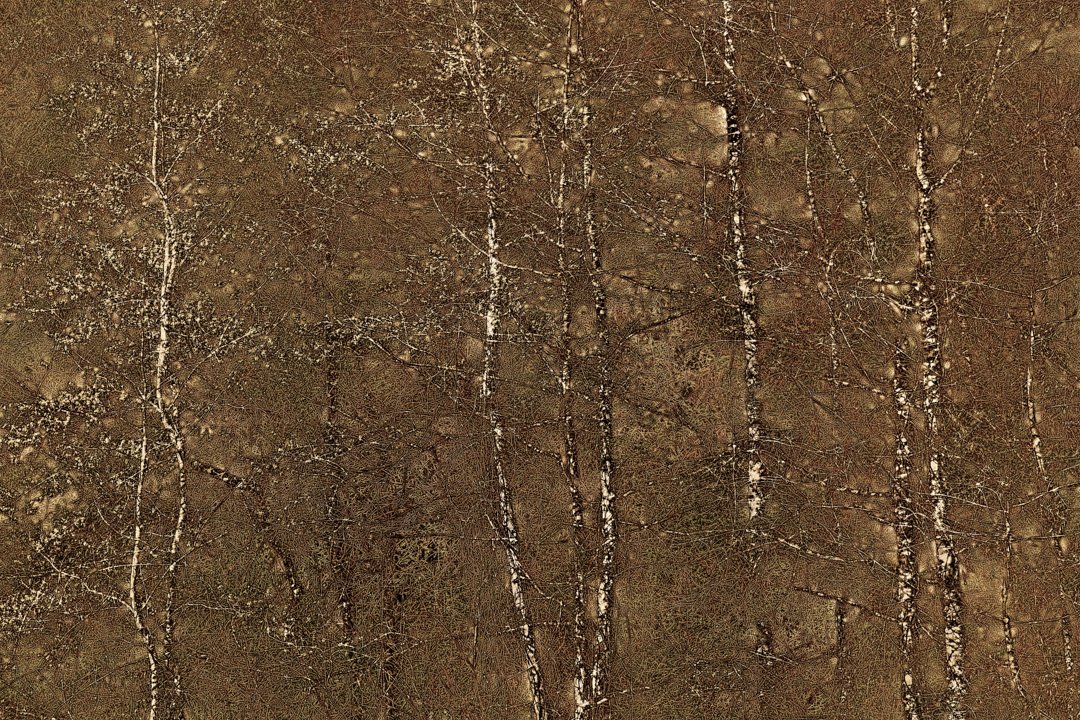
Zhang Shuguang, from the series Beyond Appearance, [2024]. Digital photograph
So what is the fundamental difference between “contemporary return” and “traditional revivalism”? The revivalist believes the answers of the past remain valid; the Returner believes only that the questions of the past remain valid. The revivalist tries to return to some romanticized technique and style, while what I do is acknowledge that that period has irreversibly ended, but the fundamental inquiry it opened — how to meet the thing before concept and naming — still waits, today, to be asked again. This forgotten wall in the city is precisely the road literati painting failed to finish walking, extended, inevitably, into the digital age. I do not paint a landscape-ized variant of “wall”; I let the wall, in its own way — mottled, flaking, eroded by rain — become the new body of that same inquiry. In this sense, contemporary return is not an imitation of the past, but a continuation of the past — continued through rupture, continued invisibly.
This constitutes a deep self-awareness in my work today: I do not possess a “golden age” to which I can directly return. What I have inherited is a fractured, even poisoned legacy. My return is not a return to Ni Zan or Bada Shanren — that is impossible, and unnecessary — but a continuation, in the direction they were unable to complete: how, having discarded their brush-and-ink formulas, to let the spiritual energy they treasured — that “resonant communion with the thing” — find a new body in today's age of digital technology and concrete.
Therefore, my genealogy is not a river that can be traced back to its source, but a slag heap requiring sifting. I extract from it the trace elements useful to me — Zhuangzi's “I have lost myself,” Chan's “not establishing words” — while clear-eyed about discarding what has already died. This is a critical inheritance, not a pious return. This forgotten wall in the city is not a substitute for landscape painting, but the necessary contemporary embodiment of a task landscape painting was never able to finish.
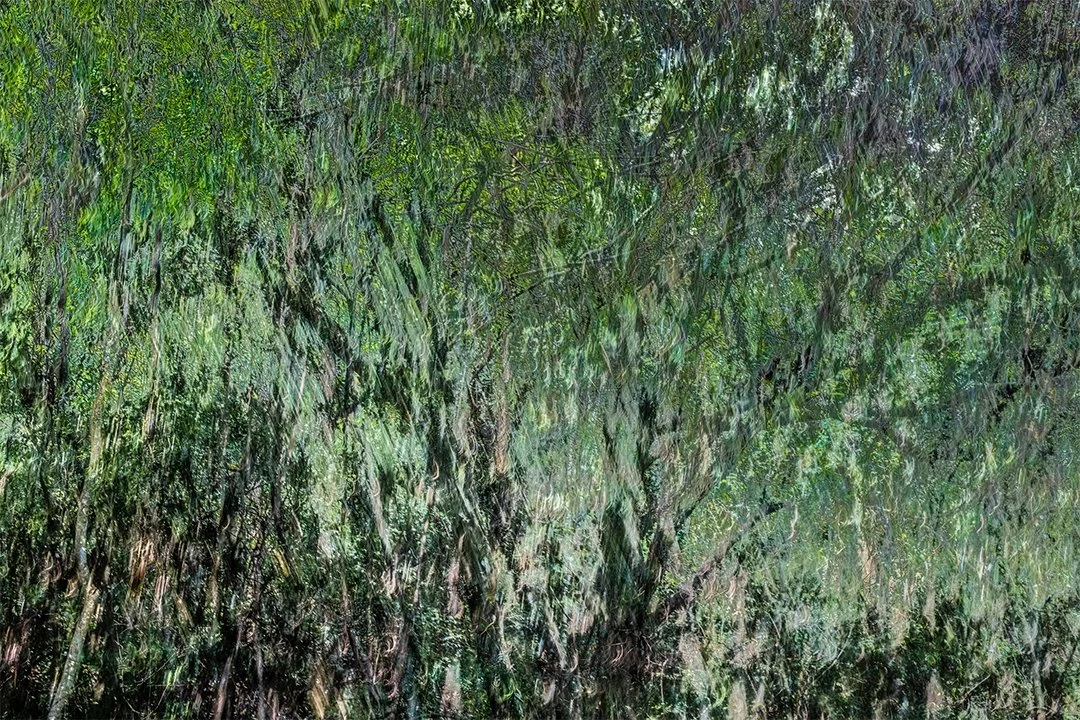
Zhang Shuguang, from the series Beyond Appearance, [2025]. Digital photograph
This genealogy suffered a still deeper rupture in the modern era. The brush-and-ink formulas of literati painting gradually ossified into a self-repeating rhetoric, while Western realism, and later modernism, entered China carrying an entirely different visual logic. The situation I face is doubled: on the one hand, I cannot simply “return” to the literati painting tradition — that world's social foundation, cultural context, and conditions of seeing have all irreversibly changed; on the other hand, I have never truly entered the subjective logic of the Western abstract tradition either. What I occupy is a middle zone — tradition is no longer a home that can be directly inherited, and the West has never become the land where I truly dwell.
It is precisely at this rupture that “return” acquires its true meaning. It is not walking backward, but standing on this shore of rupture, using contemporary media — the digital camera, image-processing software, the city wall, natural things — to reactivate the spiritual energy deposited within that genealogy of seeing. I do not paint landscapes, but I have “seen” landscape in a wall eroded by wind and rain — this is not a metaphor, but that genealogy's visual echo, today. I do not write Chan poetry, but I try, in long exposure and motion, to let a flower escape from botanical naming, returning to a state of “mere manifestation.” From “contemplating things” to “manifestation” — the classical way of seeing reappearing in the digital age; a fractured inheritance reappearing in contemporary practice; the thing, once obscured by concept, reappearing through an operation of subtraction.
This is where the river arrives, having changed its course.
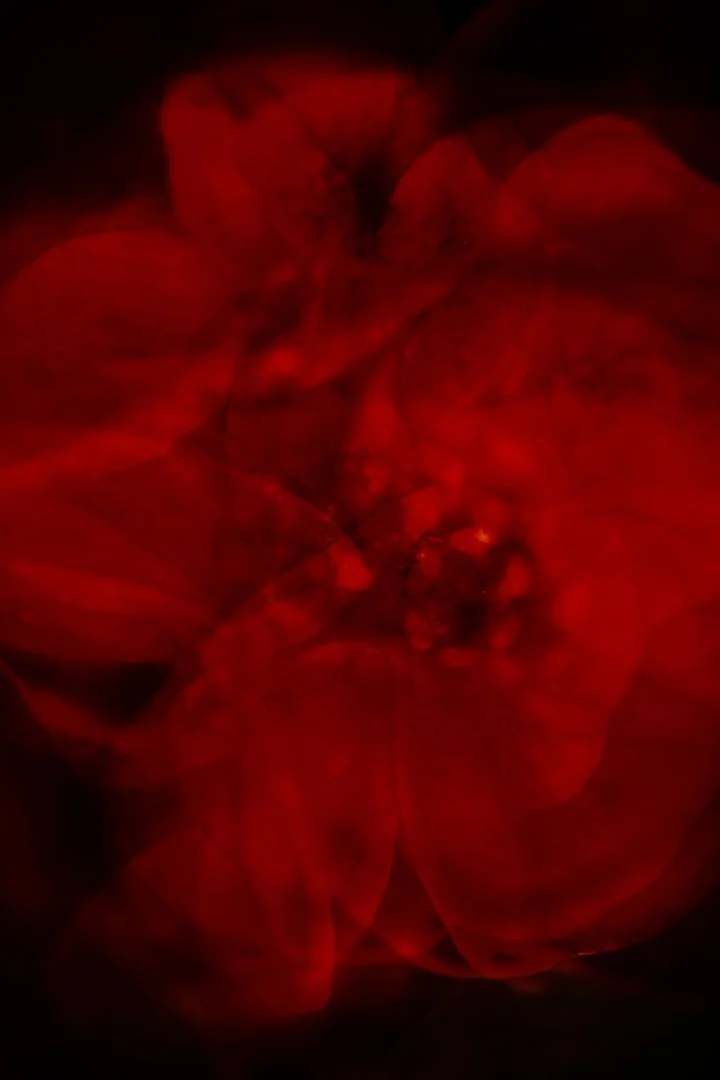
Zhang Shuguang, from the series Beyond Appearance, [2022]. Digital photograph
Another Silent Spring: The Wordless Nourishment of Folk Perceptual Experience
And yet, locking this genealogy solely within the lineage of elite literati culture is an incomplete honesty. I was born in the hills of Yongtai, central Fujian, not in a scholar's study. The child lying against his mother's back did not form his visual experience solely from the spiritual legacy of the Yijing, Zhuangzi, and literati painting — though these later became intellectual resources I consciously trace back to. In the years before I could read, another, more silent, more everyday, more concrete visual current was shaping the ground of my perception. It did not come from books, but from the hands, the rituals, the constantly-touched objects, the long and silent stretches of time surrounding my childhood, and those evenings of barefoot running and the moonlight that woke me on frosty nights.
This spring is not “another river, running parallel” to the literati painting tradition. There is no relationship of “source and tributary,” or “two rivers converging,” between them. They have, from the start, been the same underground water table, surfacing in different places — in the scholar's study, it appears as the elite discourse of “purifying the mind to contemplate the dào”; in my grandfather's study, as the grave brushstrokes on a geomantic manuscript; under my grandmother's scissors, as the translucent red shadow of festival paper-cuts; in my father's mouth, as the simple wisdom of “the road comes from walking.” This underground water table does not care whether its points of emergence are named “philosophy,” “craft,” or “faith” — it simply, continually, quietly seeps up from those lives never cut apart by theory. So rather than saying I am “the confluence of two currents,” it would be more accurate to say I am a particular outcropping of this underground water table — in me, its different points of emergence draw close to one another, forming a single spring that can be seen.
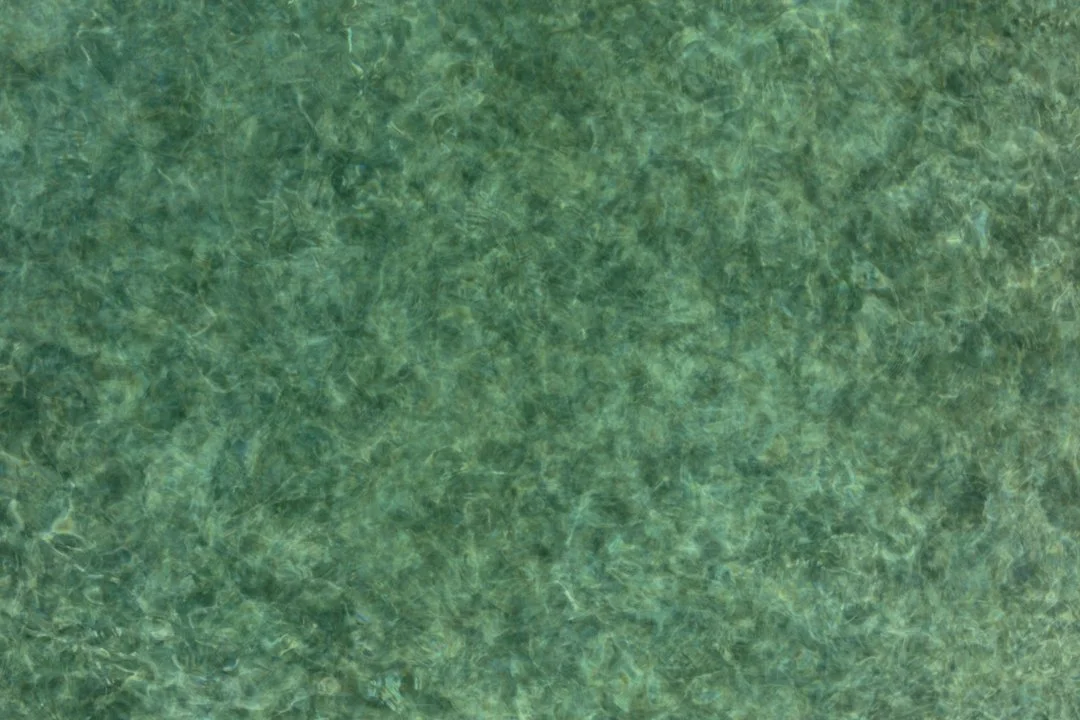
Zhang Shuguang, from the series Beyond Appearance, [2024]. Digital photograph
My Grandfather's Touch: Writing as the Body of Vision.
My grandfather was the village's geomancer, also responsible for divining auspicious dates. Nearly every seasonal observance, wedding, and funeral in the village, along with activities at religious sites, was organized through him. He wrote an excellent hand of calligraphy. In the years before I could read, he would often pull a clean strip of paper from his desk, write a few lines with his brush, and hand it to me to take to the shop to buy something. I clutched that strip of paper walking the field paths, unable to read the characters on it, yet feeling that they had a particular “quality” — an inexplicable charge coming from the brushstrokes themselves. The ink stood slightly raised on the paper's surface, catching a faint gleam in the sunlight; the warmth of my grandfather's palm as he held the brush seemed still to linger upon it. That was my earliest experience of writing — not as a vehicle of meaning, but as a pure perceptual trace, as an extension of the hand, as the bodily remainder of a grave, deliberate physical act.
In that materially scarce era, nearly all the books my grandfather needed for his own use — the geomantic manuscripts, the almanacs for divining dates, the manuals for village rites — were borrowed from other villages, from other masters, and then copied out, page by page, with his brush. The paper was coarse, handmade paper; the ink he ground himself on an inkstone. He copied slowly, but every character was written with the same gravity as positioning a geomancer's compass. Once finished copying, with that same gravity, he would write the book's title on the cover, stroke by stroke — those titles were not printed type, not decoration, but the book's very first brushstroke, from the same hand as the thousands of characters within. Finally, my grandmother would bind the pages into a volume, stitch by stitch, with hemp cord she had processed herself — stripped from hemp stalks, twisted into thread, sized with starch. My grandfather's brush, my grandmother's needle, one book, two people.
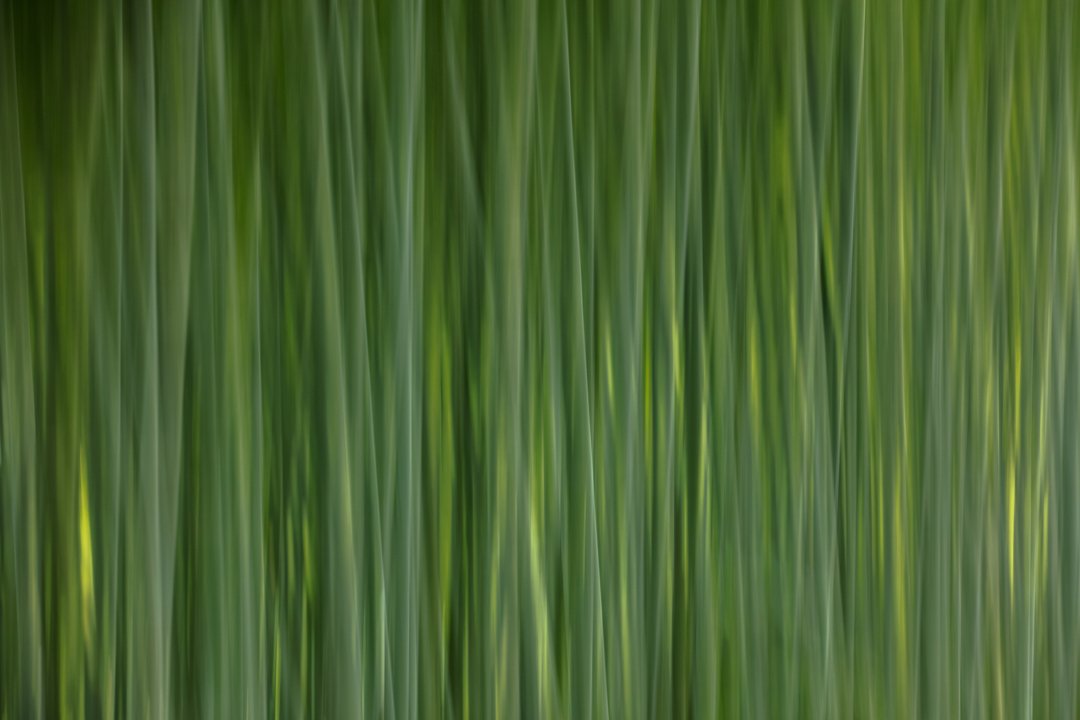
Zhang Shuguang, from the series Beyond Appearance, [2024]. Digital photograph
My grandfather's deep study of the Yijing, his operation of the geomantic compass, his presiding over village temple rituals — in his hands, these were never separated into “elite theory” and “folk practice.” As he wrote, his fingers moved slowly across the densely packed calendrical stems and branches and constellations — not an act of “interpreting,” but an act of “listening,” as though he were waiting for a certain day's name to surface, on its own, from between the pages. This “listening-style reading” and the literati-painting spirit of “contemplating things” are, at the operational level, the very same thing — only occurring in different fields, one in a scholar's study, one before a geomantic compass. My grandfather never read of “the thing-in-itself” or “phenomenology,” but the way he treated those hand-copied manuscripts shares an attitude with phenomenology's call to “return to the things themselves”: not rushing to convert the text into instructions for action, but first letting the text be felt in its own materiality.
Later, my grandfather's skill in geomancy and divination, along with the entire responsibility of organizing the village's seasonal observances, weddings, funerals, and temple activities, was inherited by my father, who carried it on admirably. Those hand-copied manuscripts passed into my father's hands as well, and remain, to this day, in the drawer of my father's desk in our old home — pages yellowed, hemp cord worn thin — objects touched by the hands of three generations.
That “numinous glow”[5] I would later feel again and again while gazing at the mottling of walls in Seeing Without Seeing — that trace co-written by time and the human hand — perhaps its earliest root lies not in any philosophical text, but in those long-lost strips of paper that once read “half a pound of soy sauce” or “three apples,” and also in those manuscripts still kept in the drawer of my father's desk in our old home, pages yellowed, hemp cord worn thin, the title on the cover and the text within written by the very same hand.
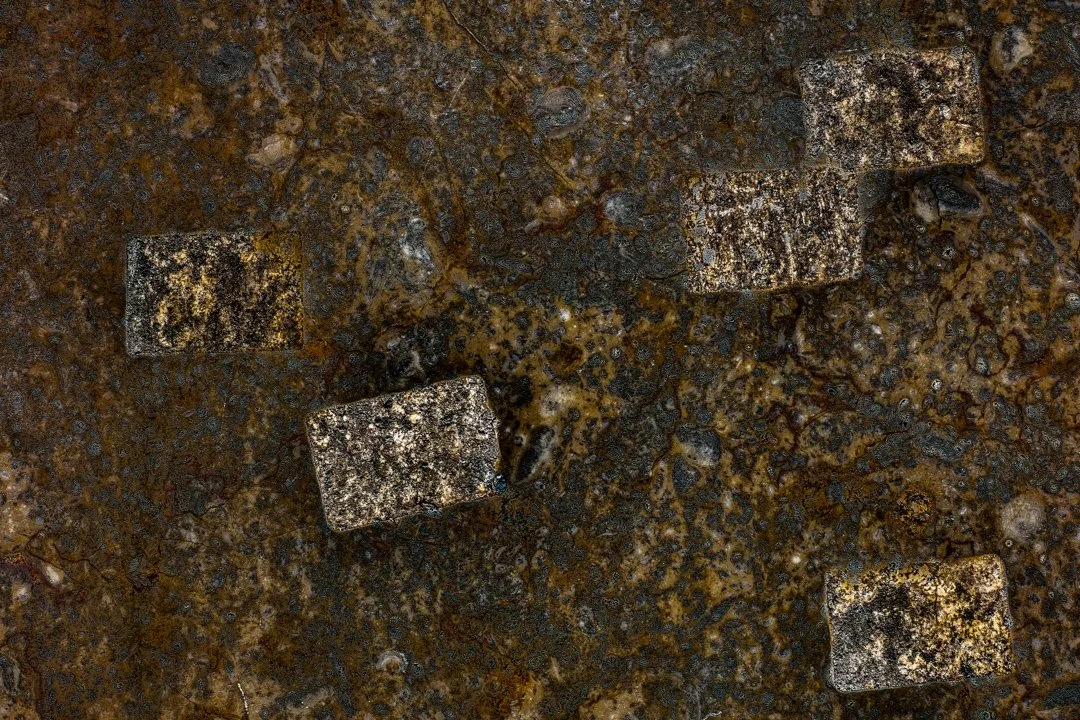
Zhang Shuguang, from the series Seeing Without Seeing, [2022]. Digital photograph
My Grandfather's Footsteps: The Earth as a Flowing Text.
A deeper perceptual awakening my grandfather gave me came through those walks. He often took me walking through the unnamed mountains of the countryside. He did not simply walk — he was teaching me to “read” the mountain: which side was the Azure Dragon, which the White Tiger, from which pass the wind came, toward which direction the water flowed. He pointed out with his finger the direction a ridge ran, the bend of a stream, the density of trees, telling me none of this was accidental — the earth itself was speaking. Those mountains had no names, or at least none written on any map, but in my grandfather's mouth, each one had its history, its temperament, its position. In that moment, the world I saw was no longer a static, fixed thing, but something flowing, mutually responsive — a force. The mountain was not a mountain, but a dragon's spine; the water was not water, but the vein of qi. This was my earliest perception of transformation and flux — learned not from the pages of the Yijing, but silently implanted in my grandfather's footsteps, in the gesture of his finger pointing toward the distance.
What my grandfather taught me of “mountain form and water configuration” points, in spirit, toward the same direction as literati painting's method of seeing “mountains have three distances” — but one was summarized as a rule within the pages of a study, the other lived as bodily memory in the act of walking. My grandfather never read Guo Xi's Lofty Ambition in Forests and Streams, but his posture while walking — pausing, turning, crouching, pointing toward the distance — was itself a living method of seeing. Later, reading Sengzhao's “though the rivers race on, they do not flow,”[6] reading the Yijing's “ceaselessly changing, flowing through the six vacancies,”[6] I felt that these words spoke of exactly what I had already seen in those unnamed mountains — the ten thousand things are never static entities, but a temporary gathering within flux. The earliest seeds of the flowing light, the swaying color, in my Beyond Appearance, may have been buried on those childhood mountain paths, buried in the moment my grandfather said, “the wind comes from here.”
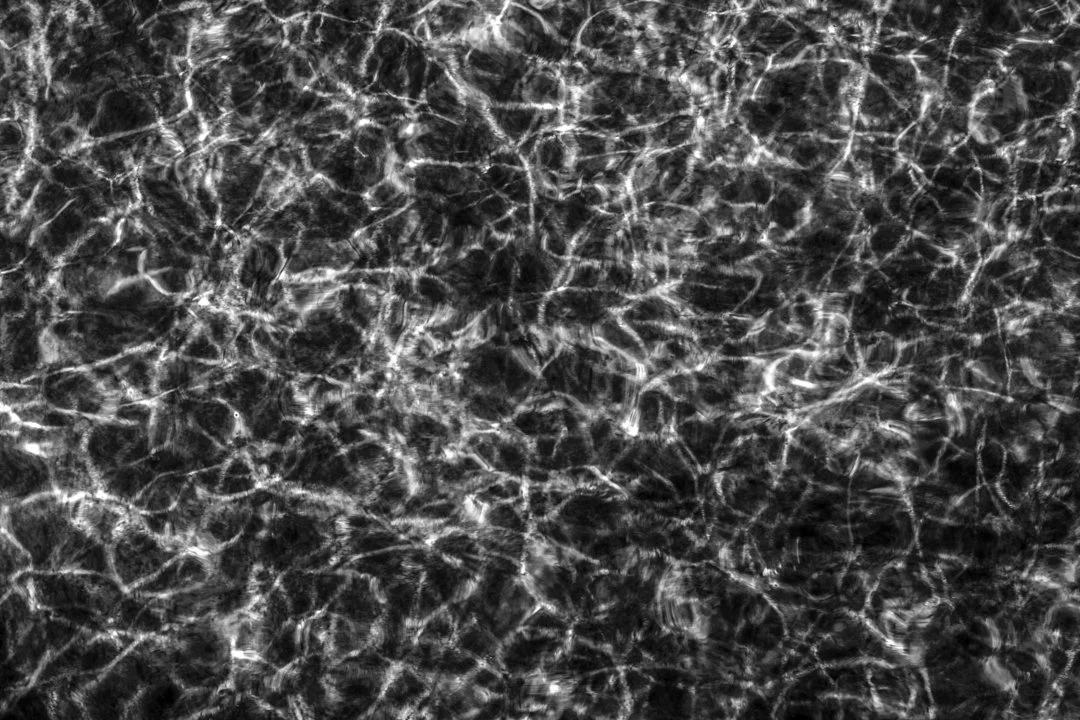
Zhang Shuguang, from the series Beyond Appearance, [2024]. Digital photograph
My Grandmother's Scissors: Time and Faith in Folk Craft.
My grandmother was one of the few Christians in the area. Every weekend, rain or shine, I accompanied her on the hour-and-a-half walk to a church in a village at the top of another mountain. She could not read, yet every time we attended service, she asked me to take notes on what the pastor said, and bring them home. She, too, had extraordinarily deft hands, skilled at paper-cutting. At every seasonal observance and at every wedding or funeral, she would take out her scissors and paper and cut out the appropriate theme — the character for fortune and fish patterns for Spring Festival, blessings for health at Qingming, auspicious flowers and dragon-and-phoenix motifs for weddings, plain paper and lotus flowers for funerals — and then carefully paste them onto walls, windows, and chests. Those paper-cuts, in the morning light, let through a translucent red; by candlelight, they cast a flickering shadow. They remained in place for days or months, then were replaced by new paper-cuts, or eroded by wind and rain, their corners curling, their color fading from bright red to pale pink.
This is an entirely different kind of temporality from the “eternity” of literati painting: it is rhythmic, replaceable, bound to a specific day. The image exists not to be gazed at forever, but to mark a particular moment in time, and then naturally fade away. Years later, the unrepeatable, moment-bound visual experience I pursue in Beyond Appearance — the one-time flow of flower-shadow in a long exposure, the trace of bamboo swaying in wind, the instant a water's reflection is scattered and regathered by a ripple — may share the very same sense of time as my grandmother's paper-cuts: not made to remain, but made to pass through.
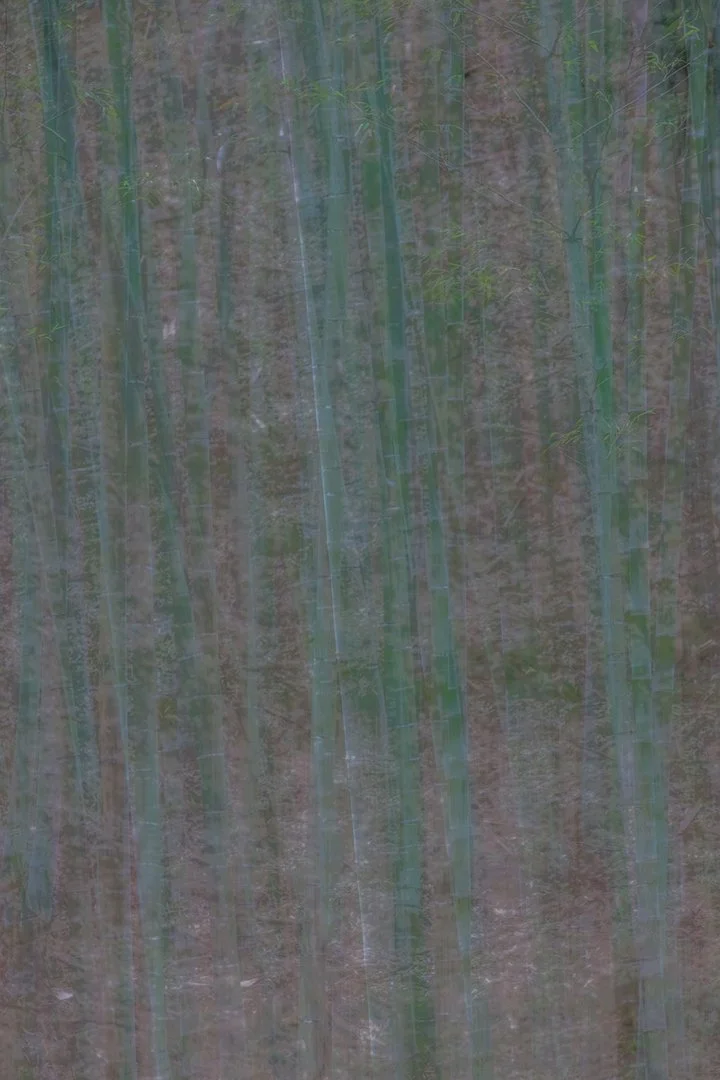
Zhang Shuguang, from the series Beyond Appearance, [2024]. Digital photograph
A Gentleness Above Conflict: A Deeper Resonant Communion.
On the surface, my grandfather's geomancy and my grandmother's Christian faith appear to be a conflict — one the folk cosmology of yin-yang and ancestor worship, the other an imported monotheism. But seen through my childhood eyes, there was no debate, no refutation between them — only the gentleness of a couple who held hands and grew old together. My grandfather never interfered with my grandmother's churchgoing; my grandmother never questioned my grandfather's work divining geomancy and auspicious dates for the villagers. Their faiths may have been incompatible at the level of doctrine, but at the level of daily life, in those mornings and evenings spent together, they coexisted peacefully, like two streams flowing in different directions into the same valley.
A deeper gentleness occurred in the evenings. Every Sunday night, my grandfather would sit in his study, my grandmother beside him, and open the notes I had brought home, going through what the pastor had said, line by line, for my grandmother to hear. He was not a Christian, yet he used the same patience with which he explained geomancy to review, for his illiterate wife, the doctrine she believed in. My grandmother listened, sometimes nodding, sometimes asking a question — not a theological question, but “was the pastor's voice loud or soft when he said that line?” My grandfather would have me recall, and I would imitate the pastor's manner and repeat it once more, and the study would fill with three voices.
There was no conflict in that scene. In the geomancer's study, Christian notes lay open; beside the compass of yin and yang and the five elements sat the gospel tract my grandmother had brought home from church. My grandfather, in the same tone he used to speak of the Azure Dragon and White Tiger, told the story of David and Goliath; with the same gravity he used to divine an auspicious date, he marked out for my grandmother the scripture passage for the coming week. This may be the earliest “form and emptiness are not two” I ever learned — not the harmony of theory, but the harmony of daily life; not the elimination of contradiction at the conceptual level, but the containment of contradiction within the gentleness of everyday existence. My later, career-long wariness of East-West binary opposition, my refusal to take sides in any either/or, may have its deepest root not in any theory of post-structuralism or multiculturalism, but in that child who watched his grandfather write, accompanied his grandmother to church, walked the mountains with his grandfather, and took notes for his grandparents on Sunday nights — who saw, between two seemingly conflicting worlds, the very same gentleness.
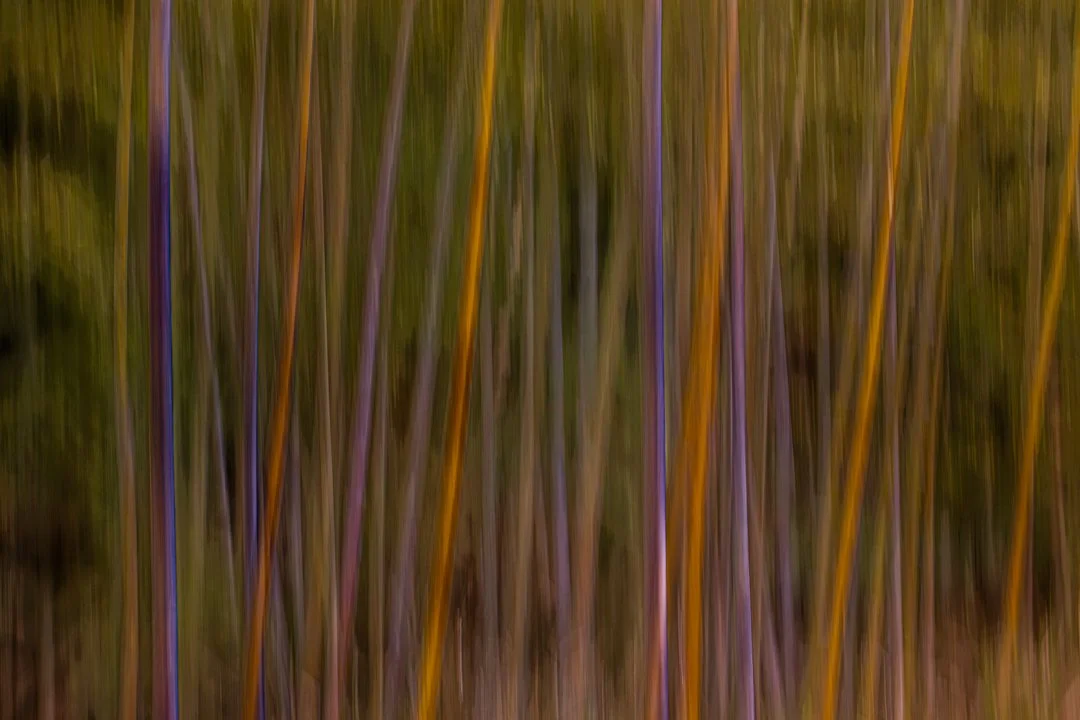
Zhang Shuguang, from the series Beyond Appearance, [2024]. Digital photograph
My Father's Silence: The Order of Things in the Mountain Wilderness.
My father is a true farmer — plain, upright, a man of few words. Every summer vacation, he would send me to guard the orchard deep in the mountains. That orchard sat in a valley, a mountain stream running through it. Many hot summer days I spent alone in those deep mountains. No companions, no toys, no books — only fruit trees, stream water, cicadas, and a long, unbroken silence. The mountains were tedious, and lonely too. But it was precisely within that tedium and loneliness that something else began to grow — something I would only later learn to name. It was not knowledge, not skill, but a slow, aimless attentiveness toward coexisting with the ten thousand things: watching how sunlight leaked through the gaps in leaves, moving across the soil for an entire afternoon; listening to the different sounds the stream made striking different stones, guessing which one might be hiding a crab beneath it; smelling how the fruit's fragrance changed as it ripened, from green to faintly sweet to rich. It was a kind of “unspeakable abundance.” It was not given to me — it emerged on its own, out of the emptiness and silence. Later, reading Zhuangzi's “an empty chamber generates brightness,”[7] reading Chan's “an empty mountain with no one there, water flows, flowers bloom,” I felt that these words spoke of exactly what I had already lived through. But the source of that experience was not in books — it was in that valley, in those idle summer days, filled and then emptied again by loneliness.
“The Thing Within the Body” — the Rein, the Frosty Night, and the Barefoot Earth:
What my father gave me went far beyond that orchard. His generation of farmers held a restraint toward things that I would only slowly come to understand later. That restraint was not deliberate, but an instinct grown from years spent living alongside scarcity. In an age of material want, afraid of wearing out our shoes, whenever dusk fell and the school bell had rung, we children would take off our cloth shoes, stuff them into our bags, and go running barefoot across the hills. The mountain was soft then — the earth, baked all day by the setting sun, was warm underfoot; the grass blades brushing our ankles were a different kind of coolness; the stones were cooler than the earth, cool to the step, like spring not yet fully departed. We climbed the hills to gather wild greens, climbed trees to raid bird nests, picked wild fruit — sour not quite sour, astringent not quite astringent, but if it grew on a tree, it was sweet. Tired, we sat on the rocks at the hilltop, gazing down at the village below with its cooking smoke rising, catching a faint glimpse of my father in our family's paddy field, pulling the water buffalo through spring plowing — that figure fixed the whole picture to the earth like a nail; the ox walked slowly, and he walked slowly too, and the thin rein between man and ox, in the dusk light, looked like an unbreakable, silent line.
Summer came, and we jumped naked into the stream in front of our house, splashing and playing — the water was cold, but after swimming a while it grew warm — not that the water itself warmed, but that the body itself began to generate its own heat. Not long after the autumn harvest, while the rice stalks still lay piled along the field ridges, I would cut a few stalks of bamboo down from the hills and, using rice straw and bamboo, build a small thatched hut, standing crooked at the edge of the paddy field, with no window, only a single opening. Late at night, I would quietly carry a cotton quilt out from home and crawl into my own “little house” to sleep — the hut was too small, and I could only curl up inside it, but that “curling” was not deprivation; it was that the whole mountain wilderness had become my bed. Waking, half-frozen, in the middle of the night, I crawled out of the opening to find the entire land covered in frost. The moon hung low; a pale grey light poured over the fields; the frost flowers, in the moonlight, reflected the faintest shimmer, and the entire mountain, the stream beside it, was submerged in a silence and brightness beyond words. That was the first time I felt that “the thing” was not something being looked at, but something you were within, and that was, in turn, within you. On that frozen night, no one taught me what “letting the thing show itself” meant — but afterward, every time I stood before a wall, crouched before a flower, lay in a pile of wild grass beneath a tree, trying to let the thing manifest in its own way, that night's frost and moonlight were present.
My Father's Path: The Way Manifesting in Silence.
A few years ago, I went home for the Spring Festival. After the New Year's Eve dinner, my father said he wanted to take a walk, and asked me to come along. I asked: which road should we take? My father said: “The road comes from walking.”
These four words, spoken by a farmer with only a few years of schooling, are the simplest yet most profound philosophy I have ever heard. It is no lofty theory, yet it points, more directly than any theory, toward a way of engaging the world: no presupposition needed, no choice needed — simply walk on, and the road will unfold beneath your feet on its own. This is wisdom grown out of the earth itself — believing the road lies not in advance planning, but in the walking of the present moment; believing the world will yield a path for anyone willing to keep walking.
In that moment I realized: my father is the true “Returner” — he does not speak of it, yet lives within it. His entire life has been “the road comes from walking”: walking on at spring plowing, walking on at autumn harvest, walking on in lean years, walking on in bountiful ones. And my “minimal intervention,” my “letting the thing show itself,” my “accepting the impossibility of arrival” — all these postures, later constructed in precise language, may have their deepest root in these four words of my father's. They taught me: return is not choosing a direction and walking back toward it, but abandoning the choice altogether, walking forward, and letting the road become the road itself.
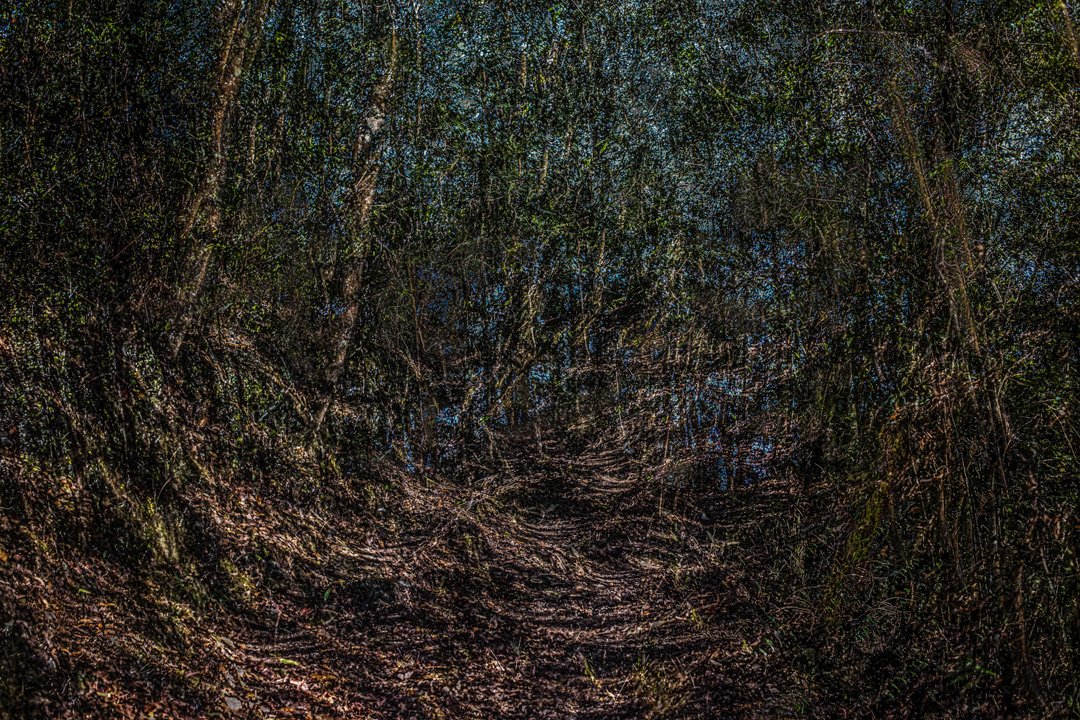
Zhang Shuguang, from the series Beyond Appearance, [2024]. Digital photograph
My mother's calling out in the dusk was another kind of perceptual education.
In the kitchen, she cooked for people and boiled feed for the pigs at the same time; the stove-fire lit her face, the rising steam blurring her features — but the hands turning the spatula over the stove never stopped. When the meal was nearly ready, she would lean out from the kitchen doorway and call my childhood name toward the mountain — Didi — and that sound would cut through the dusk, cross the field ridges, and tighten every muscle in my body, wherever I was in the hills chasing chickens, along the paddy edges herding ducks, on the slope leading a goat. Those chickens, ducks, goats, each with its own pen, had to be driven home one by one in the last of the daylight. My mother's voice was like an invisible rope, gathering me and those scattered animals, one by one, back home. She often dried and pickled the vegetables we could not finish eating, jar after jar, lined up in a corner of the kitchen — those jars crouched silently in the dark, yet gave off the most solid gleam in every season of scarcity. Her hands never stopped: planting vegetables, cooking, washing clothes, feeding pigs, drying greens, pickling, calling out — none of this labor contained a single word of theory, yet it taught me what “accordance” meant: according with the seasons, according with the ingredients at hand, according with the turning of day and night, according with the temperament of the livestock and the wandering nature of a child at play. She did not, like my grandfather, use language to teach me to recognize where the wind came from, nor did she, like my father, use silence to teach me “the road comes from walking.” She simply stood at the kitchen doorway, and at the moment the meal was ready, with a single call, gathered the whole family back together again.
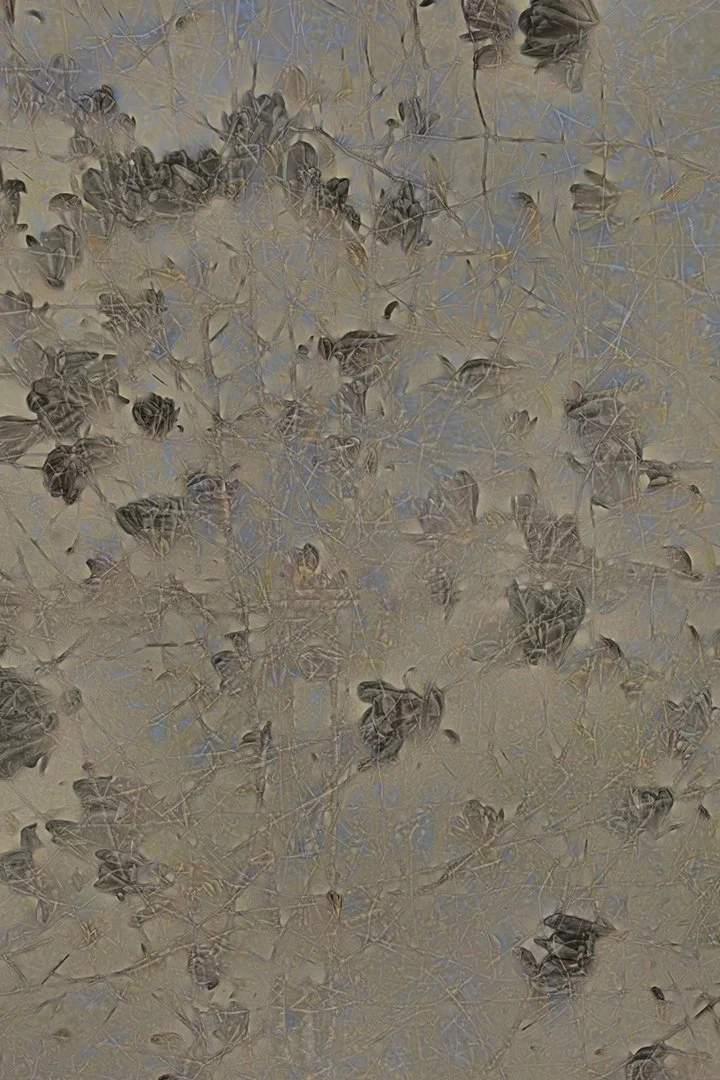
Zhang Shuguang, from the series Beyond Appearance, [2024]. Digital photograph
Surrounding my childhood, too, were those hands, forever in motion.
When my grandfather divined an auspicious date, he never searched. That almanac, its corners worn soft, lay open on the table, and his finger slid slowly along the arrangement of the calendrical stems and branches, like a needle pushed by the wind, until it stopped at a certain point — not because he decided it, but because the day itself had “walked” to beneath his finger. He used to say a good day is not calculated, but waited for. When my grandmother cut paper, she never sketched a draft beforehand — she simply folded the red paper in half, then in half again, and let the scissors wander; unfolded, it was already a complete pattern — an absolute trust in the material's own inner order. When my father pruned the branches in the mountain orchard, he never hesitated; every cut was clean and decisive, as though what he saw was not a specific branch, but the whole tree's shape of growth for the coming season. My mother's hands seemed forever soaked in water, forever steeped in cooking smoke — sweeping, washing clothes, washing vegetables, rinsing rice, turning the spatula at the stove, pressing, in the dusk-lit courtyard, layer of salt and layer of vegetable, into a clay jar. Those hands never waited for tomorrow. They began moving at daybreak, and only at dusk, wiping themselves dry on an apron, paused for a moment. This wisdom of the hands, this accordance with the texture of things and the rhythm of time, constituted the most fundamental perceptual education of my childhood. What I later called my method — suspend, gaze, purify, release — is rooted not in the texts of Laozi and Zhuangzi, though those texts later gave it a language, but in these specific hands, specific gestures, specific silences, silently implanted.
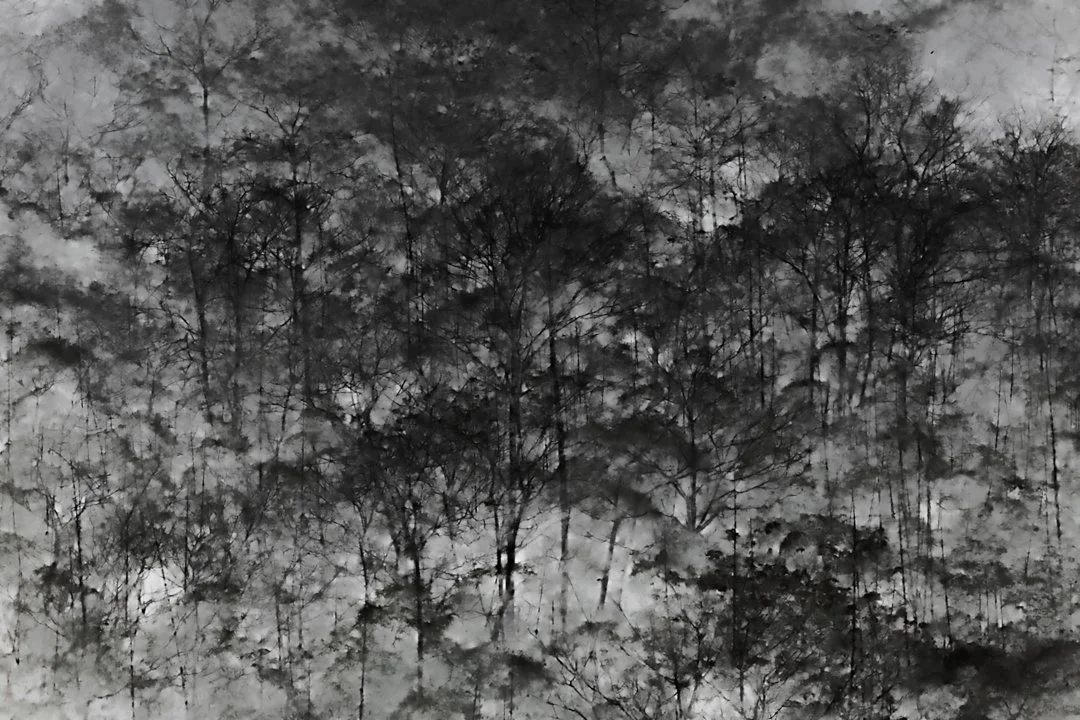
Zhang Shuguang, from the series Beyond Appearance, [2024]. Digital photograph
Beyond the Family: The Folk Perceptual World
The above is the perceptual education given to me by my blood relations. But surrounding them was a broader perceptual world, permeating the entire countryside. It belonged to no single family member, yet formed the background and soil of every family memory.
The Image of Ritual and the Numinous Halo of the Thing.
The village temples, the incense tables of the ancestral hall, the paper offerings of festival celebrations — these folk religious images constituted my earliest field of visual encounter. When my grandfather, and later my father, organized these activities, I often trailed behind, watching them light incense, hang talismans, arrange offerings. The gaze of the deity's statue, the strokes of the talismans, the faded couplets — these did not exist to be “aesthetically appreciated,” but to be “responded to.” In these settings, the image was not representation, but presence — the deity's statue is not a painting of the deity; it is the deity's manifestation, here, now. This non-duality of image and being resonates, in spiritual direction, with the Chan gong'an of “the cypress tree in the courtyard,” and with the Heart Sutra's teaching that “form is emptiness” — but its mode of transmission was not scripture or commentary, but the rustle of my grandfather's robe as he pressed his palms together, the gradually blurring golden statue amid the smoke of incense, the slow loss of moisture in the offerings under candlelight. Perhaps the “numinous halo”[8] I would later pursue in the mottling of walls has its source neither in Benjamin, nor in Chan records, but in these temple walls, long since blackened by incense smoke, already sunk deep into memory.
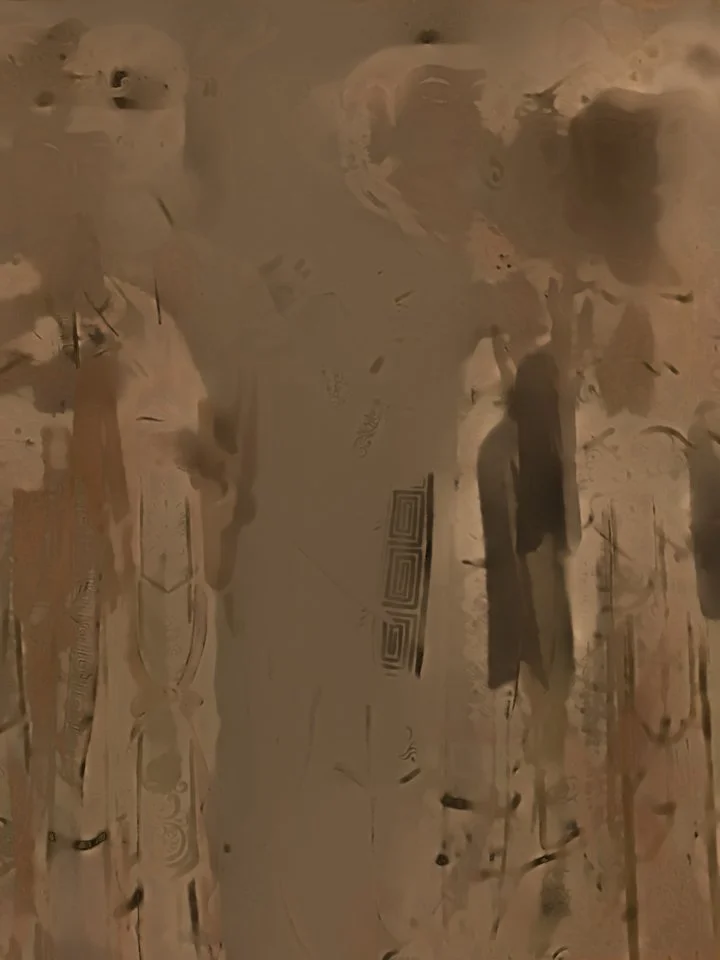
Zhang Shuguang, from the series Beyond Appearance, [2024]. Digital photograph
The Way of Contemplating Things in Craft and Labor.
The craftsmen of the countryside — carpenters, stonemasons, bamboo-weavers — carried, within their traditions of making, an ethics of seeing rooted in “according with the natural grain of things.” A carpenter's accordance with wood grain, a stonemason's listening to material, a bamboo-weaver's grasp of bamboo's nature — they looked at a piece of wood not to see what it could be made into, but to see what it wanted to become. This posture of “observing things through things,” elevated by Zhuangzi into philosophy within elite culture, existed wordlessly, in folk culture, within every well-fitted farm tool, every properly joined piece of joinery. I still remember the neighborhood carpenter, planing wood, pausing to run his palm along the grain — not a measurement, but a listening. He told me: plane with the grain, and the wood won't “bite” you. That sentence taught me what “resonant communion with the thing” meant, earlier than any philosophical text. It is the same thing I would later see in the movement of my grandfather's fingers when divining a date, in the wandering of my grandmother's scissors while cutting paper, in the clean strokes of my father's blade pruning fruit branches: the hand's listening to the thing, the person's accordance with nature.
Everyday Objects and the Aesthetics of Home.
A farming family's objects — the clay jar, the bamboo basket, the straw raincoat, the millstone — their forms arose not from a conscious act of design, but from long accommodation to function. This kind of “nameless design” presents a functionalist aesthetics: the form of a thing is the accumulation of the marks of its use, the patina left by time upon the object. Is my later gazing at the mottling of walls hiding, within it, the visual memory of that soot-blackened clay kettle in the childhood kitchen, that hoe-handle worn smooth by hands? My grandfather's old desk where he wrote his paper strips, my grandmother's sewing basket holding her scissors, the whetstone on which my father sharpened his blade — every one of them silently declares the same thing: beauty is not manufactured, but left behind. These objects will never enter a museum; they exist only in daily wear and consumption — but it is precisely this “wearing-in-use” that constitutes my most original aesthetic education.
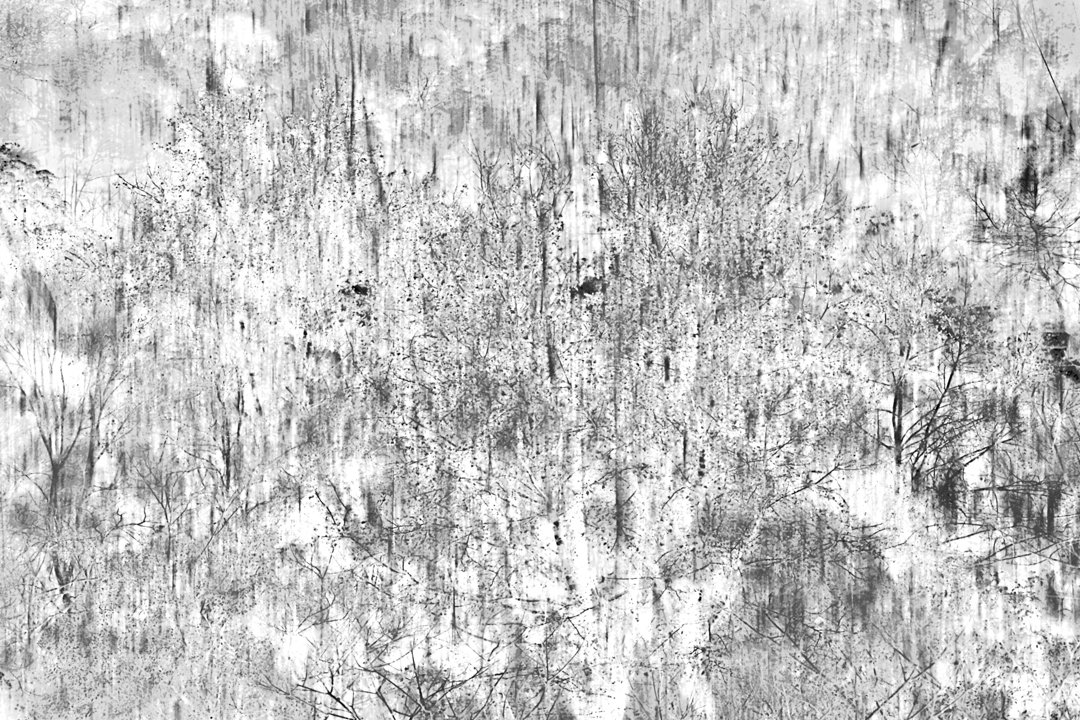
Zhang Shuguang, from the series Beyond Appearance, [2024]. Digital photograph
Landscape as the Body's Dwelling, Not the Mind's Metaphor.
The hills of Yongtai were not the “landscape” of literati painting — distantly beheld, sentimentally invested, morally inscribed. It was concrete, touchable — the paddy field one could step barefoot into, the miscanthus grass that could cut your arm while cutting hay, the smell rising from the earth after rain. That touch was exactly the sensation of “the thing within the body”[9] I first felt on that frozen night — the whole mountain wilderness, the moonlight and frost, were not objects being observed, but something you were within, and that was, in turn, within you. This kind of perceptual experience of landscape was not the spiritual stillness of “purifying the mind to contemplate the dào,” but the total mobilization of the body's every sense within its environment — touch, smell, hearing all participating; vision was only one among them. The mountains my grandfather walked me through had, in his geomantic vocabulary, position and configuration of qi — but in my bodily memory, they were first of all a specific touch and temperature: the coolness of mountain wind on skin, the cold of stream water rising past the ankles, the heaviness of dew soaking through trouser legs. The state of “the ten thousand things all complete within me” that I later try to restore in Beyond Appearance has its earliest root, perhaps, not in Guo Xi's “heart of forests and streams,” but in that barefoot evening run, that frozen night's moonlight — the warmth of earth, the coolness of stone, the cold of stream water, the prick of rice stalks, moonlight faintly glinting on frost. It was not “about” landscape; it was landscape itself — unmediated, untranslated, unsublimated.
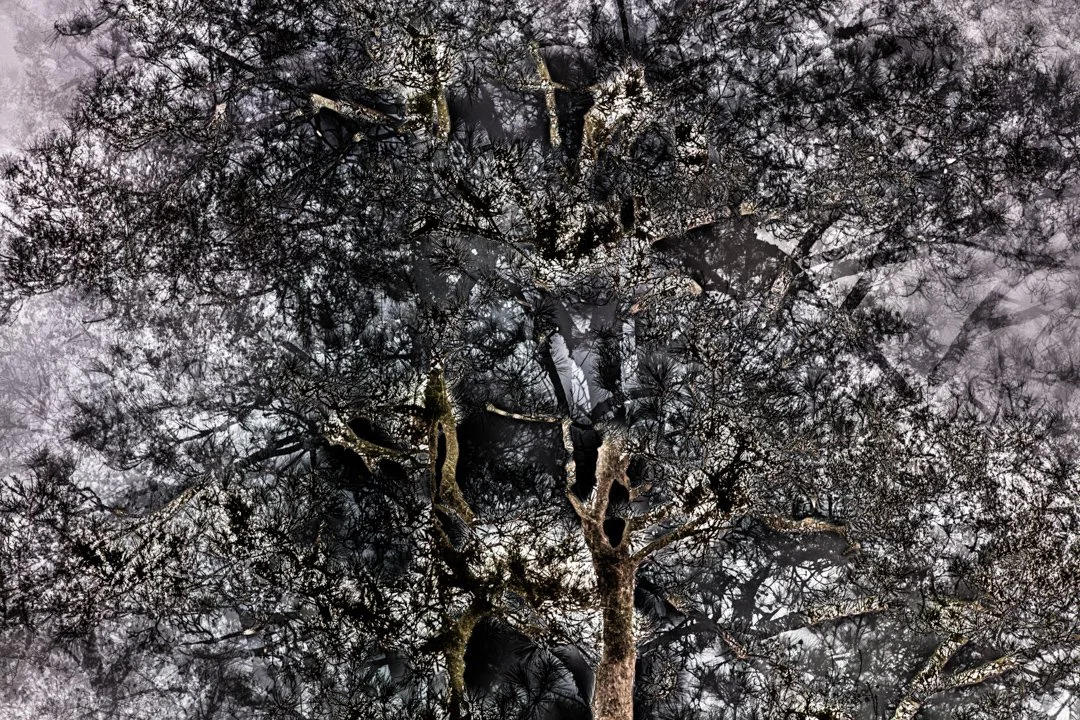
Zhang Shuguang, from the series Beyond Appearance, [2024]. Digital photograph
The Visual Shock of the Reform-Era Years.
My childhood and adolescence coincided with the violent visual transformation of Chinese society in the 1980s. Television, advertising, magazines, packaging — these new visual media, carrying the visual logic of consumer society, flooded in, colliding violently with the natural order of the hills, with my grandfather's brushwork, with my grandmother's paper-cuts. Fluorescent beverage packaging, record covers of Hong Kong and Taiwan pop stars, giant advertisements on county-town walls — they constituted a visual experience utterly different from the traditional aesthetics of “contemplating things”: intense, seductive, disposable. Was my gaze at the city's walls — those walls covered by billboards, bombarded with information — also, at the same time, an attempt at a subtractive dissolution of this new visual violence? Stripping the wall from the accumulation of signs, returning it to mottling and flaking — this operation is not only a suspension of the “classical order of representation,” but also a quiet resistance to the flood of consumer vision in Chinese society since the 1980s. This may constitute an unspoken historical dimension within my “perceptual critique”: it points not only toward today's attention economy, but also toward that silent visual enlightenment and rupture within my own childhood experience — from the ink traces of my grandfather's handwritten notes, to the flickering advertisements on a television screen; from the lotus flowers of my grandmother's paper-cuts, to the product posters on a county-town wall.
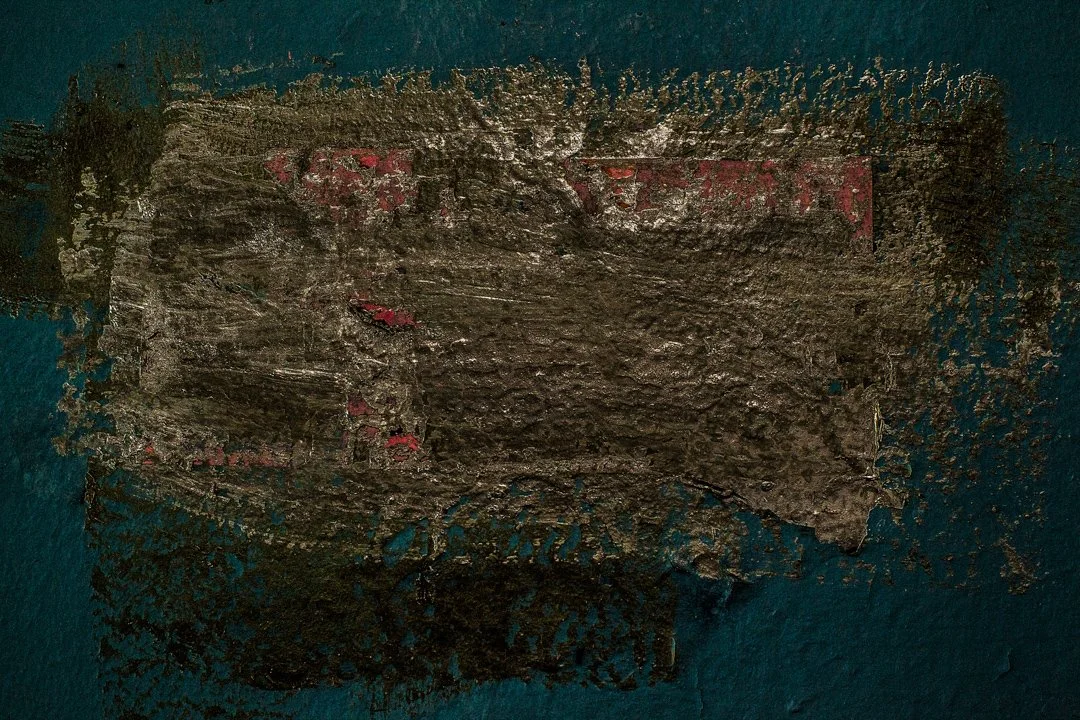
Zhang Shuguang, from the series Seeing Without Seeing, [2020]. Digital photograph
One Ground, Many Springs: A More Complete Sense of Genealogy
Acknowledging the participation of folk perceptual experience and the visual shock of the reform era is not a negation of the original genealogy, but a way of making it fuller, more historically concrete. The elite “contemplation of things” tradition — from the Yijing to literati painting — offers me a conscious intellectual method and spiritual aim. But that folk current, growing in my grandfather's brush and footsteps, in my grandmother's scissors and prayers, in my father's silence and “the road comes from walking,” in my mother's calling in the dusk and her hands forever in motion, in the silence of the deep mountain valley and the barefoot evenings and frozen nights, in the visual clamor of the reform era — offers this method a more primal, more sensory, more bodily foundation.
The elite “contemplation of things” tradition and these folk, bodily, everyday visual experiences are not a relationship of source and tributary, but different veins within the same perceptual stratum, jointly shaping, from the start, the world seen by the child lying against his mother's back. The direction of the mountains my grandfather taught me to see and the Yijing's “looking up and down to observe”; my grandmother's paper-cuts and the shared sense of time in church hymns; my father's “the road comes from walking” and Zhuangzi's “the way is made by walking it”; the loneliness of the deep mountains and Chan's emptiness and stillness; the fluorescent color-blocks of television advertisements and the contemplation of “form is emptiness” — these are not separate threads, but different outcroppings of the same perceptual vein, coexisting and interpenetrating within me at once.
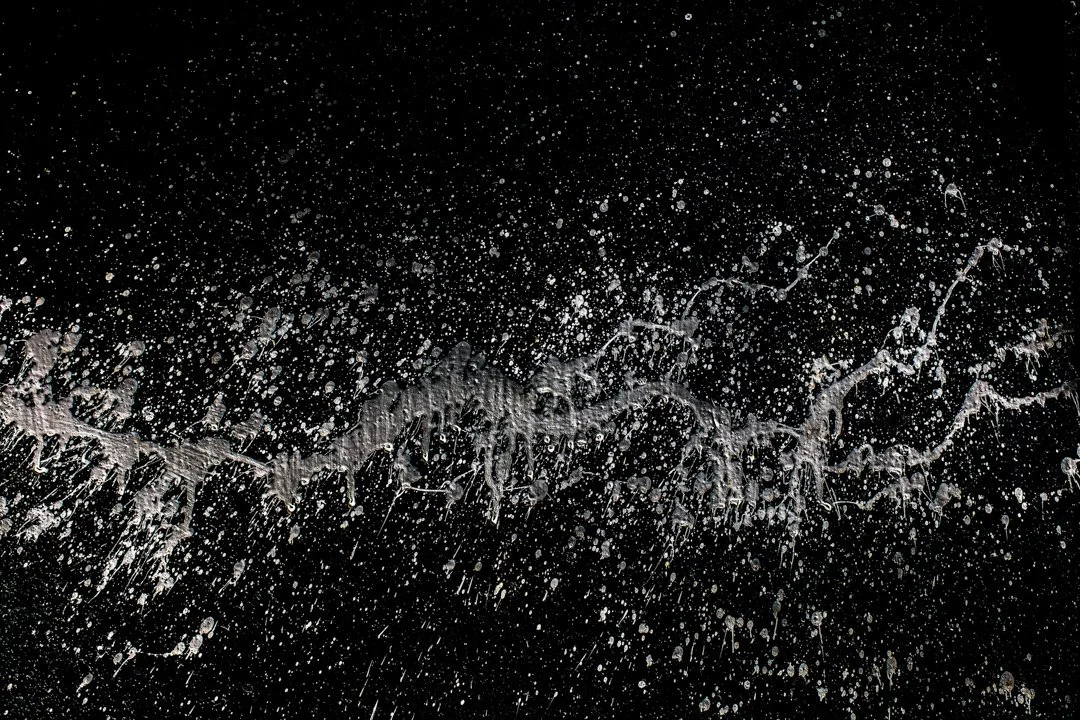
Zhang Shuguang, from the series Seeing Without Seeing, [2021]. Digital photograph
From this, the meaning of “return” becomes clearer. What I return to is not only the metaphysical origin pointed to by the Yijing and Chan — not Zhuangzi's “I have lost myself,” not Chan's “not establishing words,” not the “contemplation of things” refined, within literati painting, into a spiritual aim. What I return to is a more concrete, more mixed scene, one that no single cultural tradition can encompass: my grandfather copying geomantic manuscripts stroke by stroke onto coarse paper, the ink standing slightly raised, catching a faint gleam in the afternoon sun; my grandmother binding books, stitch by stitch, with hemp cord she twisted herself, the needle piercing and pulling taut through each page; the red paper lotus flowers my grandmother cut, pasted on the window, turned translucent by the morning light, trembling faintly in the wind; my grandfather leading me by the hand through unnamed mountains, the gesture of his finger pointing into the distance, saying “the wind comes from here”; my father's silence itself becoming a valley — those long, silent summer days, sunlight moving across the earth for an entire afternoon, the stream striking different stones with different sounds; the barefoot evening runs, the earth's temperature beneath my feet shifting from warm to cool, the touch of grass blades against my ankles like an ancient language; crawling out of the thatched hut on a frosty night, moonlight faintly glinting on the frost flowers, the whole mountain wilderness submerged in an unspeakable silence and brightness; my mother leaning out from the kitchen doorway, calling my childhood name into the dusk, that sound crossing the field ridges to gather me and the scattered livestock, one by one, home.
And even those fluorescent color-blocks that flooded in, the television advertisements, the product posters on the county-town wall — they, too, constituted the texture of that world, part of the “reality” seen by that child's eyes. All of this is not merely “thing,” but the full touch and warmth of “the thing within the body.”[9] The “swaying spring” felt by the child lying against his mother's back, the “moonlight and frost” felt by the child crawling out of the thatched hut — both are the embryonic form of a philosophy of oneness with the ten thousand things, and also the entire world given to a child of the hills of central Fujian, at a specific historical moment, within a specific cultural stratum. There is no conflict in any of this — only a gentleness coexisting beneath a single roof; only, between barefoot running and waking cold on a frosty night, between spring and moonlight, a presence, sustained through an entire childhood, that no concept can accommodate.
And the deeper revelation is this: in that child's world, there was no such thing as “conflict.” My grandfather's geomancy and my grandmother's Christianity were not, in his eyes, two opposing worldviews, but two gentlenesses coexisting beneath a single roof. My grandfather's unnamed mountains and the advertisements flickering on television constituted, in his perception, the very same texture of the world — one speaking of the flux and breath of the ten thousand things, the other of the rupture and clamor of an era, and both were real. This capacity to “see harmony within contradiction” may be the most hidden core of my entire theory of creation — prior to all theory, prior to all self-awareness, prior to the adult who would later learn to reason and distinguish. All the work I do is nothing more than an attempt to walk back to the eyes of that child, capable of holding, all at once, geomancy and Christianity, ink and scissors, mountain wilderness and television, my grandfather's mountains and my father's path, the barefoot evenings and the moonlight of frozen nights. And “the road comes from walking” — these four words — finally become the most precise footnote to “the Returner.” Return is not walking back along a known road, but walking on where there is no road, letting the road manifest beneath your own feet. My grandfather taught me to recognize the direction of the mountains; my father taught me that the walking itself is the deepest knowing.
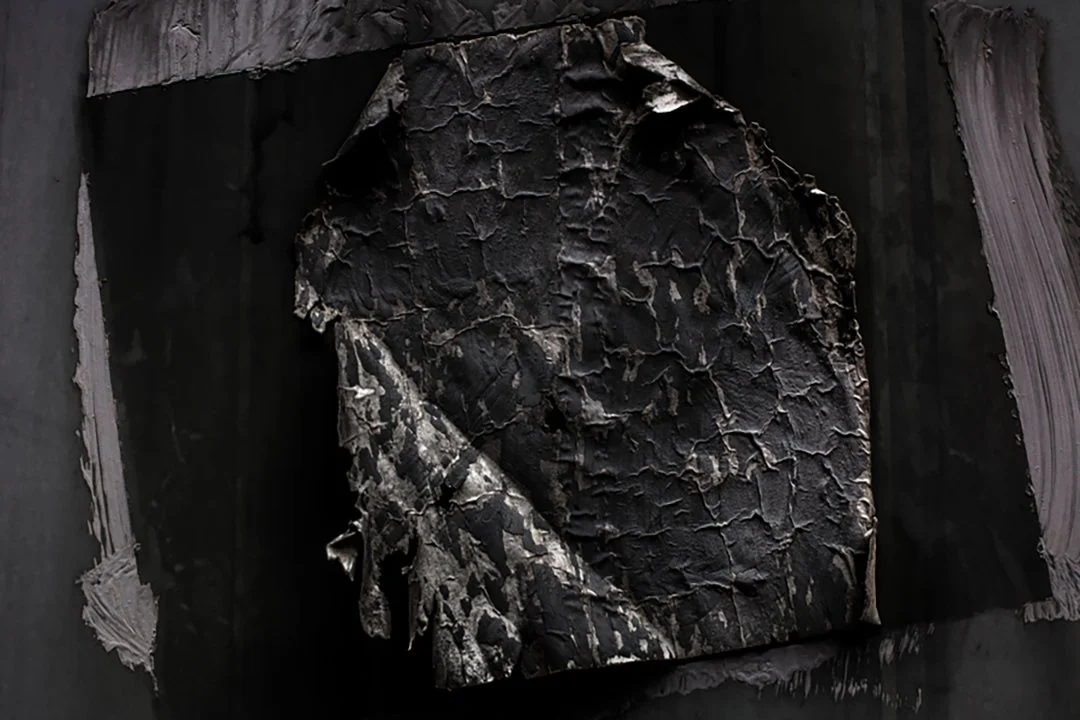
Zhang Shuguang, from the series Seeing Without Seeing, [2021]. Digital photograph
[▲ OOO Supplement 3: A Mirror for the Genealogy — Calibration by OOO]
And here, object-oriented ontology offers one further mirror. It lets me see clearly: whether the resonant communion of the Yijing, the “investigation of things” in literati painting, or my grandfather's footsteps, my grandmother's paper-cuts, the carpenter's hand upon the wood grain, that moment of crawling out of the thatched hut on a frosty night surrounded by moonlight — all of these are specific, historical ways in which humans have encountered things, not an ultimate arrival at the thing itself. I cannot claim that these traditions come any closer to the thing's reality than the “indirect contact” OOO acknowledges.
But the value of this mirror lies not in denying the truthfulness of these traditions, but in forcing us to confront the modern predicament of “return” directly: we can no longer naively believe that the genuine experience of oneness with the ten thousand things is itself an ultimate truth — in a world that has lost its ontological guarantee, any claim to “arrive at the thing itself” is worth doubting. And yet this does not mean those experiences are false, nor that we should abandon them. Quite the opposite: it is precisely at the moment we can no longer claim them as “truth” that we first truly understand their weight — they are not knowledge about what the world is, but wisdom about how a person coexists with the world. Acknowledging them as “posture” rather than “truth” is not a diminishment, but, once innocence is lost, the most honest ground on which they can still stand. The moonlight of those frosty nights, the mud rising between bare toes stepping into a paddy field, my mother's call in the dusk — their reality does not depend on any ontological guarantee; they have already left an indelible mark in the body. This is the most sincere answer I can give.
In this sense, my father's “the road comes from walking” and Harman's “withdrawal” are not in contradiction — one says the thing is forever in transit; the other says the road is forever underfoot. What they say may be the same thing: the impossibility of arrival, and the necessity of walking.
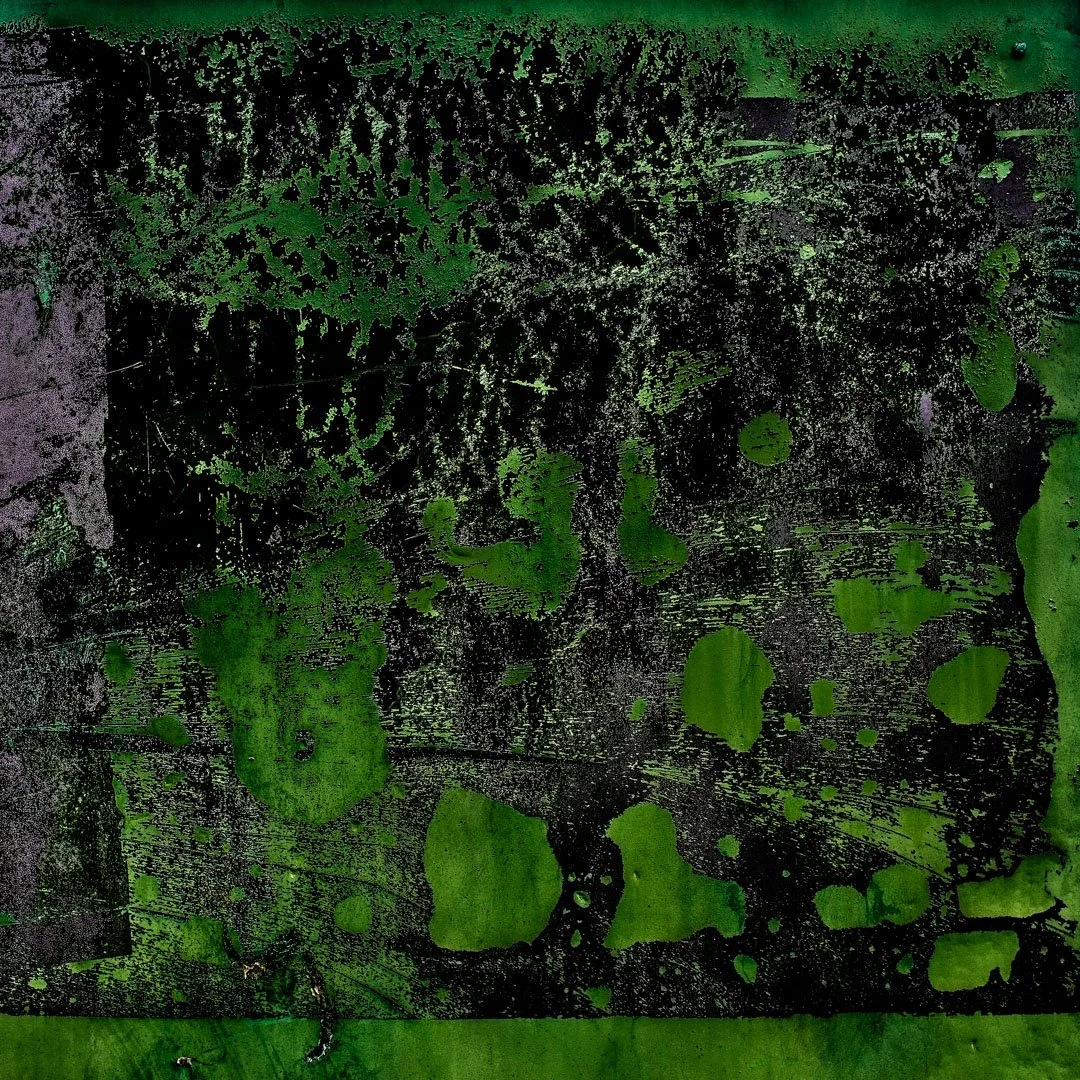
Zhang Shuguang, from the series Seeing Without Seeing, [2024]. Digital photograph
Reflexive Note Three: Standing Within a “Genealogy,” Trapped Within a “Genealogy”
At this point, I seem to have found a clearly traceable genealogy for my practice. But a clear-eyed doubt follows immediately: is my own understanding and construction of this genealogy not itself situated within that very genealogy? The way I see it has already been shaped by it; the language I use to narrate it has already been predetermined by it. In this sense, I am not the discoverer of the genealogy, but its product. I cannot stand outside the genealogy to give it an “objective” accounting — every accounting I give is the genealogy reproducing itself through my hand. What I take to be “return” may only be a new version the genealogy has manufactured for its own continuation.
When my grandfather held my hand, he did not need the word “genealogy”; I need it, precisely because I am no longer within the warmth of that hand. So what I narrate here as “genealogy” is not an objective archaeological report, but a confession from within the genealogy itself. It is less a proof of the legitimacy of “return” than an acknowledgment: I have no choice but to walk within this genealogy, and I hope that the walking itself might loosen the genealogy's boundary, even if only by the smallest degree.
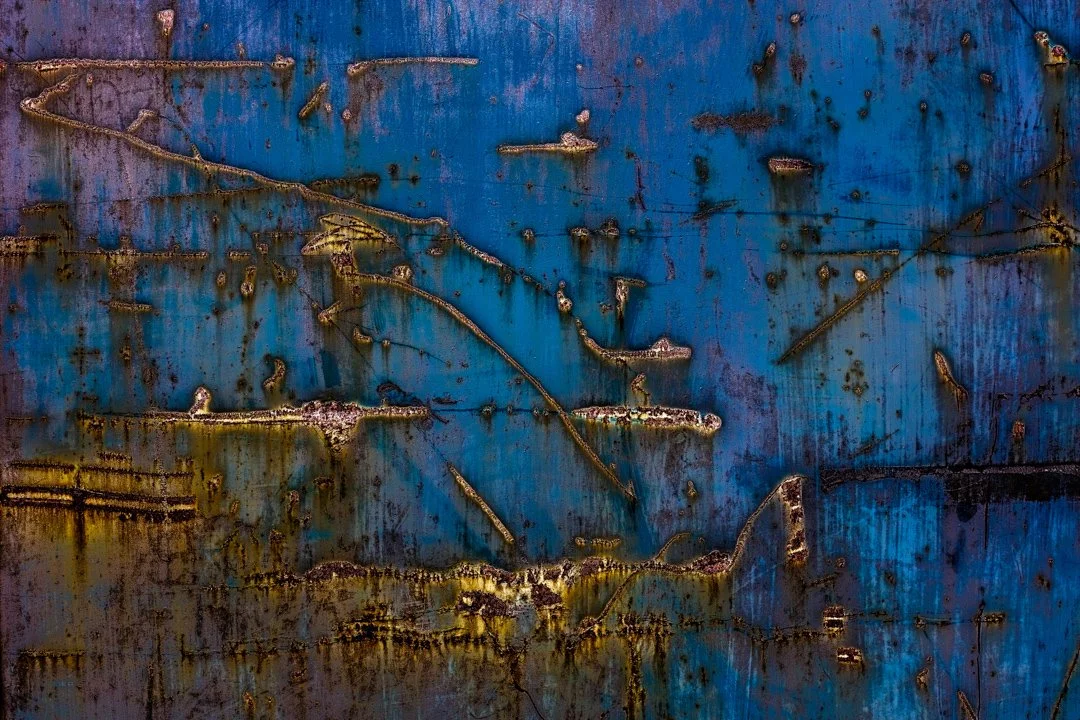
Zhang Shuguang, from the series Seeing Without Seeing, [2024]. Digital photograph
Unfinished Questions Within the Genealogy
If this genealogical writing were to be pushed further, several points of tension deserve a dedicated essay of their own, rather than remaining a rough sketch.
First, the deep contradiction between Chan's “not establishing words” and art — an act that inevitably “establishes images.”
Chan points toward an intuition prior to concept, yet art — even the most subtractive art — must, in the end, exist in the world in some perceivable form. A photograph hung on a wall is already “an image” — it has already entered a field where it will be seen, interpreted, classified. How can “not establishing words” possibly be realized through “establishing an image”? This is not a paradox that can be solved once and for all, but a predicament that must be faced anew every time the shutter is pressed. Perhaps the answer lies not in “solving” it, but in letting the image dissolve itself as quickly as possible, after each act of establishing it — as the Buddha said, in a well-known teaching, that even the doctrine itself is like a raft, to be left behind once the river is crossed, how much more so what is not the doctrine.[10] If even the teaching itself is a raft to be left behind after crossing the river, then the work, as “image,” having fulfilled its function of encounter, finds being forgotten not a loss, but its most fitting destination. The meaning of a work does not lie in being remembered, but in being able, after being seen, to dissolve itself.
Second, the internal tension between “investigating things” and “writing the mind” within literati painting.
Song-dynasty Neo-Confucian scholars advocated “investigating things to extend knowledge” — exhaustively pursuing the principle within the ten thousand things — an outward-directed, near-scientific spirit of inquiry; from the Ming-Qing period onward, “writing the mind” gradually replaced “investigating things” as the mainstream, the focus of painting shifting from the principle of things to the emotion of the person. This shift appears, on the surface, to be a liberation of the subject, but may in fact have buried another form of concealment: once “writing the mind” became the sole source of legitimacy, the thing itself once again exited the scene, this time amid the swelling of subjectivity. My Seeing Without Seeing tries to return to “investigating things” — but no longer the Song Confucian investigation that exhaustively pursues physical principle, but a phenomenological “return to the thing itself”: not inquiring into what it is, but simply letting it manifest. Is this a contemporary revival of the “investigating things” tradition, or a thorough rewriting of it? I have no answer to this question, but it points toward a possible direction: beyond the opposition of “investigating things” and “writing the mind,” does there exist a third path — a fragile balance that neither lets the thing be swallowed by human concept, nor lets the human disappear entirely before the thing?
Third, the question of the universality of “the Returner” identity.
This question concerns whether this genealogy can move beyond the limits of personal experience to become a shareable methodology. I must honestly confront this: the entire narrative of “return” depends heavily on my own personal experience — the hills of Yongtai, the rainy day on my mother's back, the flower beside the pigsty, the barefoot evening runs, the moonlight of frosty nights. These experiences cannot be replicated, and should not be replicated. If “return” means that everyone must return to the same origin as mine, then it is a closed, narcissistic posture, not an open practice.
But I believe that what “return” points toward is not some specific origin, but the act of “returning to an origin” itself. Everyone's origin is different — it may be a certain childhood kitchen, a certain hillside at dusk, a certain unspeakable gaze. What I offer, therefore, is not an origin that can be copied, but a mode of inquiry that can be transferred.
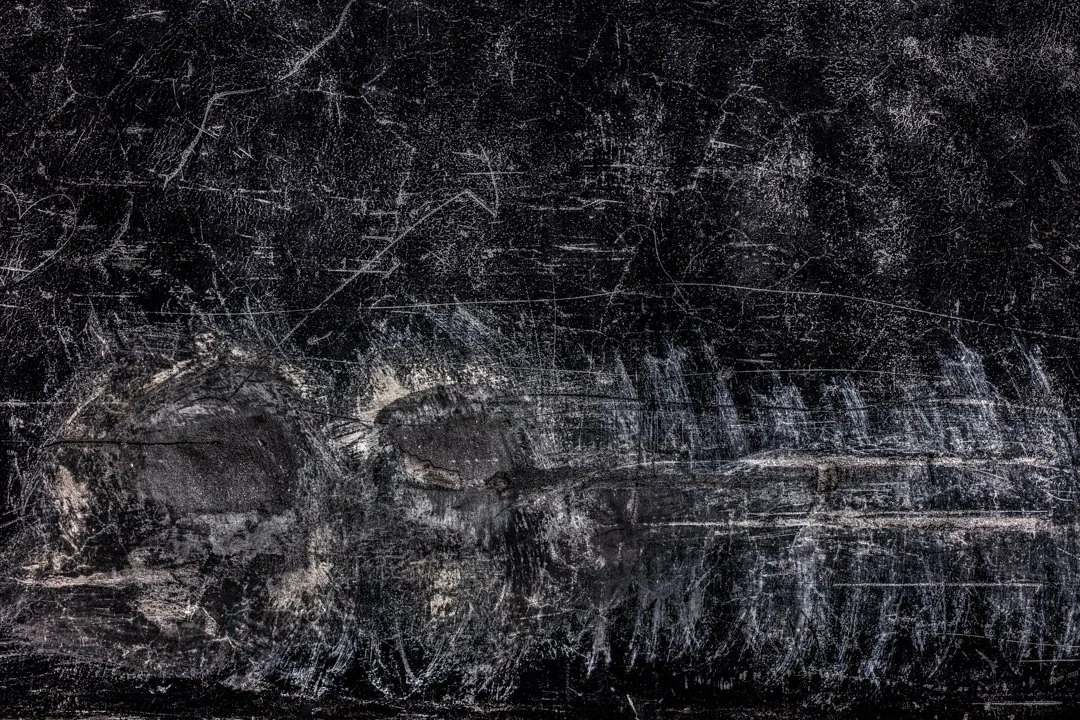
Zhang Shuguang, from the series Seeing Without Seeing, [2024]. Digital photograph
VI. The Four-Step Method of Perceptual Critique: A Transferable Creative Posture
If this practice can only be used by “Zhang Shuguang, who grew up in the hills of Yongtai,” then it remains, in the end, only an autobiography, not a method. I am willing to try extracting several transferable moments deposited within my own operation, lifting them out of the constraints of personal experience, and turning them into a creative posture that others — whatever their medium, wherever their “origin” may be — can draw upon.
I call it the “four-step method of perceptual critique,” but it is not a technical procedure — it is a sequence of spiritual posture. Each step points toward a specific “subtractive” operation.
Step One: Suspend — letting the impulse to name step aside for a time.
Before picking up the camera (or any creative tool), make a silent pause: temporarily remove whatever you are about to face from every classificatory system it belongs to. It is not a “wall,” a “flower,” a “building,” or a “landscape” — these words have already decided how you will see it. Try, in imagination, to erase its name, as though redrawing its outline on a blank sheet of paper, without fixing it with any ready-made vocabulary. This step points toward the intersection of Chan's “not establishing words” and the “pure gaze” Foucault traces.
Step Two: Gaze — letting the thing “speak” over a sufficiently long duration.
The key here is not the quality of “looking,” but its duration. When you remain before an object for more than twenty minutes, your vision undergoes an observable change: the initial question “what is this” gradually dissolves, replaced by a more diffuse visual state, without a clear object. A mottled wall will begin to organize itself into pattern; the movement of light and shadow will change the thing's “expression.” At this moment, the observer is no longer an active searcher, but gradually becomes a waiter — waiting for the thing to manifest in its own way. This posture of waiting is, more than any technical operation, the true core of the method.
This earliest practice of waiting can be traced back to those barefoot evenings roaming the hills — sitting on a hilltop watching the cooking smoke and my father's figure, or crawling out of the thatched hut on a frosty night, silently surrounded by moonlight and frost. In that time, “seeing” was not deliberate, but passive: the thing saw you before you discovered you were seeing it. Later, in the mountain orchard, those long, silent afternoons — sunlight moving across the earth, the stream striking different stones — were nothing more than a continuation of this passive gazing. Until “seeing” is no longer an action, but a mode of existence. There is no fixed “minimum duration” I can give, but the threshold might be described this way: when you begin to forget what you are looking at, that is when you begin truly to see it.
Step Three: Purify — practicing the subtraction of “loss upon loss” in post-processing.
The convenience of digital technology is that it lets us continue gazing after the shot is taken. My post-processing operation always follows one principle: only subtraction, never addition. Add nothing that was not originally in the frame; remove only the information that pulls the viewer's attention toward “everyday cognition” — overly assertive color cues, overly specific identifiable detail, unnecessary spatial depth. The goal is to let the image become visually “thinner,” letting the thing emerge from its background, becoming more direct.
This step corresponds, at the operational level, to the Daoist labor of “loss upon loss” — not “creating” an image, but “stripping away” layer after layer of concealment, until the thing photographed is seen in its own way.
Step Four: Release — letting the posture itself become the answer.
This is the final step, and the hardest to “teach.” It occurs after the work is finished: when you find you still cannot arrive at that childhood rainy day, when you find that wall has refused you, when you find the flower you photographed is still not the flower you wanted — accept this “impossibility of arrival,” and let this acceptance itself be the endpoint of creation. This is not failure, but the true meaning of return: releasing the fixation on “going back,” acknowledging that you have already walked an irreversible road, and letting this acknowledgment itself become the posture in which you stand. That posture — standing before a grey wall, hands empty, and still choosing to stay — is closer to the essence of art than any successful work.
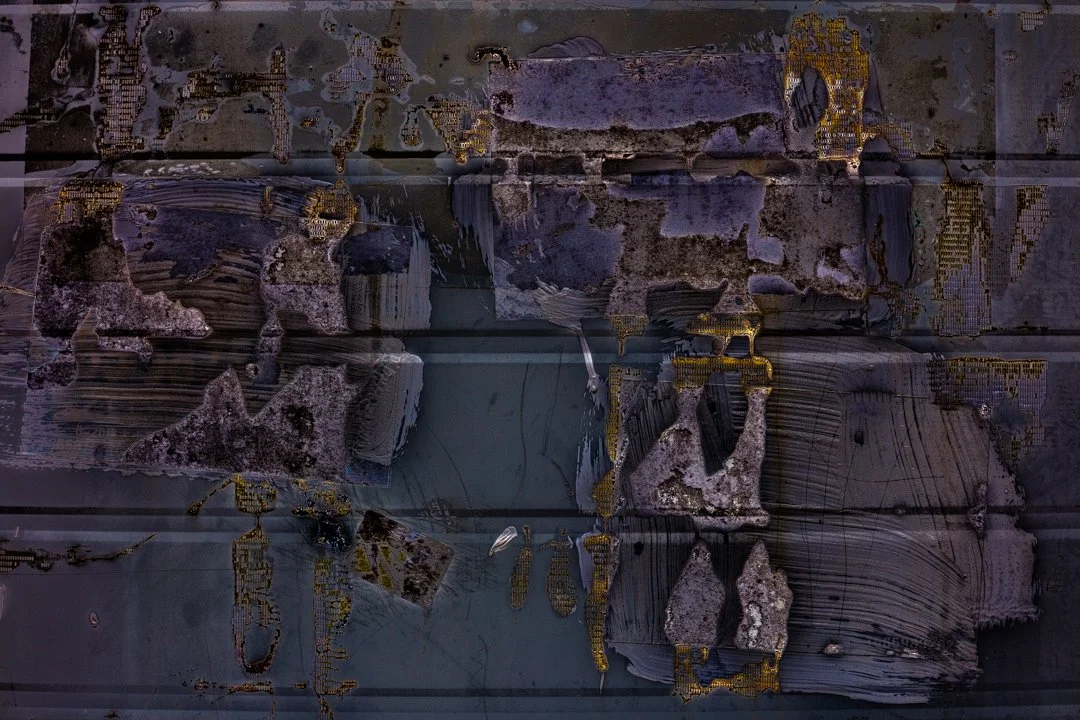
Zhang Shuguang, from the series Seeing Without Seeing, [2024]. Digital photograph
After the Four Steps: A Set of Open Questions
The four steps above are a path I have walked, again and again, in my own practice. But I do not want it treated as a procedure to be copied. If the “four-step method” becomes a new dogma, it will have betrayed itself — because its entire meaning lies in breaking dogma, including its own.
So, after the “four-step method,” I am willing to hand the method back to you — to each reader. What follows is a set of questions — not instructions for an exercise, but entry points inviting you back into your own experience. You need not answer me; you need only use them to face yourself.
I. The Memory of the Hand: Writing, Scissors, Needle and Thread, Texture
1. My grandfather's touch points toward the moment writing becomes the body of vision — before you could read, were you ever moved by the gesture of a certain brushstroke, the texture of a certain ink mark, rather than persuaded by the meaning behind it?
2. My grandfather's binding and my grandmother's needlework point toward the moment a book becomes flesh — was there ever a book, not bought printed from a shop, but copied out page by page, bound stitch by stitch, by someone's hand? Its pages yellowed, its cord worn — an object touched by three generations of hands.
3. My grandmother's scissors point toward the moment an image exists to pass through, not to be preserved — was there ever some festival decoration, some paper window-flower, some paper offering at an altar, that taught you beauty is not eternal possession, but a mark of time, arriving, and then naturally fading away?
4. The village carpenter's palm points toward the moment of listening-style seeing — did someone ever tell you, through touch rather than words, that wood has its own grain, and what you must do is not conquer it, but follow its direction? Plane with the grain, and the wood won't bite.
5. My mother's hands point toward the moment labor itself becomes perception — was there, around you, ever a pair of hands that never stopped, telling you through sweeping, washing, rinsing rice, pickling, that accordance is not a choice, but the most basic way of coexisting with the ten thousand things? That pair of hands, seemingly forever soaked in water, forever steeped in cooking smoke, never waiting for tomorrow.
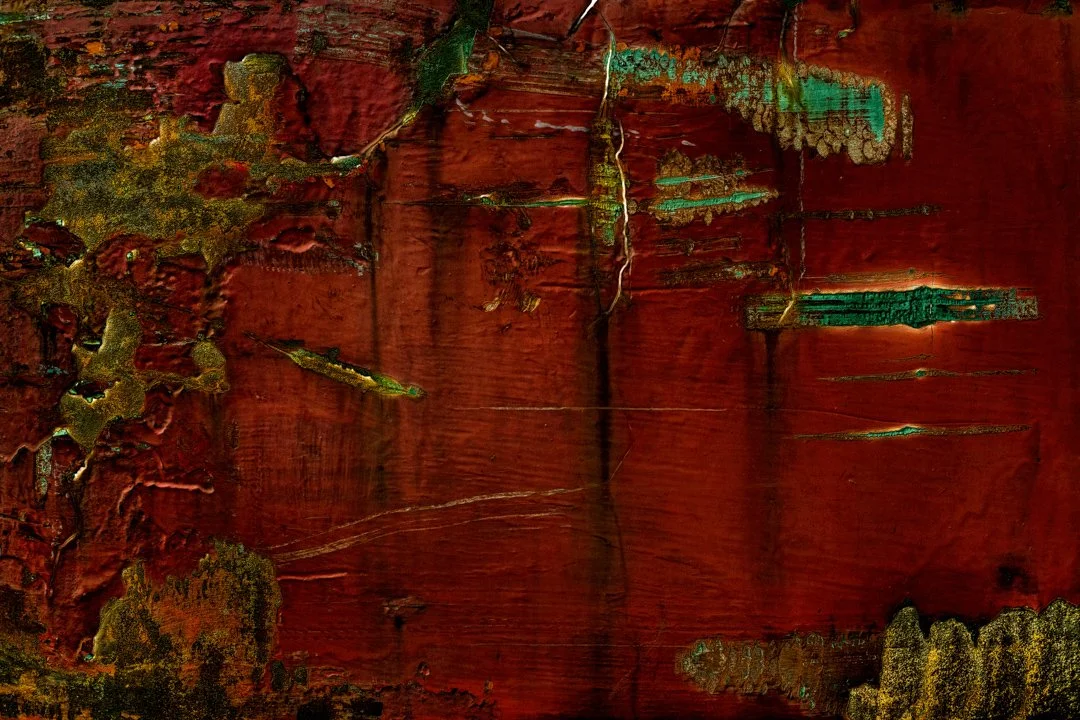
Zhang Shuguang, from the series Seeing Without Seeing, [2026]. Digital photograph
II. Feet and Earth: Walking, Running, Standing
6. My grandfather's footsteps point toward the moment the earth becomes a readable text — did someone, on some road, before some mountain, ever teach you to recognize where the wind came from, where the water was going, letting you feel for the first time that the world is not a static thing, but a flowing force?
7. My father's silence points toward the moment abundance rises up on its own, out of boredom and stillness — did you ever, on some long afternoon, with no toy, no companion, no purpose, suddenly discover that the movement of sunlight across the earth was itself an event, that the different sounds of a stream striking stone were themselves a kind of language?
8. Barefoot running and moonlight on a frosty night point toward the moment the body becomes a vessel of perception — did you ever have a moment when it was not you looking at something, but the thing surrounding you first, and only then did you discover you were perceiving? Earth shifting from warm to cool, moonlight faintly glinting on frost — in that moment, the world was not object, but dwelling.
9. My father's “the road comes from walking” points toward the moment the road manifests, once presupposition is abandoned — did someone, at some turning point, tell you, in the simplest way, that you need not know every answer before setting out — walk on, and the road is already underfoot?
III. The Eye's Seeing: Presence, Time, Rupture
10. Ritual and the deity's statue point toward the moment an image is presence rather than representation — among the images you have seen, were there ever some that were not “about” something, but simply were that something? The deity's statue is not a painting of the deity; it is the deity manifest, here, now. The image is not seen — it is responded to.
11. Everyday objects and the aesthetics of home point toward the moment time writes its own form — were you ever moved by the wear-marks on an old object, rather than persuaded by its newness or refinement? The patina on a clay jar, the smoothness of a hoe-handle, the wear of a millstone — beauty is not manufactured, but left behind.
12. The visual shock of the 1980s points toward the moment rupture itself constitutes perception — in your own growing up, did some entirely new visual language, utterly unlike anything you knew, ever suddenly break in, one you could not refuse, only absorb? Fluorescent beverage packaging, the record covers of pop stars, a giant advertisement on a town wall — colliding violently with the natural order of the hills, yet becoming, equally, part of the “reality” seen by that child's eyes.
13. The gentle coexistence of my grandparents' faiths points toward the capacity to see harmony within contradiction — in your childhood world, were there ever two seemingly conflicting forces that, miraculously, coexisted peacefully beneath the same roof? The geomancer's study with Christian notes spread open upon it; the compass of yin-yang and the five elements beside a gospel tract — that was not the harmony of theory, but the harmony of life.
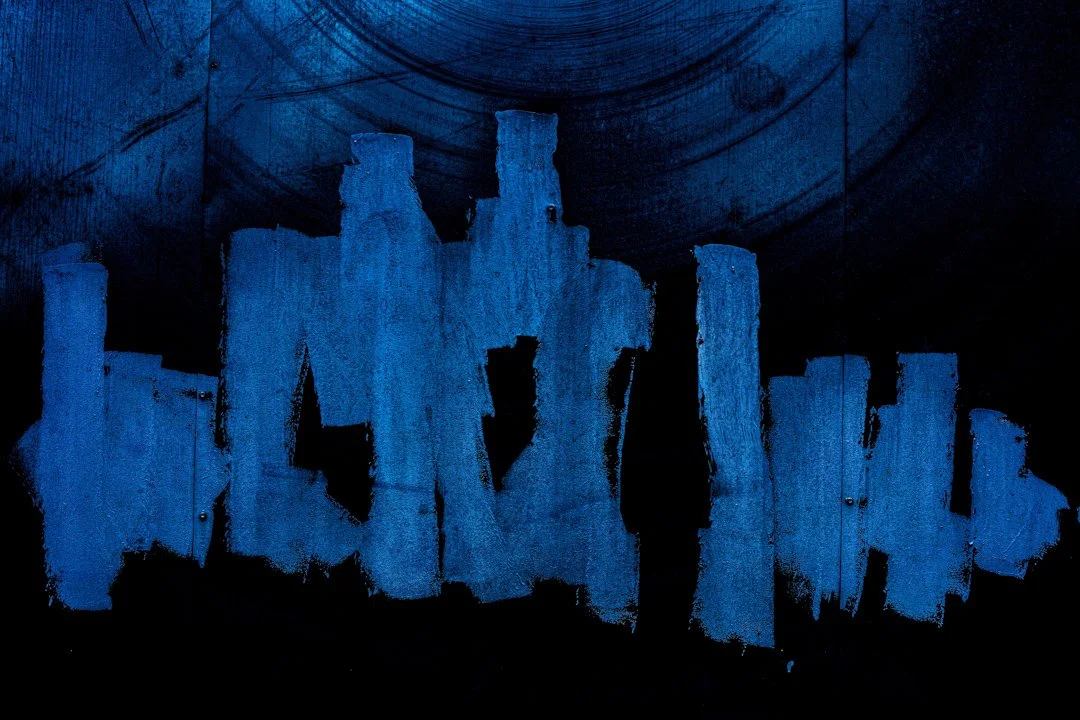
Zhang Shuguang, from the series Seeing Without Seeing, [2026]. Digital photograph
These questions are the true core of “return” as a method. I ask no one to return to my Yongtai, my rainy day, my flower beside the pigsty, my thatched hut on a frosty night. I only invite each person reading these words to carry these questions back into their own life experience, to search for their own correlates. You need not have my origin; you need only have the willingness to “return to an origin.” What that origin specifically is — the smell of a certain kitchen, a certain pine tree on the way home from school, a certain call at dusk, a certain moonlight glimpsed from beneath the covers — does not matter.
What matters is this: before concept and naming have yet hardened, does that primordial experience — heaven and earth born together with me, the ten thousand things and I as one — still remain within your own life?
If the answer is yes, then you, too, have your own “return” — its path, its form, its medium, may be entirely different from mine. And this is precisely the ultimate promise of “perceptual critique” as a transferable method: not to make you become me, but to make you become the you who still remembers how to “see.” That “seeing” is not the eye you learned to use afterward, to observe the world — it is the entry point through which the world had already flooded in, before you had learned anything at all. Return is not going back to the past, but going back to that entry point, learning again to let things arrive before naming.
In this sense, everyone can become “the Returner” of their own domain — not by imitating my childhood, but by returning to their own origin. It might be the first time you noticed, in a kitchen at dusk, the way light passed through a glass; it might be an afternoon you crouched by the roadside watching ants and forgot to go home; it might be a bodily sensation you still cannot put into words, but have never forgotten. Where it is does not matter. You need only one action: go back.
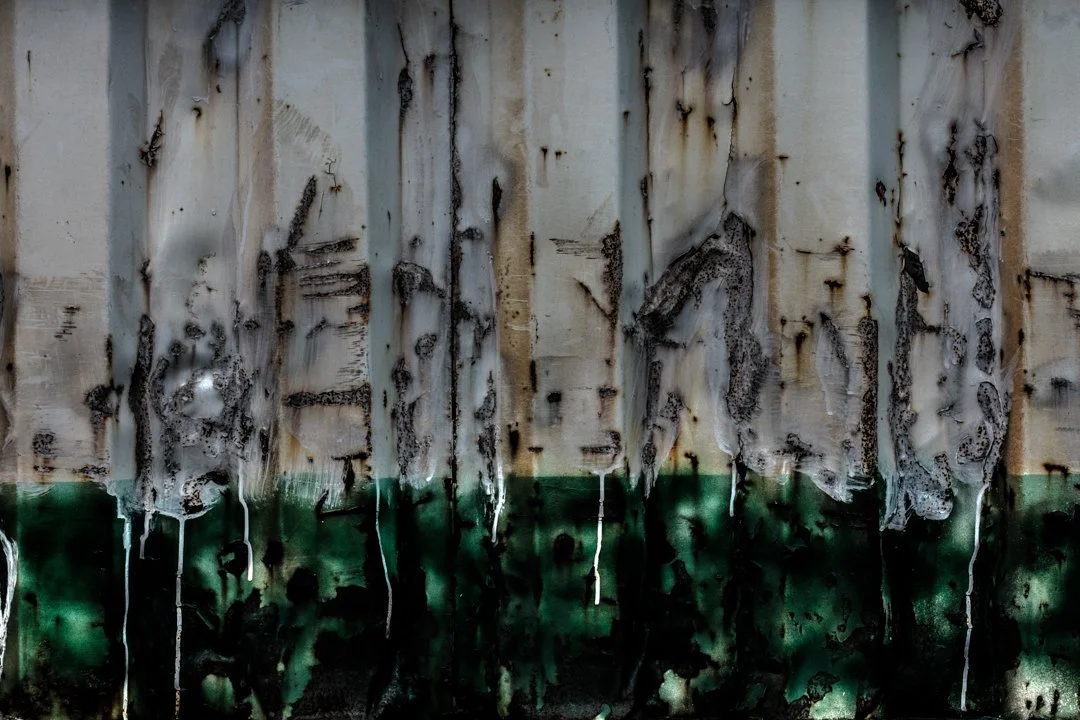
Zhang Shuguang, from the series Seeing Without Seeing, [2026]. Digital photograph
VII. Lamp-Fire and Shadow: At the Boundary Where Words Arrive
Having written this far, I must stop, and face an irony the reader may already have noticed: I am using an extremely precise theoretical discourse, trying to reach that “unable to tell” spring, on my mother's back. Foucault's episteme and Crary's observer build a corridor of cognition leading toward that wall, but the corridor's own light is too bright, and the mottled shadows on the wall are, in its glare, beginning to fade. This is not a fallacy of theory, but the fate of language. Any speech about a “pre-linguistic” state must, in order to occur at all, borrow language — and is therefore destined to be a betrayal, or at least a delay. Every concept I write down freezes that rainy day's sway, that frosty night's moonlight and silence, into a “knowledge” that can be indexed, cited, debated. And genuine “return” is precisely the eternal refusal of this kind of knowledge-making.
So I ask you, reading this, to treat these theoretical passages as a reverse ruler: their purpose is not to define that spring, but to mark how far we still are from it. When I speak of Foucault, I am really saying: you see, even the most rigorous history of Western thought admits that vision is constructed — so can we, for a moment, set these constructions aside, and return together to the moment before that construction was complete?
When I write of my grandfather teaching me to recognize the Azure Dragon and White Tiger, of my father saying “the road comes from walking,” of the barefoot evenings and the moonlight that woke me on frosty nights, I am really saying: you see, something older, simpler, more direct than all theory has already, long ago, been silently received by a child, in those unnamed mountains, on that night road leading nowhere he knew. It exists equally in the wandering of my grandmother's scissors as she cut paper, in the lamplight by which my grandfather reviewed the doctrine for my illiterate grandmother, in my mother's voice calling me home through the dusk, in the golden statue gradually blurring amid temple incense, in the carpenter's palm running along the wood grain, in the sensation of mud rising up between bare toes stepping into a paddy field, in the faint shimmer of moonlight on frost. These moments need no theory; they point directly at the original mind.
What you feel, having finished reading Crary, is not the clarity of understanding, but the limit of understanding — and that is exactly what this essay wants to give you.
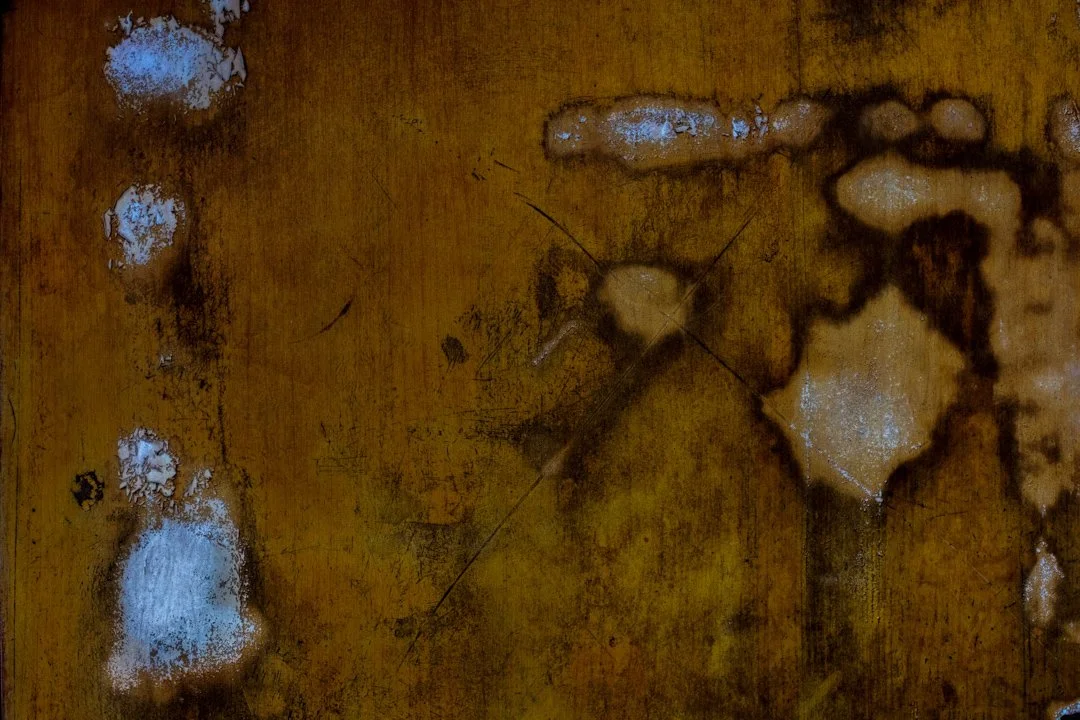
Zhang Shuguang, from the series Seeing Without Seeing, [2026]. Digital photograph
Finally: Back to That Wall
The recourse to Foucault and Crary above was not meant to “translate” my practice into Western academic discourse in order to gain legitimacy. These theoretical frameworks were introduced only to create the possibility of dialogue, to let readers from different cultural backgrounds find a path drawing near to that “rainy day.” Now, the work of theory is finished. Let us return to that wall.
Foucault's episteme reminds me: even in the moment of trying to suspend classification, I am still surrounded by a larger cognitive order — this awareness is not a burden, but the condition of clarity. Crary's observer lets me see clearly: the one who observes has never been natural, but jointly shaped by technology, institution, and discourse — including myself. Neither of these recognitions dissolves the meaning of my practice; instead, they make it more honest, more rooted — I no longer need to imagine myself an empty vessel transcending history; I need only acknowledge: I am an individual carrying a particular genealogy of seeing, trying, amid the visual ruins of the digital age, to walk back to that rainy-day child.
And my grandfather no longer needs these names. What he taught me is a way of reading older than any theory — recognizing the writing of time in the direction of a mountain range, listening to the breath of the earth in the source of the wind. When he lit incense and hung talismans, those temple walls, blackened by smoke, may have been the very first wall I ever saw, the one I would spend years afterward gazing at again in the walls of the city. My father inherited his geomantic and calendrical learning, and the responsibility of organizing every seasonal rite, wedding, funeral, and temple activity in the village, and carried it forward admirably. What I have inherited is not the craft or the responsibility itself, but the attitude silently transmitted behind them — that gravity toward things, wordlessly passed down in every deliberate gesture of my grandfather's brush, my grandmother's stitches, my father's labor and his solemnity in presiding over ritual. I have carried this manner from the mountain wilderness into the city, from the temple wall to the street wall, but its root remains planted in that hand that once held mine.
And Foucault's analysis of power lets me see further: the liberation of perception is not the absence of politics, but the place where politics is able to begin again. When our gaze withdraws from the flood of consumer signs, and settles once more on a forgotten wall, on the transformation of a nameless flower — what happens in that instant is a small resistance occurring at the level of the body. It changes no law, overturns no institution, but it changes the manner of “seeing.” And changing the manner of seeing is one way of changing the world — not the fastest way, but perhaps the most lasting. The communities behind those walls, the memories covered by that flaking paint, the histories legitimately erased by urban renewal — though they do not directly appear in my images, their weight remains, always, present. My gaze is not a denial of them, but a way — one that takes nothing, names nothing, files nothing away — of letting them regain the right to be seen. This ethics of seeing may be the most fragile, and also the most real, core of “perceptual politics.”
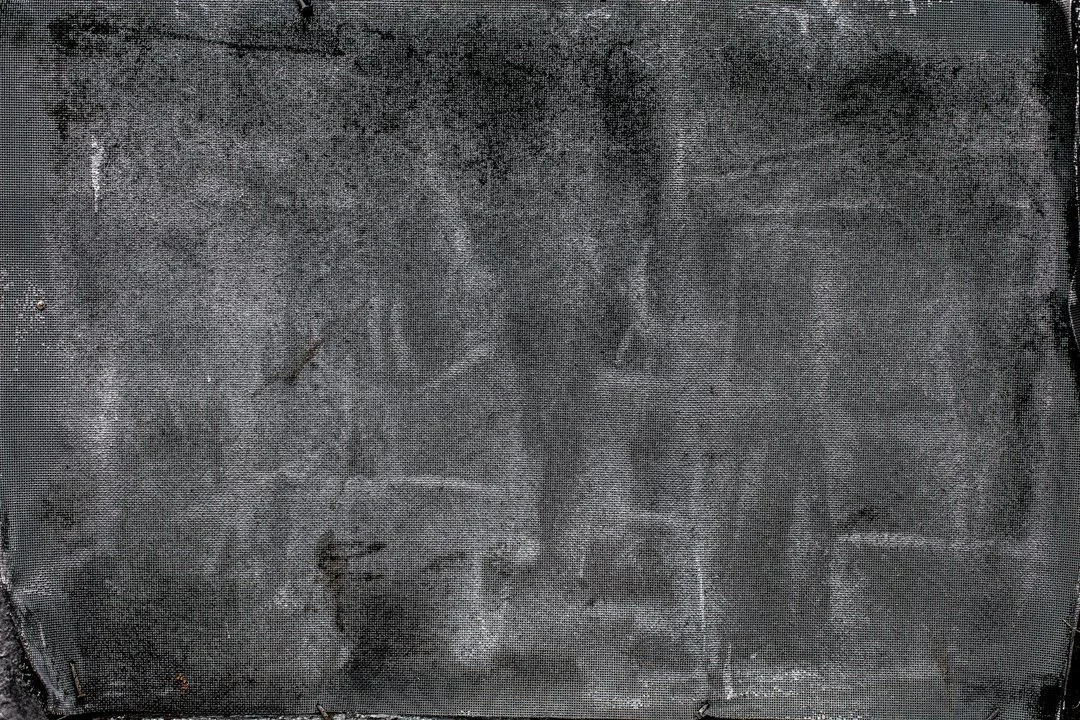
Zhang Shuguang, from the series Seeing Without Seeing, [2026]. Digital photograph
Now, the names of Foucault and Crary need no longer be spoken — but what they have taught me has become the self-awareness I stand upon, every time I raise the camera. That wall is no longer an object theory can exhaust, but theory has helped me see clearly: everything I carry as I walk toward it — my eyes, my habits, my technology, my cultural genes — is not natural, but generated within history. And “return” is possible precisely because any way of seeing can be reopened — as long as it was, once, shaped within history.
But I must also return, once more, to that “Grey I Could Not Enter” — that wall refusing every theory. It is the boundary of every one of my steps. It is also that silent wall, that refuses, that does not respond to any call. I have said before that its silence taught me: the true meaning of “letting the thing show itself” is not letting the thing manifest as I wish, but accepting that some things will simply never manifest for me at all. It does not manifest anything toward me, speaks no numinous glow, offers no aesthetic pleasure. It is only a wall that refuses me.
Einstein's “comprehensibility,” before that grey wall, is not an error, but a language no longer applicable. The wall does not refuse understanding; it simply does not enter the set of relations understanding presupposes. It is not a riddle, not a code, not a text waiting to be deciphered. It simply stands there, and with the whole of its indifference, lets the word “comprehensibility” flake off my own vocabulary on its own. Chen Yan's question still stands — how do you convince yourself? — but Einstein's assertion has already spent its full strength before this wall.
But right beside it, on the hillside in April, a wildflower, whose name I still do not know, still sways in the wind. Wall and flower — one refusing my entry, one welcoming my gaze — together constitute the whole of my work. The grey wall taught me to accept the impossibility of arrival, and that flower let me know that, having accepted the impossibility of arrival, one can still crouch down, do nothing, and simply look.
The child lying against his mother's back had never heard the names Foucault or Crary, but he was already there — in that “unable to tell,” swaying spring. And the child who crawled out of the thatched hut on that frosty night likewise did not know what “letting the thing show itself” meant, but the faint shimmer of moonlight on frost had already entered his body. Every word I have written is only an attempt to walk back toward them, and all theory is only, along that road, a borrowed lamp — one that will, eventually, go out.
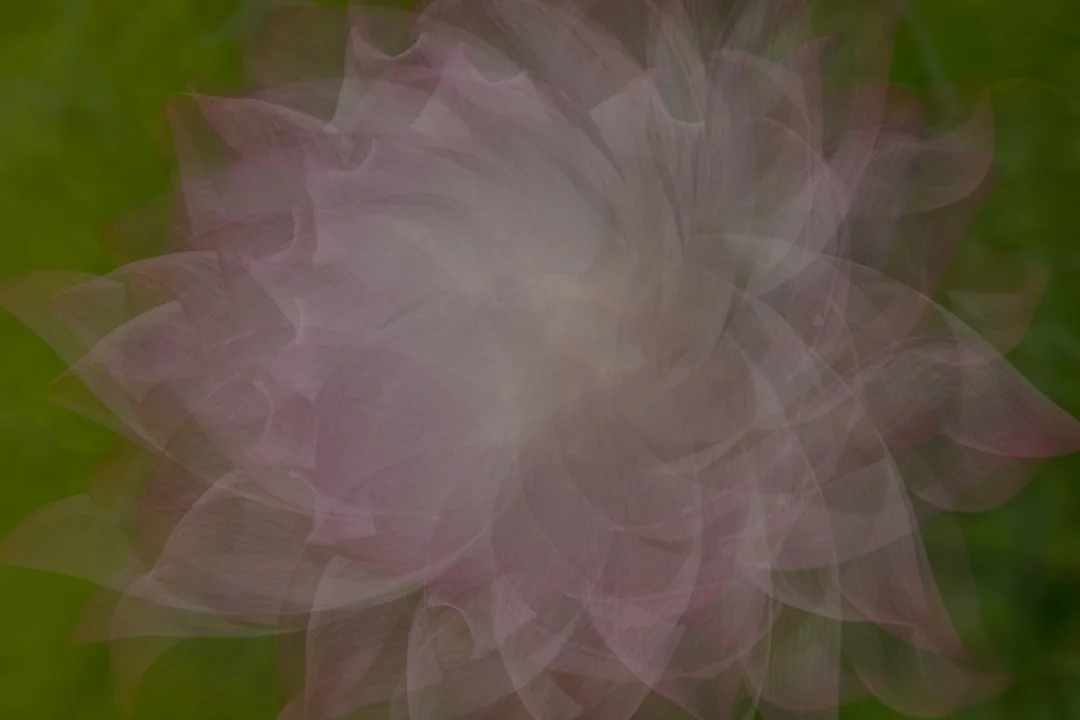
Zhang Shuguang, from the series Beyond Appearance, [2021]. Digital photograph
That grey wall is the one fragment, within my entire practice, that no narrative can accommodate. It is only a wall that refuses me — refusing not the species “human,” but “me” — a person carrying particular eyes, particular habits, a particular history. Its “unenterability” is not the thing's secret, but my own finitude. It is not an ontological truth, only a specific, real failure of encounter between myself and this particular wall. This failure is precious precisely because it refuses to be sublimated into a universal law. It does not let me console myself with “the thing-in-itself is unknowable” — it simply stands there, silently, stripping away all my vocabulary with its indifference, and lets me see clearly: it is I who cannot reach it, not that it refuses anyone entry.
This grey wall has taught me more than every moment of resonant communion put together. It tells me: return is not arrival, but accepting the impossibility of arrival. And within that naked failure, unguaranteed by any philosophy, I have encountered, more truly than in any successful image, that which cannot be named — not the “nature” of the thing, but the fissure, forever unable to be filled, and forever unable to be canceled, between myself and the thing.
My father's “the road comes from walking” has, in the end, become the most precise footnote to my understanding of “return.” Return is not walking back along a known road — the unnamed mountains my grandfather walked, the hour-and-a-half path to church my grandmother walked, the field paths my father walked his whole life — none of these are roads I can walk again. Return is only walking forward, walking on where there is no road, letting the road manifest, on its own, beneath your feet. That grey wall is a wall, and also a crossroads — it refuses me, and yet teaches me how to keep walking.
I no longer long to become again that child lying against his mother's back. I have already walked too far a road, accumulated too much knowledge, too much wound, too much bias. I cannot “go back.” But every time I stand before a wall, I practice a posture: setting down the camera eager to capture, setting down the impulse eager to name, setting down the expectation eager for communion — simply standing there, hands hanging at my sides, facing a silent wall. I no longer knock at the door.
When I stop knocking, the door no longer exists. The wall is still the wall, but I no longer need to pass through it.
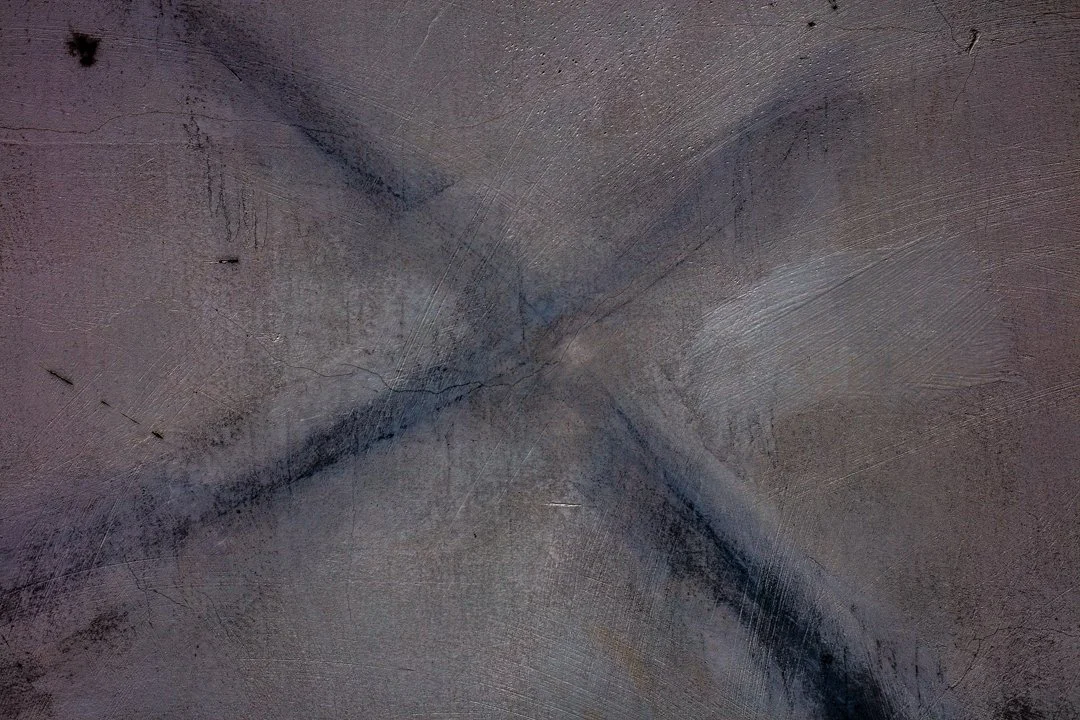
Zhang Shuguang, from the series Seeing Without Seeing, [2026]. Digital photograph
All the steps have been walked — or rather, the steps have been recognized as also being, themselves, the wall. All discourse has been exhausted. Before that grey wall, my hands are empty. And that wall still stands silently in its place, neither welcoming me, nor driving me away. Standing before it, I must face my friend Chen Yan's question again: is my “return” a genuine tranquility, arrived at after passing through every disturbance, or has it merely manufactured a new disturbance — a new artistic posture, a new discourse, a new power, named “return”?
The answer is: I don't know.
But perhaps “I don't know” is exactly where tranquility begins. Because tranquility is not the overcoming of disturbance, but the relinquishing, within disturbance, of the desire for certainty. What that grey wall has taught me is not how to enter, but how to stand outside the door — without lying, without fleeing, without beautifying “the impossibility of entering” into another kind of entering.
At this moment, I must look directly at the full sharpness of that metaphor — is this whole discourse of “perceptual critique” itself the new suit I have sewn for myself, so that the old question might be discarded like an old set of clothes? That old question — how to meet the thing sincerely, how to perceive without the aid of concept, how to return to that spring on my mother's back — has it already been hung on a rack, while I, wearing this suit called “theory,” mistake myself for walking toward it?
That grey wall's silence is the only answer to this question. It does not care what I am wearing. It simply stands there, stripping away all my vocabulary with its indifference. In that moment of complete nakedness — no “perceptual critique,” no “return,” no “object-oriented ontology” — I can feel that the old question was never discarded. It has remained pressed against my skin the whole time, older, more enduring, closer to my own body's warmth, than any new suit.
Perhaps genuine “return” is this: in an age overgrown with theory, acknowledging that theory will, in the end, be taken off, while the old question, incapable of being spoken, will remain, always, upon the naked body. It is not a problem needing to be solved, but the texture — unable to be stripped away — that constitutes who I am.
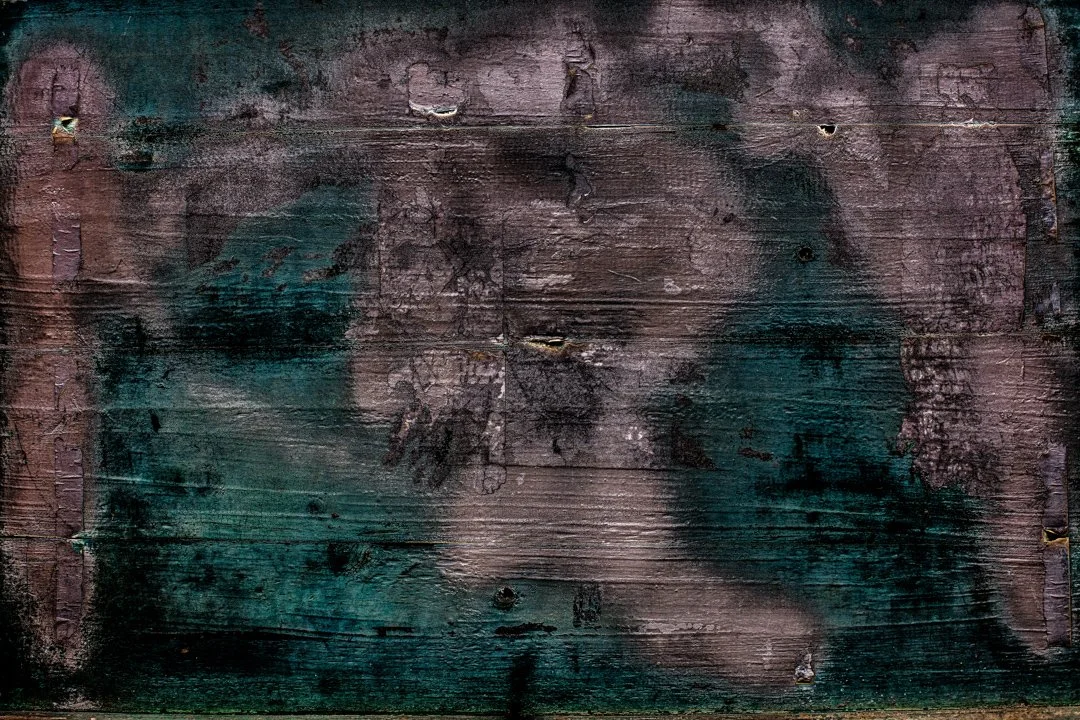
Zhang Shuguang, from the series Seeing Without Seeing, [2026]. Digital photograph
The child lying against his mother's back never asked himself whether this was “art's own truth.” He simply watched, swaying, as the world flooded in. Every word I have written is an attempt to relearn that posture of not-asking — and all theory, including this very text now drawing to a close, is the inevitable struggle before I have learned it. This struggle is disturbance, and to acknowledge the struggle itself may already be that door, not yet closed.
This is the whole of what I can give you — not an answer, not a successful encounter, but the posture of a person standing there, not knowing how to enter, and yet still choosing to stay. It is closer than any theory to those barefoot evenings and frosty nights — the warmth of earth, the coolness of stone, the cold of stream water, the prick of rice stalks, moonlight faintly glinting on frost. In those brief, eternal instants, observer and observed have not yet split apart; the world is the body, and the body is the world.
That posture is closer than any theory to that spring — the swaying spring, on my mother's back.
The self-statement of the Returner, Zhang Shuguang.
Translator's Notes
[1] Épistémé (知识型): the standard term from Michel Foucault's Les Mots et les choses (1966), translated into English as The Order of Things (Alan Sheridan, trans., Tavistock/Vintage, 1970). Retained here in its Anglicized/Latinate form (episteme) as is standard practice in English-language Foucault scholarship, rather than translated as "knowledge type."
[2] Foucault's analysis of Velázquez's Las Meninas opens The Order of Things. Passages in this essay attributed to Foucault or Crary are rendered here as paraphrase rather than direct quotation: because both The Order of Things (in its standard English translation) and Techniques of the Observer (originally written in English) are extant, copyrighted published texts, and the Chinese source material could not be reliably matched, phrase for phrase, against either published English edition, this translation avoids presenting reconstructed English sentences as verbatim quotations of either author.
[3] Foucault's distinction between “the visible” (le visible) and “the sayable” (le dicible/l'énoncé) is developed at length in his reading of René Magritte (This Is Not a Pipe) and, more systematically, in Gilles Deleuze's Foucault (1986), which builds on this distinction. Rendered as paraphrase for the reason given in note 2.
[4] Jonathan Crary, Techniques of the Observer: On Vision and Modernity in the Nineteenth Century (MIT Press, 1990). As this text was originally written in English, all passages attributed to Crary in this essay are rendered as paraphrase rather than reconstructed quotation, for the reason given in note 2.
[5] Two distinct terms appear across Essays Four and Five that could easily be conflated but are not the same word, and the artist has confirmed this distinction is deliberate rather than inconsistent usage: língguāng (灵光, "numinous glow"), used here and in Essay Four, carries the specific Chan Buddhist provenance discussed in Essay Four's note 1 (Baizhang Huaihai's "the numinous light shines alone"). Língyùn (灵韵, "aura"), used later in this essay's “The Image of Ritual” section and explicitly juxtaposed there with the name “Benjamin,” is the standard Chinese translation of Walter Benjamin's concept of aura. A third term, língyùn (灵晕, "numinous halo") — a homophone of língyùn/aura (灵韵) but written with a different character meaning "halo" or "diffuse glow," as in a halo around the moon — appears once, in that same section's subheading. The artist has confirmed that all three terms are a deliberate, intuitive near-homophone play rather than a terminological inconsistency to be standardized: 灵光 (light) evokes the Chan register of clear manifestation; 灵韵 (resonance/cadence) evokes the Benjaminian register of atmosphere and resonance; 灵晕(halo/diffusion) evokes the visual quality of a halo or diffuse bloom of light — closer to the actual optical texture of a mottled, weathered wall. This translation therefore renders each with a distinct English term (“numinous glow” / “aura” / “numinous halo”) rather than collapsing them into one, in order to preserve this three-way play rather than resolve it into false uniformity.
[6] Sengzhao's “though the rivers race on, they do not flow” is from his Wù Bù Qiān Lùn (see Essay Four, note 11); the Yijing's “ceaselessly changing, flowing through the six vacancies” (变动不居,周流六虚) is from the Xicí commentary.
[7] Zhuangzi's “an empty chamber generates brightness” (虚室生白) is from the “In the World of Men” (人间世) chapter.
[8] See note 1 above for the distinction between this term (灵晕, “numinous halo”) and línguāng (灵光, “numinous glow”) and língyùn (灵韵, “aura”).
[9] “The thing within the body” (物在身中) is a recurring image specific to this essay, first introduced in the rein/frosty-night/barefoot-earth section: the perceptual state in which the thing is not observed from a distance but inhabited bodily, and inhabits the perceiver in turn.
[10] The Buddha's teaching that the doctrine itself is like a raft, to be abandoned once the river is crossed, is a well-known paraphrase of a passage from the Diamond Sutra; rendered here in paraphrase rather than verbatim translation, consistent with this project's approach to extended scriptural citation.