Zhang Shuguang
Exhibition Record
Solo Exhibitions
2025 — Classified According to Their Kind, Southeast Art Center, Fuzhou
2025 — 10th PHOTOFAIRS Shanghai, Shanghai Exhibition Center, Shanghai
2025 — Flowers Bloom, Liangrang Art Center, Jiaxing
2024 — Beyond Appearance, Baizhuo Image Space, Xiamen
2024 — Mist, Youth Art Museum, Fuzhou
2023 — 1st Beijing Photo, 798 Art District, Beijing
2022 — The Emergence of the Manifest Image, Three Shadows Photography Art Centre, Xiamen
2022 — All Things Arising, Shuguang Art Museum (the artist's own space, founded 2021 in the mountains of Fujian), Fuzhou
2021 — Seeing Without Seeing, Suzhou Honsen Art Museum, Suzhou
2018 — Investigating the Subtle, Yiruo Aesthetic Space, Fuzhou
2017 — Unnamed Energy, Uppsala 203 Art Museum, Sweden
2017 — Clarified Image, ANAF Space, Fuzhou
2016 — Art Reconstructs Life, School of Design, Fujian University of Technology, Fuzhou
2015 — Seeing the Unseen, Pin Salon Art Space, Fuzhou
Group Exhibitions
2025 — A Thousand Mountains Ask of Spring, Shenzhen World Exhibition & Convention Center, Shenzhen
2024 — Without Direction, Guangzhou Poly World Trade Expo, Guangzhou
2023 — Formless Futures: Digital Art Exhibition, Beijing Kunlun Jiarui Cultural Center, Beijing
2022 — The New Artist II, Boomer Gallery, United Kingdom
2022 — Odyssey: Collateral Event of the 59th Venice Biennale, Venice Time Space Art Center, Italy
2022 — China Digital Art Expo, Western China International Expo City, Chengdu
2021 — Metaverse NFT Digital Art Exhibition, Shanghai Plaza, Shanghai
2019 — Portrait, Hongding Art Museum, Xiamen
2016 — If Not for Yantai Mountain, Yantai Mountain History Museum, Fuzhou
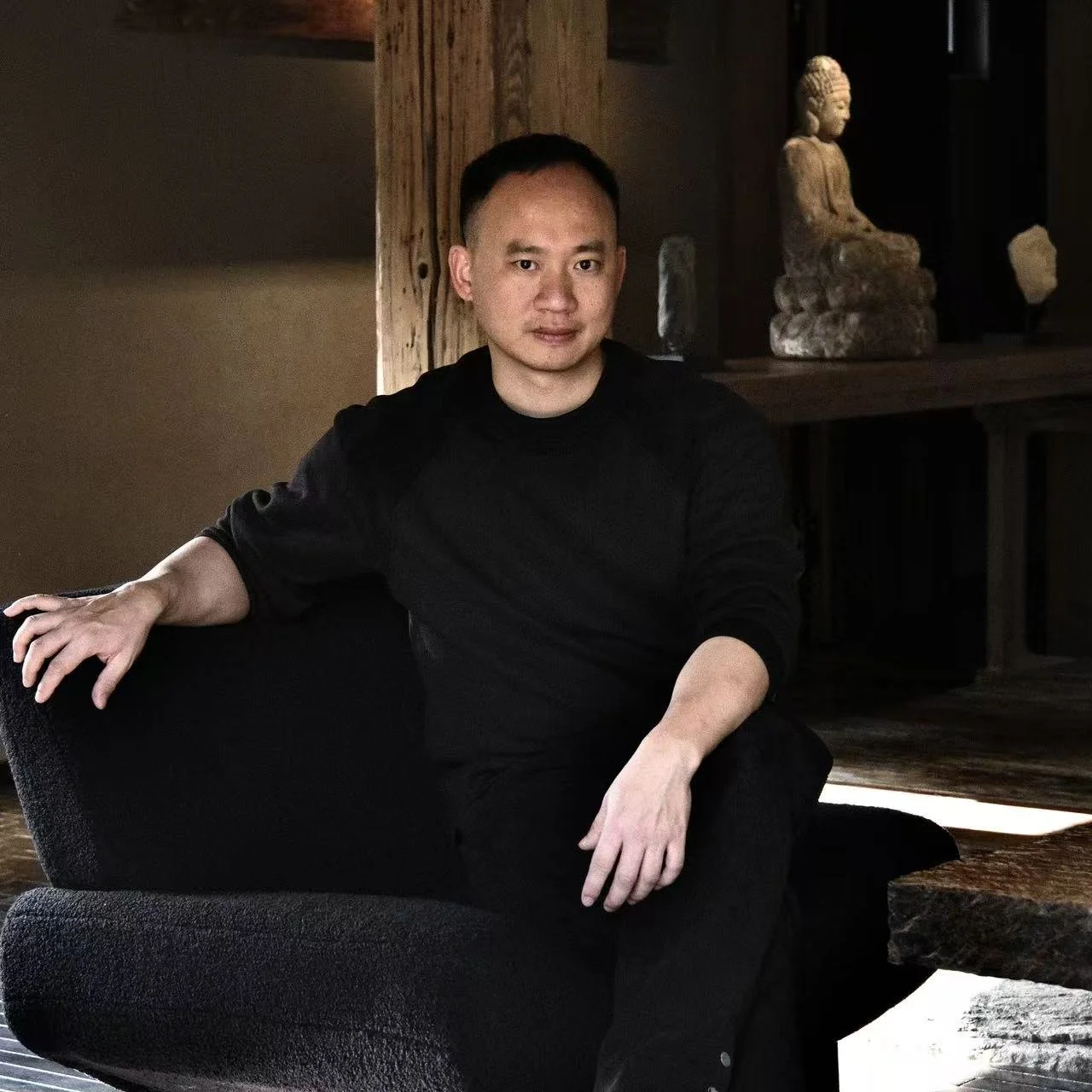
Zhang Shuguang (b. 1984, Yongtai, Fujian) is a contemporary artist and writer working in conceptual art through the medium of digital photography, with a practice spanning more than two decades. His two principal series, Seeing Without Seeing and Beyond Appearance, focus respectively on the manifestation of thingness within the city's "second nature" and the perceptual recovery of natural forms. His work as a whole can be summarized as a single gesture: return — a return to the moment before concept and naming have hardened into fixity, to that original instant of feeling the swaying spring on his mother's back.
Within art history, his concept of Readymade Abstraction grows out of a perceptual experience rooted in the hills of central Fujian and in the contemplation of "form and emptiness are not two": moving nothing, creating no new image, and instead letting forgotten walls and plants manifest of themselves through minimal digital purification. These images are neither a created abstraction nor an abstraction of expression, but a Discovered Abstraction and a Purified Abstraction. This path shares certain outward affinities with Duchamp's readymade tradition and with the "found abstraction" current in Western photography, but its point of departure and its destination grow independently, from its own soil.
At the level of theory, Zhang has systematically developed the paradigm of Perceptual Critique — shifting art's central question from institutional empowerment to the repair of seeing itself. His core texts — The Return to the Origin: Readymade Abstraction and the Critique of Perception (2026), The Road Comes From Walking: An Archaeology of Perception, A Genealogy of Seeing (2026), and the essays that follow — engage Foucault, Crary, and Shklovsky, among others, in dialogue, while drawing their spiritual foundation from the Yijing, Daoism, Chan Buddhism, and literati painting, constructing a methodology independent of Western art-historical narrative, continually calibrated and revised through sustained dialogue with outside critical perspectives. Yet the most solid ground of this thought lies buried in a childhood among the hills of central Fujian: his grandfather's brush and ink, his grandmother's scissors, his father's words, "the road comes from walking" — this bodily, folk perceptual experience forms a foundation that cannot be fully absorbed into theory.
Zhang Shuguang's position in art history lies not in entering the lineage of any "-ism," but in offering global contemporary art a sample of practice — humble, method-built from individual lived experience, and tested through sustained scrutiny.